Wednesday, December 4, 1907

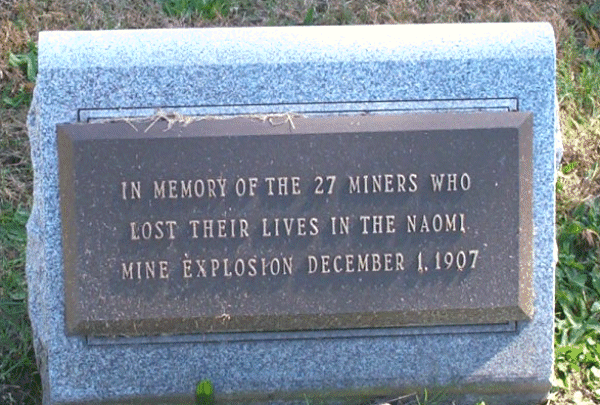
At the Naomi mine in Pennsylvania:
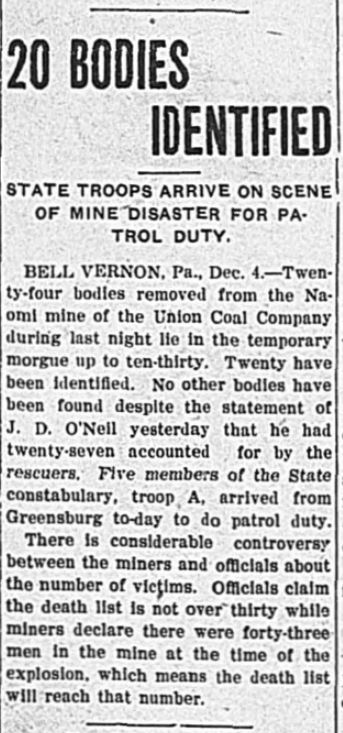
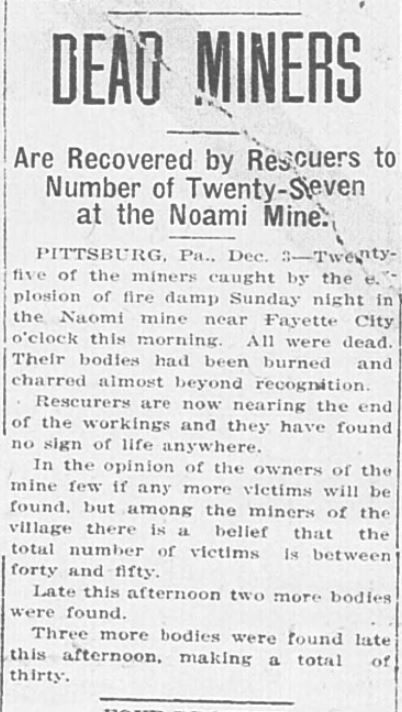
12.4.07 - pg 1 - Naomi

FWV 12.4.07 pg 1
In Washington D.C.:
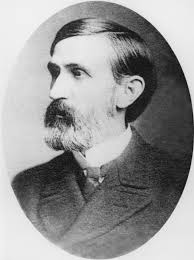
Gov. Dawson - wikipedia
photo of Governor W.M.O. Dawson from Wikipedia

Governor William M.O. Dawson arrives in D.C. for the national river convention. Governor Dawson conferred “with river enthusiasts from many States and is rejoiced at the enthusiasm…”. (FWV 12.5.07 pg. 1)
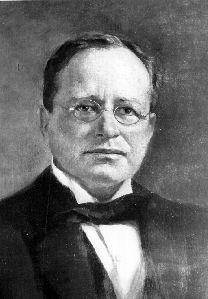
ABFleming - wikipedia
Photo of Aretas Brooks Fleming from Wikipedia

Former West Virginia Governor and current Fairmont Coal Company associate, A.B. Fleming, is also at the convention in D.C. (FWV 12.5.07 pg. 1)

In Grafton, WV:
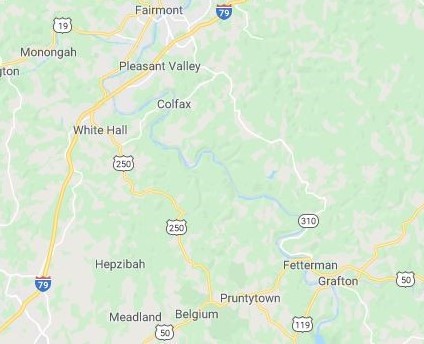
grafton larger map 1

Sam Furk has been arrested in Grafton by local authorities for crimes associated with the Black Hand. Furk is described as a “tough-looking” “big Italian”, believed to be “king of the Black Hand society of this section of the country”.

“Nothing concerning where Furk came from can be elicited from any of the local foreigners and all of them seem to be afraid of him. He arrived here a short time ago and has been spending his time among the foreigners.”

Furk is charged with extorting other Italians for money around the Grafton and Fairmont areas.

“From what could be learned of the matter from the foreigners, most of whom were so badly scared they would not talk, it appears that Furk, since he came here, has been posing as the ‘big man’ in the ‘Black Hand’ society and in making his demands upon the foreigners has emphasized his remarks by the flourish of a big revolver.”

Many local terrorized Italians are “afraid that if they do appear against the fellow that he should not be held for court that he would kill them as soon as he could find them after being released.”

“…Furk was not given a hearing yesterday, but he will probably be arraigned today.” (FWV 12.4.07 pg. 2 & 6)

At the Monongah mines:

Day shift worked at mines #6 and #8

Fred Stubbs is among them but this will be his last day of work for the rest of the week because his wife is very sick at home. At this time, a system known as “miners freedom” allows Fred to choose if he wants to work, rather than requesting the time off.
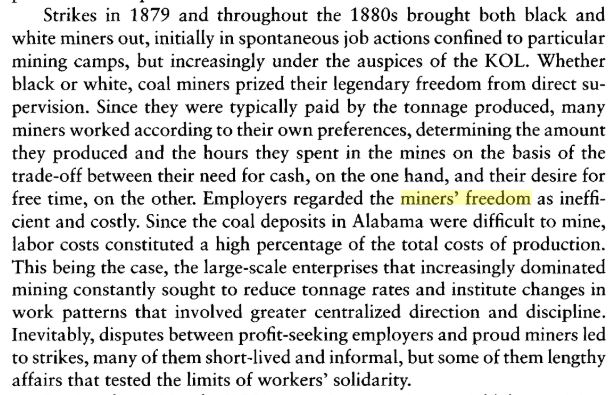
Ebook - miner's freedom - Race & labor in America
For Jobs and Freedom: Race and Labor in America Since 1865
By Robert H. Zieger, page 37
In #8:

It is the first day on the job for 3 Russian immigrants: Paul Goff, John Goff, and Frank Kreger.

Fred Vandatti works the gathering motor in #8: 4th right, 2nd north. Hugh Reese (brakeman) was his helper.

motorman
Motorman driving a gathering motor.
In #6:

James Rogers (assistant foreman in #6 and foreman in #3) is working in #6. This will be his last day of work this week due to illness.

George Simko works in #6: 2nd right, E face, room 8. This will also be his last day of work this week due to sickness.

Libberato Delasandro is working in #6 and finds gas accumulation earlier in the day at 2nd right off of D face, in rooms 2 & 3. However, it was only a slight trace – normal and relatively safe—so he does what most miners do: he takes off his coat and waves it around, fanning the gases out of the air and working space. Later, he will find gas and dust accumulation on 2nd right of G face in #6. At one point a foreman comes into where he is working, notices the gas and shouts at Libberato to lower the flame on his cap and so he does. (Inquiry, McAteer)

Liberatto map

In Fairmont, WV:

The Fairmont West Virginian reports the weather as: Snow tonight. Thursday fair. Minimum temperature tonight about 15 degrees.

CW Watson - Wikipedia
Photo of C.W. Watson from Wikipedia

Fairmont Coal Company and Consolidated Coal Company President Clarence Wayland Watson is world-renowned for his show horses. 14 of C.W. Watson’s show horses arrive in Fairmont on train No. 7., care of the US Express company from New Haven, Conn. (FWV 12.4.07 pg. 5)
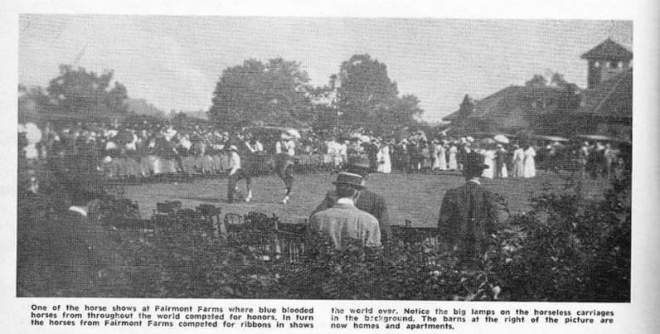
FB_IMG_1516709527023

Night

In Monongah:

A meeting of Monongah mine foremen & superintendents is held in J.C. Gaskill’s office. The meeting is called to go over things regarding safety of the mines.

Fairmont Coal Company supervisor David Victor, Tom Donlin (foreman at #6), and foreman Pete McGraw are present for the meeting.

Gaskill asks McGraw and Donlin about conditions inside and about the mines and they replied that it was good in both cases. “…McGraw said he had a little bit of shooting off the solid that he had not been able to eliminate. He was instructed to eliminate all of that and that he must get rid of the men who had that practice.” (Inquiry– Victor)

James Rogers, assistant foreman in #6, talks with foreman Tom Donlin in the company supply store about watering the mines tonight.

At the mines:

Night shifts work and, per usual, the main-ways of the mines are watered, but not the branching off hallways and rooms. (Inquiry, McAteer)


Previous Post

Next Post


More on How Death Gloated!

Bibliography

Disclaimer and Guide

Introduction

About the Author

Contact Information

Tuesday, December 3, 1907

Morning

At the Naomi mines in Pennsylvania:
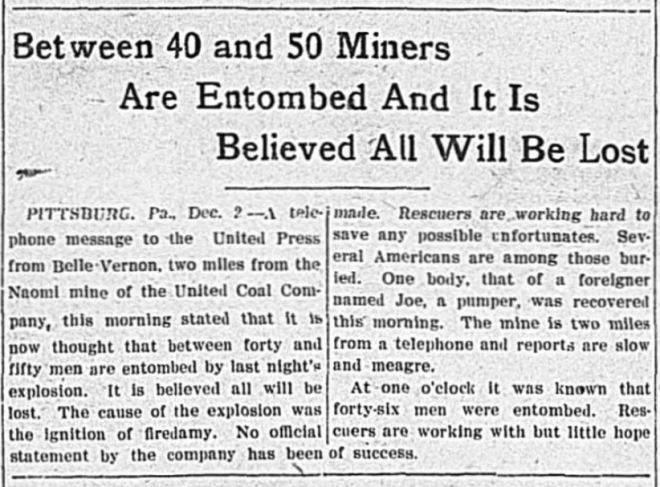
12.03.07 - pg 1 - Naomi
CDT 12.03.07 pg. 1
In Fairmont:

Very icy conditions – “The walking…was very treacherous and many people got falls” (FWV 12.4.07 pg. 8)

Mrs. Jacob M Watkins of 5th ward fell and broke her wrist.

Miss Edith Frey slipped on icy pavement on her way to school and broke her elbow.

Mrs. Ellis Billingsiea fell and was unconscious for some time. No broken bones.

Mr. Crawford M. Shaw, a well-known B&O Engineer, fell on icy pavement and broke his arm.

Mrs. J.M. Watkins fell at home on Locust Ave and broke her wrist.


Afternoon

The Women’s Auxiliary of Christ Episcopal church routinely shift hostesses for their meetings. Today the collective leaves Fairmont on the 2:00 pm trolley headed for Monongah. After about a 20 minute ride, they meet up with their hostess, Mrs. Ruckman at Monongah. (FWV 12.2.07 pg. 8)

FB_IMG_1512224499627

Night

In Viropa (mining town one mile north of Shinnston):


Fire destroys the houses of five miners.  “As there was no means of fighting the fire except by volunteer bucket brigade another house was dynamited to prevent the flames from reaching a large boarding house and the mine tipple.” (CDT 12.4.07 pg. 8)

The houses actually belong to the Fairmont Coal Company. “The company’s loss is between $3,000 and $4,000, but the property was fully insured. The houses were occupied by foreigners who saved most of their household goods.” (CDT 12.4.07 pg. 8)


Previous Post

Next Post


More on How Death Gloated!

Bibliography

Disclaimer and Guide

Introduction

About the Author

Contact Information

Monday, December 2, 1907

In Monongah:

Both #6 and #8 mines are working
Ben Coon is working as the stable boss at #8 with Charlie Dean having general supervision over the work.
Leo Dominico notices a toad hole in the roof while working in #8 mine (Inquiry)


At Naomi mines in Pennsylvania:
12.2.07 - pg 1 - Naomi mine
FWV 12.2.07 pg 1 morn

Night

12.2.07 - pg 1 - Naomi
FWV 12.2.07 pg 1 eve.
Whington, PA

William May, whose brother was one of those entombed in the Naomi mine is held up by 3 masked men on his way to the disaster scene. William did not hear about the Naomi disaster until Monday night. 3 men stopped him on his way to the streetcar, held him at gunpoint, searched his clothes, took his money and a gold watch. William had to go back home to get more money before going to disaster scene. (FWV 12.4.07 pg. 4)


Previous Post

Next Post


More on How Death Gloated!

Bibliography

Disclaimer and Guide

Introduction

About the Author

Contact Information

Disclaimer and Guide


By: Katie Orwig

How Death Gloated! is a collection of numerous resources and publications on the history of the Monongah Mine Disaster. They are arranged and presented in the form of a timeline of events as this better helps my own organization when it comes to working on my historic fiction about Monongah.

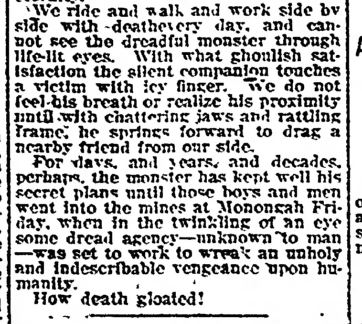
The title is taken from a newspaper article published on December 10, 1907 in the Cumberland Evening Times.

12.11.07 - pg 11 - Monongah 6

This timeline is not to be blindly trusted and is constantly subject to future change as I come across any new information. However, as far as I have found in my few years of formal research on this topic, I have yet to come across anything like a detailed timeline of events so I felt obligated to share this form of organizing my research despite the fact that I don’t think it will ever be a finished product.

I’d like to inform you of specific choices I made for How Death Gloated! so that it may help you navigate the information better:

  1. Certain events included in this timeline may have only come with time stamps like “this afternoon,” or “early morning”. In these instances I would do my best to consider the context of the original source, cross check with other sources for anything which may conflict or concur the event being described, and then do my best to estimate the approximate time this event may have occurred based on what information I had to that point. Sometimes an event could get more accurately placed later on when more information is obtained, and sometimes it will remain in its ‘best guess’ slot.
  2. I have not included ALL of my information. Some events which matter very much to the research for my historic fiction but are not necessary to the format and purpose of How Death Gloated!, have been omitted…for now. Almost all of these are just waiting for more clarification on where they should be placed, while the others have more of a storytelling/narrative intent and will not be included at all. For many of these issues, I will be making and posting separate journal entries about the problems they pose.
  3. When considering my sources and their provided information, I often gave greatest partiality to the people of Monongah and the stories I heard through my life about the disaster. They often discussed the wrong information which was spread vs. what they knew or grew up hearing themselves.

These resources include contemporary newspaper, journal, and magazine accounts; photographs from various points in time; documentaries; published texts; personal accounts, etc. They will also be consistently updated.

These resources and the cited information contained on this site are not presented with the intention of formal citation.

In less formal lingo, please cite the source I cited for this information whenever possible.

If you have any questions about any of the information or a citation is unclear or missing, please contact me and I will do my best to answer any of your questions, point you in a possible direction for more information, or clear up something I probably just overlooked.

Please feel free to leave comments or discuss the events with myself and others here or on other media platforms. I welcome conversation and discussion on this matter as I feel collaboration on historic matters is absolutely vital.

Introduction to a timeline of The Monongah Disaster of 1907

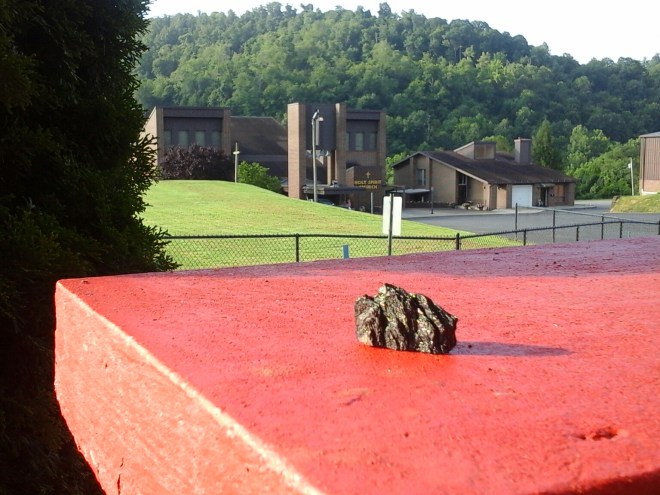
20190710_080551-1

By Katie Orwig

“As an individual, you have had a very limited set of experiences. And the limitation on your experiences may have then set a limitation on your thinking—may have narrowed your thinking. And to recognize those limitations—to recognize that you may have been limited by your family, by your education, by your church, by the class to which you were born—to recognize the limitations of your personal experience, is to then enable you to perhaps go beyond those limitations.” – Howard Zinn, The Lottery of Birth

What is privilege?

Today in the 21st century most people directly associate it with wealth, comfort, inherent advantages, and power. To be privileged is to be of your paradigm and never question what lies beyond; to never see it for what it is. Because what it is, is familiar and comforting so where is the want to change that?

Those are, indeed, privileges. And there is nothing wrong or bad about any of them.

Though, they were not mine.

My privileges included: childhood poverty lingering into adulthood despite never-ending work; inherent disadvantages based on my simple lottery of birth which have allowed others to look down on my home and proudly say, “at least we’re not them”; learning very early on in life that the color of my skin might be the only inherent advantage I have; Stockholm syndrome from a narrative designed to get you to accept oppression as a universal reality so you will oppress yourself and others making everyone too afraid to leave their paradigm despite its obvious toxicity; and the discomfort of knowing that I lived, played, and went to school atop one of the worst disaster sites which gave the U.S. so many of its privileges—that the reason I and every other child across the country got to do those things was because innocent adults and children were slaughtered beneath my very feet, including my very own great-great grandfather.

Or do all U.S. teachers, parents, and religious leaders get that kind of ammo?

That was my paradigm and that of hundreds of other children and adults all around me in the little town of Monongah, West Virginia.

And it was, indeed, a privilege.

“There is a very partial window that is opened for you and that partial window numbs you to the impact of your actions.” – Vandana Shiva, The Lottery of Birth

What matters is the influence made by these privileges and what one does with them. There is nothing bad about privileges; we all have more than we realize. But, do we share those privileges to gain perspectives from experiences which we can’t possibly have ourselves—to gain enlightenment from one another—or to create a hierarchy of these perspectives in order to continue oppressing ourselves and one another?

Privileges explain who we are individually and as a collective, but they turn bad when they become an excuse for why we should stay within our respective paradigms. If I allowed my privileges to be my excuses, I would have been in my grave over a decade ago—just another statistic in the opioid epidemic. But they do explain who I am and I am not ashamed of them nor will I deny or desire to change them just because openly acknowledging them forces others to uncomfortably address their own unacknowledged privileges.

Instead, I choose to share those privileges and expose the true value of them. I choose to give you the privilege of knowing just some of the things I know, but never occurred to you that you should know. And what better place to start than with my biggest inherent privilege of all? One over which I had absolutely no control.

It is a very elite few who win this lottery of birth; a very elite few who got a lifetime of listening and learning; a very elite few who get to have a relationship with this event and its people as more than just an “historic subject”; an even more elite few who were privileged to perspectives, knowledge, experiences, and insights on this event and place which no historic scholar could ever possibly have or find.

I am a born and raised Monongah Lion which gives me more connections to this place, these people, and this event—personally and intellectually—than any official historian or scholar I have yet come across. I was not just privileged to live where I lived but to be exposed to the people and their cultures, to care about them and their stories as part of my own. It is also a personal lucky privilege to have always been one who loves stories. I paid attention when people told their stories to me as a child and, at 35, I have surprisingly retained a lot of them.

The disaster was over a century ago but an odd heaviness still hangs in the air of Monongah. Anyone who was raised in it will begin to question it at an early age or simply learns to ignore it. My husband felt it the first time he came back with me for a visit, though he did not know of the disaster at the time. I was lucky enough to be one of those who questioned it early on. Though, I can’t tell you that I have any answers yet or that there even are answers to be had.

Answers really aren’t what matter. Answers won’t change the events, they can only influence our perspectives and understanding of events. But they can also influence the perspectives and understandings we have of the people involved in these events and the perspectives we hold of ourselves. The change that gets made is up to each and all of us and what we choose to do with this privilege.

There is no one living today who can be held responsible for what happened in Monongah’s gloomy past. But everyone living today is inherently accountable for the memory of that past and how we use the privileges we have gained from events like Monongah. Being privileged to this rare lottery of birth, I accept my inherent accountability and responsibility to share this privilege with you.

It will not be a comfortable experience. It will include the truths and the falsehoods, the mistakes and misunderstandings, the corrections and oversights humans are prone to make. There will be stories without endings or closure, people who play but minor roles yet their perpectives matter all the same, valuable information which doesn’t really have a ‘place’, and accounts which can only be verified by the long since dead.

There is no running narrative; no grand thesis or conclusion. This isn’t an academic adventure where I am trying to force you to see something that probably isn’t really there. Maybe you will see something, maybe not.

It will be confusing, overwhelming, and intimidating as I have no intention to lead you in any one specific direction or tell you what you should think. I hold an unyielding conviction that it is impossible for anyone to be an expert on much of anything in this world—even one’s own experiences. That all history is in the perspective of the historian is an unfortunate truth which I openly claim.

Though I have collected this information because I am working on an historical fiction, all good historic fiction is just 98% truth and 2% fictional filler. The narratives that are currently out on Monongah, even those from accredited historians, do not come close to that percentage simply because the conflicting information we do have left from this event and the way we are compelled to formally present information forces one to choose a narrative—to discredit one in favor of the other. I have done my best not to do that except where it helps eliminate redundancy. I feel it is important for you to be as jumbled and conflicted as they were on these matters. It is important that you attempt to fill in those blanks for yourself, to look for more information yourself and to make your own choice: will you take the information for simply as and what it is or will you challenge and omit that which disrupts the easier narrative?

This work I am presenting is not a formal research project, nor is it presented as one. My own narrative of this event will come in good time, but I will not attempt to masquerade it as nonfiction like so many others.

All I can do is share my research and knowledge with you for what it is.

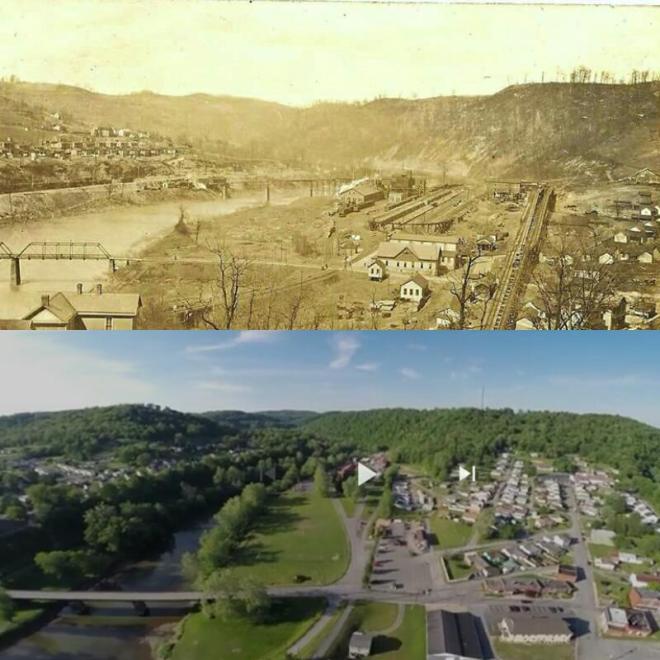
2017-12-04_16.28.33
Top: Monongah around 1907. Bottom: Monongah around 2007

 “I think the key to any progress is to ask the question ‘Why?’ all the time. Why is that child poor? Why was there a war? Why was she killed? Why is he in power? And those questions can get you into a lot of trouble. Because society is trained by those who run it to accept what goes on. And if you keep asking questions its very destabilizing. And yet, you have to do it. Without questions we won’t ever make any progress at all.”  Tony Benn, The Lottery of Birth


December 1, 1907 – Welcome to Bloody December

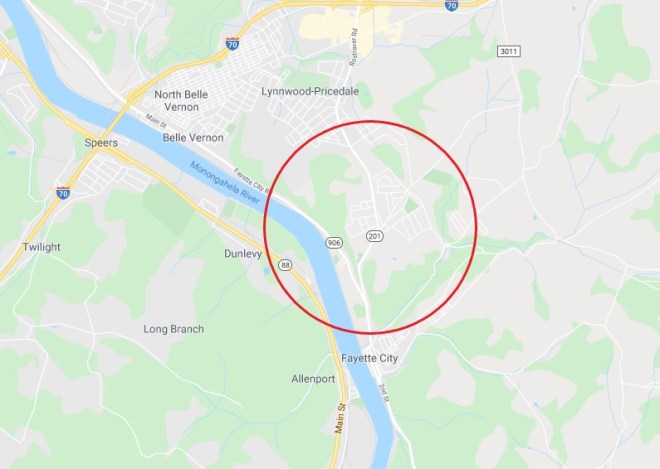
Naomi - approximate location

Belle Vernon, near Fayette City, Pennsylvania.

Sometime between 7:15pm – 7:30 pm, the Naomi mine explodes “with a roar that shook the whole countryside.”1

“The explosion was caused by gas being ignited by an open light or an electric spark or flame from the electric wires, and it was greatly augmented by coal dust.”4

Fires inside the mines immediately follow the explosion. The Sunday night shift is relatively small so it is believed some 30 – 60 miners are entombed underground where the fires steadily consume all breathable oxygen and replace it with toxic gases known as black damp.

“Within a few minutes hundreds of people surrounded the pit mouth. The screams were indescribable. Wives and children and friends of the men entombed wrung their hands and begged piteously for rescuing parties to enter the mines and bring out their loved ones. All night they refused to leave the pit mouth.”

“After a brief examination of the conditions, the impression prevailed among the inspectors that no one would be found alive in the mine, as the after damp would in all probability have smothered those who were not burned by the gas or hurled to death against the sides of the mine by the force of the explosion.  The miners, most of whom were foreigners, were at work almost a mile from any entrance.”4

“Only one man, an unknown foreigner, (out of 34 employees), reached the surface after the explosion occurred, and as he reached the open air he fell unconscious from inhaling the gas fumes and died in a few minutes.”4

This slideshow requires JavaScript.

image from usminedisasters.com
In West Virginia:

Governor Dawson leaves for Washington D.C. to attend a meeting of rivers and harbors congress which will be in session for several days. (FWV 12.4.07 pg. 4)

Welcome to Bloody December.


1907 is considered the deadliest year of the mining industry in the United States.2 The month of December produced 5 separate major disasters and numerous accidents which cost the lives of over 800 men and boys, the majority of whom are minorities and immigrants.

This month will be the real catalyst to a decades-long fight to bring an end to negligent labor practices across the country. Bloody December is so horrific that the American public finally lets its government and its industries know that they have had enough. The devastating and very preventable loss of life sparks a heavy push for government regulation in private industry and labor practices.


Previous Post

Next Post


More on How Death Gloated!

Bibliography

Disclaimer and Guide

Introduction

About the Author

Contact Information