

“Every decade has had its horrors and every decade will have them until the end of time. It seems sometimes that the decades that have passed and gone were angelic compared to the present, but such is not the case.
“The terrible mine disaster at Monongah is still fresh in our minds, and it will remain fresh for many days for the parties of rescuers have scarcely begun to find the bodies of the victims of that catastrophe.” (AC 12.10.07 pg. 4)
~12:00 am
At the mines:
“At midnight a total of sixty-six bodies had been brought from the two wrecked mines at Monongah.” (BEB 12.10.07 pg. 7)
“The bodies taken out…were for the most part in bad condition, being maimed and blackened, and besides, many of them were far advanced in decomposition.” (ES 12.10.07 pg. 1)
“The work of rescue is daily becoming more difficult and dangerous. To the dangers of fire damp and explosive gases generated by the fire in Mine No 8 are now added the odors peculiar to decomposing bodies. The health of the rescue parties is endangered, and it is with the utmost difficulty that they are able to face these new terrors of the mines.” (LCT 12.10.07 pg. 8) (RP 12.10.07 pg. 1)
“…men who were unafraid to work 12, 24, 48, or 72 hours at a stretch if there were hope or help in it. This mustering of the minute men of the coal pits is one of the finest things in industrial life in America today. Some come because of the good pay there is in it, and some because of the adventure, but for many it is the response of working men to a human call stronger and more stirring than either of these.” (Kellogg)
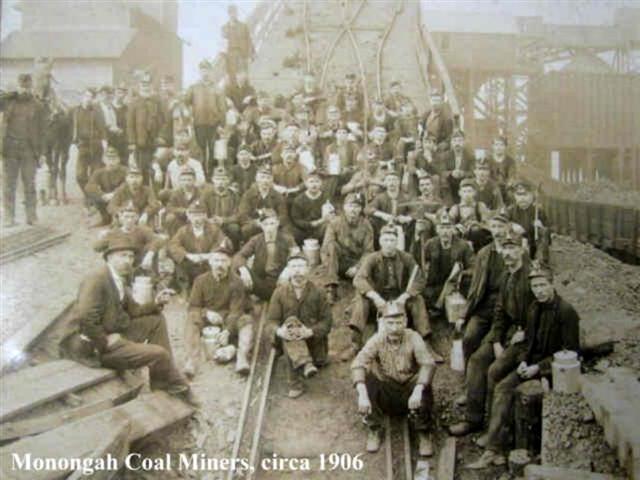
“Now, it having been determined that there can be no living men in the mine, the state and federal authorities have ordered a cessation of the rescue work. They rightly cannot see the necessity of sacrificing the living for the dead. But it is a notable fact that the work would have gone on, regardless of danger, if the authorities had not intervened. The men were willing and anxious to risk their lives, even though they knew they could not save lives by so doing.” (SLH 12.10.07 pg. 4)
“The coroner and his deputies remain constantly upon the scene, viewing the bodies as they come out, but no date has been set or other arrangements made for taking testimony or other features of the inquest.” (ES 12.10.07 pg. 1)
Inside the mines:
“Men are working incessantly.” (WH 12.11.07 pg. 3)
“They carried pick and shovel, but the weapons that for the most part they had to rely on were boards and canvas and cement and a spinning fan at the mine mouth.” (Kellogg)
These men “…must go ten feet ahead and try; must hold canvas barricades against the after-damp till their arms ached, while the brattices slowly went up; and all the time must forage for death in that breathless sweater, finding it in a disemboweled mule, or the charred, crushed thing that had been a miner, or a headless trapper boy, or an empty shoe.” (Kellogg)

“After the bodies are located, the rescuers say the most difficult part of the work is encountered. The bringing out of the bodies, a distance of a mile or more through the underground workings, it is tedious on account of meager facilities.” (WH 12.11.07 pg. 3)

“There has been considerable apprehension that the work of rescue might be stopped on account of the many carcasses of horses and mules in mines Nos 6 and 8, but so far there has been little trouble from this source, and the stench has not been sufficient to overcome the workers.” (CDT 12.10.07 pg. 1)
“The official reports show that there were eleven horses and mules in No 6 mine and 38 in mine No 8. All were killed.” (CDT 12.10.07 pg. 1)
“Health authorities fear an epidemic of fever due to the decaying bodies of the men and the animals caught in the mine and have prepared to enforce heroic measures if it becomes necessary.” (WED 12.10.07 pg. 1)
At the morgues:
By an order of the County Board of Health, mutilated bodies are to be kept 3 hours for ID and at the expiration of that time shall be interred. The order has increased the anxiety of relatives of the victims who are eager for the news concerning the recovery of bodies. (FWV 12.10.07 pg. 1)
At #6:
“There was pathos enough in the scenes at the mines while the bodies were taken out to make a nation weep.” (AC 12.10.07 pg. 1)
“Early in the morning they took the body of a small boy about eleven years old from Mine No. 6. He bore on his begrimed little face a look of peace and happiness that doubtless never marked it in life.” (LCT 12.10.07 pg. 8) (RP 12.10.07 pg. 1)
“The little body they took out was that of a weakling, a mere child, who in life probably did not possess enough strength to lift a bushel of coal. But his hands were knarled and his shoes were those of a man laborer, rough and tough and hobnailed.” (LCT 12.10.07 pg. 8) (RP 12.10.07 pg. 1 & 2)
“It was identified as John Yaconis, and taken to the tumble-down shack up in Red Row over the mine, where a stony faced little woman kissed it till her face was black from the charred flesh.” (NCH 12.10.07 pg. 1)
“’Devil Johnny’ they called him, but there was nothing devilish about him. At 12 the stunted little overalled figure trudged every morning to the mines where he was a trapper. At 13 he died in those mines.” (NCH 12.10.07 pg. 1)
“Another body, that of the boy’s father, Franco Yaconis, is still concealed in one of those underground rooms.” (NCH 12.10.07 pg. 1)
“There are other little trapper boys, they say, in the hideous catacomb back under the hills, boys that have never known the delight of tops and marbles, and whose best comrades are the slow and patient mules that haul the black cars down the drifts.” (LCT 12.10.07 pg. 8) (RP 12.10.07 pg. 1)
“’My man ask for boy getta job. Company give it even to so little boy.’ Said the mother. The labor law of West Virginia requires a child to be 14 before he may work, and the white faced Monongah woman says that Johnny’s case was many a boy’s case. At any rate there are no boys of that age on the Monongah streets.” (NCH 12.10.07 pg. 1)

~6:00 am
At the mines:
“Seventy-six dead bodies had been taken from the ill-fated Monongah mines when work was resumed today.” (WT 12.10.07 pg. 11)
“Mothers, wives, sisters, and children gathered at the entrance of the mines until driven away by the company’s police.” (AC 12.10.07 pg. 1)
“It is believed that the preliminary work of the rescuers has at last been completed…brave fellow workingmen to the number of hundreds have been risking their lives for nearly 96 hours.” (WED 12.10.07 pg. 1)
“There is now no fire in either mine and the air is such as not to materially interfere in the work. The order at the mines is perfect and the rescue work goes systematically on, notwithstanding the steady downpour of rain and deep mud.” (CDT 12.10.07 pg. 1)
“The company issued a statement yesterday saying later developments lead them to believe only 260 men were in the mines when the explosion occurred, but the miners insist that 406 men were checked…besides many having duties in the mine who are not under the checking system.” (OES 12.10.07 pg. 4)
“No man can write down in words the story of the pitiful grief and mental suffering that was witnessed during the hours I stood surrounded but those whose loves ones lay cold in death far beneath their feet in the workings of those wrecked mines.” (AC 12.10.07 pg. 1)
“Monongah is today a fatherless, husbandless village. In a moment the largest mining village in West Virginia was shorn of its bread-providing population as lint is swept by a white hot tongue of flame.” (AC 12.10.07 pg. 1)
~7:00 am
“Today dawned with the bright prospects for bringing to the surface a majority of those still in the workings, deep in the bowels of the hills and far from the entrances.” (WED 12.10.07 pg. 1)
“A story started last night that rats were in the mines gnawing the bodies of victims, but it was too ridiculous to receive much credit. Doubtless there were numerous rodents in the mines at the time of the accident, as there always are in mines, but that even a rat escaped the awful death strike, when the explosion came is not at all possible. There has not been any opportunity since for rats to get into the mines as the entrances have had men constantly at them and hence there could be none within. Besides the bodies recovered shows no sign of the presence of rats in the mines.” (CDT 12.10.07 pg. 3)
More on How Death Gloated!

 The Monongah Disaster