Stonco Goyac, the 29 year old Hungarian miner stabbed and shot in Farmington, dies at Cook’s Hospital. He leaves behind a brother in Pennsylvania. (FWV 12.23.07 pg. 1)
7:30 am
In Fairmont:
Christ P.E. Church – Holy Eucharist (FWV 12.21.07 pg. 5)
9:30 am
In Fairmont:
M.P. Temple Sunday School meets; “a full turn out of the school is desired so that the plans for the ‘Old Fashioned Christmas Tree’ service to be held on Christmas Eve may be completed.” (FWV 12.21.07 pg. 5)
Diamond St M.E. Church Sunday School meets in charge of Mr. E.A. Wilson. (FWV 12.21.07 pg. 2)
Presbyterian church Sabbath School meets – J. Walter Barnes, superintendent. (FWV 12.21.07 pg. 5)
First M.P. Church Sunday School meets – J.A. Swiger superintendent. (FWV 12.21.07 pg. 2)
Palatine Baptist Church Bible School meets with Supt. W.A. Hustead in charge, the subject being, “Christmas lessons” (FWV 12.20.07 pg. 2)
M.E. Church South Sunday School meets – Dr. L.N. Yost superintendent (FWV 12.21.07 pg. 5)
Grace Lutheran Church Sunday School meets – Home-coming day. (FWV 12.21.07 pg. 5)
First M.E. Church Sunday School meets– C.W. Evans in charge. (FWV 12.21.07 pg. 5)
First Baptist Church Sunday School meets. (FWV 12.21.07 pg. 5)
Christ P.E. Church Sunday School meets. (FWV 12.21.07 pg. 5)
Central Christian Church Sunday School – McIntire, superintendent (FWV 12.21.07 pg. 5)
9:45 am
In Clarksburg:
First Presbyterian Church, Wm. M. Hudson, Minister – Sabbath school meets. “Tuesday night the Sabbath school will have a tree to which the children and others are to bring presents and these presents are to be sent to the Rev. W.O. David at Monongah for distribution Christmas night to the Monongah children.”(CDT 12.21.07 pg. 3)
10:00 am
In Fairmont:
Cook Hospital informs Coroner Amos of Goyac’s death. This is the first any official has heard about the incident. Coroner Amos attends the postmortem examination. (FWV 12.23.07 pg. 1)
10:30 am
In Fairmont:
M.E. Church South service – R.T. Webb, pastor. “Both the music and the sermon…will be appropriate to the Christmas occasion.” (FWV 12.21.07 pg. 5)
Grace Lutheran Church service. (FWV 12.21.07 pg. 5)
Subject, “No Room for Jesus”
“Reception of members at 10:45”
“Sacrament of the Lord’s supper will be administered immediately after the sermon.”
“Congregational meeting after morning services.”
10:45 am
Christ P.E. Church – morning prayer and litany (FWV 12.21.07 pg. 5)
Presbyterian Church service – H.G. Stoetzer, Pastor (FWV 12.21.07 pg. 5)
First Baptist Church service – W.J. Eddy, Pastor (FWV 12.21.07 pg. 5)
Subject of sermon, addressed to the boys and girls, “Jesus, our Great Christmas Gift.”
“Some special music will be rendered by some folks as well as by the choir.”
M.P. Temple service – J.C. Broomfield, pastor. Sermon, “The Birth of Christ”; text, “And the Word Became Flesh and Dwelt Among Us.” (FWV 12.21.07 pg. 5)
Central Christian Church service – W.H. Willison, Pastor. (FWV 12.21.07 pg. 5)
First M.P. Church service – Rev. U.W. Morrison, pastor. Subject of sermon, “Christmas” (FWV 12.21.07 pg. 2)
Palatine Baptist Church service – T.B. Lawler, Pastor. Subject, “The Guiding Star” (FWV 12.20.07 pg. 2)
First M.E. Church service – G.D. Smith, pastor (FWV 12.21.07 pg. 5)
Diamond St M.E. Church services – Rev. G.W. Bent, Pastor; subject of sermon, “Christmas themes” (FWV 12.21.07 pg. 2)
11:00 am
In Clarksburg:
First Presbyterian, Wm. M. Hudson, pastor; Divine worship and sermon, “The sermons at both services will be held in the spirit of Christmas, the morning sermon dealing with ‘Blessedness of Giving’…” (CDT 12.21.07 pg. 3)
“Strangers are cordially invited to all these services.” (CDT 12.21.07 pg. 3)
11:45 am
In Fairmont:
Diamond Street M.E. Church class (FWV 12.21.07 pg. 2)
“It is beyond the human pen to describe the spectacle presented, when bodies are brought up from the bowels of the earth whither courageous men day in and day out were wont to toil for the support of their loved ones. Fathers, brothers, husbands and sons, are carried from the slope leading to the fatal regions of the earth. Their bodies are as black as the coal itself. The experienced eye of the undertaker cannot detect their color, whether white or black, until after the bodies have been washed. Even then the mutilation in some cases make it difficult.” (CDT 12.9.07 xtra pg. 4)
~7:30 pm
At the mines:
“Rain began falling early in the evening and continued almost incessantly throughout the night.” (WED 12.10.07 pg. 1)
“Last night they took out two bodies from No.8. Tonight, they will take out many more dead who have already been dug out of the wreckage and are lying along the catacombs ready for removal.” (RP 12.9.07 pg. 1)
“When darkness came tonight a total of sixty-six bodies had been brought to the surface from the two wrecked mines at Monongah.” (DASB 12.10.07 pg. 1) (LODD 12.13.07 pg. 3)
In Fairmont:
The Union Relief Association is formed by local women who were among the first responders to the disaster. Mrs. F. E. Nichols, President & Mrs. R. T. Webb, Secretary hold a meeting at M.P. Temple – “all ladies urged to be present.” “All women interested in the relief work are earnestly requested to be present. Committees will come prepared to report the progress made today.” (FWV 12.9.07 pg. 8)
Walter Zirkle is located safe and alive. He had been employed at the Gaston mines in Fairmont, not the Monongah mines. “The wish of his sister and mother were at once communicated to him and he has no doubt reached his home…” (FWV 12.10.07 pg. 2)
“Over $25,000 was added to the various relief funds during the day.” (BME 12.11.07 pg. 6)
In Monongah:
The General Relief Committee meets in Mayor Moore’s office. The first members are: Mayor Moore of Monongah; Mayor Arnett of Fairmont, chairman; Father Boutlou, Rev. J.C. Broomfield, Rev. H.G. Stoetzer; J.E. Sands, treasurer, and J.M. Jacobs, secretary. “Five responsible men will handle large gifts.” All checks will be payable to J.E. Sands, who will see that the funds are properly distributed. (FWV 12.10.07 pg. 1)
Paul Kellogg is talking with the children of a grieving family at their home. One of the oldest daughters tells him of the father they call “Pap” and brother, referred to as “George” who was a machine man:
“…and as we stood there on the door step, the sisters showed me his picture that of a clean cut young fellow, taken with his dog in a field. ‘Many’s the woman was dependent on each day’s wages,’ they said, –‘nothing at all ahead—and now that’s cut off. We’re not that way—not quite. Pap was all we had and he was getting’ old and couldn’t do so much. But George—soon as he’d get through cutting, he’d come help him load and so Pap’d make more. That was the way with George—5 girls, the only brother we had, and he that good to us! And such a good wife.’ One after another, the sisters broke in parts with the story. ‘Pap was singing the morning he left when he went to work—we heard him as far’s it carried. It was Nearer My God to Thee. That’s what he was singing. They worked 3 miles in—Pap and George—r-right under us. Two of the girls broke off there and ran into the house, and a third, who had come out and was combing her hair while we talked, gave it a savage twist that would have brought tears to her eyes if they hadn’t been there already. ‘Oh, we know we’ve got to give him up. We know he’s dead; but if we could only get his body out of the pit.” (Kellogg)
In the morgue:
George Gibbons is very successful in telling who victims are as they are brought in through the night. (FWV 12.10.07 pg. 1)
The first money found on any of the victims is found on the 69th body to be taken out, Dan Dominico Jr.* He had $27 on him when found. (FWV 12.10.07 pg. 1)
*The paper reports that this is “Dan Domico”. However, body #69 on the Coroner’s List is actually Dan Dominico Jr.—the son of the injured miner who was among the 4 men to escape through a toad hole the morning of the explosion. Despite being seriously injured, his father ran to the mouth of the mine after escaping and wanted to go back inside in an attempt to save his son. Dan Domico did not attend work on Friday and is, in fact, still alive.
At the mines:
“The rescue work, while slow, is progressing smoothly and as rapidly as due precaution for the rescuers would permit. It is believed that close to a hundred dead will be recovered by daylight tomorrow.” (News)
~8:00 pm
In Monongah:
Paul Kellogg visits the Italian Catholic priest, Father D’Andrea. Kellogg writes that, “it was raining heavily and a hearse was ploughing up through the mud when I reached the little Italian church…where last year alone he [D’Andrea] baptized 170 American born children.”
Kellogg describes D’Andrea as “a young, spare man with a quick smile on his dark face. His beard had gone 3 days without shaving and his eyes were hollow for sleep.” D’Andrea has been so consumed with his duties as a priest and to his brother’s family that he has had no time to personally grieve his brother.
“It was only one cry all day until now,” he said and turned his palms out and dropped his shoulders. Then in answer to the door, he directed a driver who for 2 hours had been searching for the right house, and was going back with the body. (Kellogg)
~10:00 pm
C.W. Watson issues statement:
At the mines:
“The heavy rainfall caused a veritable mortar of mud more than shoe top depth in many places through which the workers and the anxious watchers could make their way only with the greatest difficulty.” (WED 12.10.07 pg. 1)
The body of Charles McCain is finally reached. McCain was a well-known man of his city and had many friends here. Despite numerous early accounts of Charles being found “blown to bits”, his body was in good condition. There were no marks on it showing that he was a victim of the after damp. His remains were brought to his home. (FWV 12.10.07 pg.1)
~11:00 pm
At the mines:
“Heavy rain storms make the conditions around the mine worse than any time since the explosion. Only a few stragglers are now keeping the gruesome vigil.” (DASB 12.10.07 pg. 1)
“Milder temperatures today resulted in a thaw which converted the soil near the entrance into a sticky, dirty mortar…now almost knee deep in places.” (SLH 12.10.07 pg. 1)
“It dispersed, however, a very large portion of the great, impatient surging crowd that from the first has hovered as near the entries as they could get, a constant handicap to the rescuing forces whose work they retarded.” (WED 12.10.07 pg. 1)
“The rain has also interrupted the makeshift telephone and telegraph communication between the mines this city and the outside world.” (AMJ 12.10.07 pg. 1)
“Twelve bodies have been taken from the mines tonight, bringing the total number up to 11 p.m., seventy-eight.” (DASB 12.10.07 pg. 1) (CB 12.10.07 pf 1)
“At a late hour, …the officials of the company said they had reached a point where there were a great many bodies. From this time on the work of bringing out the dead will be done more rapidly.” (CET 12.10.07 pg. 1)
At the morgue:
“The rapid recovery of the bodies is making lively work at the morgue and at a late hour…thirty-five more undertakers were telegraphed for besides the several who arrived early in the evening from Grafton and Fairmont. Spring wagons bringing the bodies from the traction station across the river, to which they are conveyed from the mine openings by an ambulance street car, are followed by throngs of men, women and children, who gather around the morgue and remain in the rain until the bodies are placed in the caskets and laid in state in the bank building for viewing and identification.” (CDT 12.10.07 pg. 1)
Fire Boss P.J. McGraw leaves his fire boss shift after filling out his report.
Outside #8
Pat Kerns comes out of the mines and talks with P.J. McGraw for a bit. (Inquiry)
Carl Meredith arrives to work as Tipple Foreman. (Inquiry)
Inside #6
Andrew Daran arrives for work and proceeds to F face, 4th right, rooms #12 & #13. Despite seeing no mark to indicate that either Fire Boss had been in that area and inspected it prior, he proceeds to work. (McAteer, Inquiry)
Outside #6
Lester Trader has finished cleaning himself up and stops by the Post Office to mail the letter to his father in Pennsylvania that he finished during his lunch break before walking home. (McAteer, Inquiry) ◊
Will Jenkins gets called down to the mine to shoe a horse. He leaves the blacksmith shop, walks over to #6 pit mouth and rides one of the motors down. (Inquiry) ◊
7:00 – 7:30 am
In Monongah:
Several men leave their homes for work at the mines. (FWV 12.9.07 pg. 7)
These men are not paid according to the tonnage they mine, like the diggers who showed up hours earlier. Rather, they are paid a flat wage for a special job or skill performed through the day.
A miner says goodbye to his family and walks off to the mines singing ‘Nearer My God to Thee’. They can hear him singing “as far’s it carried.” (Kellogg) ◊
Lester Trader arrives home and eats the breakfast that Mayme, his wife, has prepared. (McAteer, Inquiry) ◊
Inside #6
Will Jenkins arrives to 2nd left, east heading to shoe a horse. (Inquiry) ◊
7:30 – 8:00 am
In Monongah:
Fire Boss Trader checks on his 2-year-old daughter, Elizabeth, then heads to bed himself. (McAteer) ◊
8:00 – 8:30 am
Inside #8:
The DePetris brothers are working in 2nd right south, room #15, when they are told by a boss, one they are not familiar with, to stop working and move elsewhere. The brothers tell this boss they want to go to a section where they can “start the room” and work the 100’ long wall (a.k.a. the “long-ton”). (Inquiry) ◊
Leo Dominico is working alone in south, 2nd right, 1st south but changes his location to 3rd left south. (Inquiry) ◊
Inside #6
Andrew Daran is still working at F face, 4th right, rooms #12 & #13 and has occasionally noticed a little gas in his area throughout the morning. (Inquiry) ◊
8:30 – 9:00 am
Inside #6
Andrew Daran is still working at F face, but is starting to feel ill. (Inquiry)
9:00 – 9:30 am
A life insurance salesman enters one of the mines to sell insurance policies, a common practice of the day. (McAteer) ◊
Outside #8
Hyre Stalnaker is working in the shop across the river from the mine opening. (Inquiry)
Lee Curry is running the hoist in the engine house. (Inquiry)
Inside #6
Andrew Daran leaves work for the day, feeling too sick to continue on. (Inquiry)
Will Jenkins is called to 4th left by Frank Moon to check on shoeing another horse. (Inquiry)
In Fairmont:
FCC offices are open and running.
General Manager L.J. Malone is working in the general offices on 12th street.
J.O. Watson II, a company officer, is in Downtown Fairmont along with S.L. Watson, company treasurer.
◊ = Time of event is ‘best guess’ by author based on available information
“The dawn of a new era of prosperity is here.” (FWV 12.5.07 pg. 1)
During the day:
The country is beginning “to recover from the severe shock of the recent panic” on Wall Street. “Naturally there was a little scare at first, but when the people saw that there were rotten spots only here and there they quickly recovered from their fright.” (FWV 12.5.07 pg. 1)
Gov. Dawson of West Virginia gives the opening speech at the river convention. (FWV 12.5.07 pg. 1)
“He said his state was particularly interested in the comprehensive improvement of the inland waterways of the country…The governor referred particularly to the resources of West Virginia, the State being second in the production of coal and fifth or sixth in hard wood timber. The bulk of the coal has to find a market outside of the State and if, by water transportation, the state could save the ten cents a ton it would aggregate $3,000,000 a year.” (FWV 12.6.07 pg. 1)
“’We are one people and have a common destiny,’ said he, in conclusion. ‘We want nothing in West Virginia that is forbidden to any other part of the country; but I say to you, gentlemen, that we want to be ready for the Panama Canal when the great waterway is ready for us.’” (FWV 12.6.07 pg. 1)
In Grafton:
“Sam Furk, an Italian, has been held for the grand jury on the charge of extorting money at the point of a revolver from several of his fellow countrymen of this section.” An Italian witness from the same area of Italy as Sam Furk ‘testifies’ that Furk is wanted on two murder charges back in Italy, “so it is probable that the local authorities will take up this matter with the Italian embassy at Washington.” (CDT 12.5.07 pg. 1)
“The hearing developed the fact that Furk had been playing the hold-up game among members of his race successfully at Brooklyn, N.Y., Rowlesburg, Manheim, Fairmont, Clarksburg and Grafton.” (CDT 12.5.07 pg. 1)
The Fairmont West Virginian reports the weather as: Fair tonight and Friday, warmer Friday
In Monongah:
Mines #6 & #8 are not running at full production today but the fans continue running for the skeleton crew inside. Due to the recent stock market crash, there is still a lack of orders & a majority of the working immigrant population will be celebrating the eve of St. Nicholas Feast Day tonight. In these days of “miner’s freedom”, many miners would choose not to go to work during their holidays.
In the Afternoon
In Fairmont:
The Isabella Davis Circle of King’s Daughters opens their annual Christmas Bazaar in the Sunday school room of M.E. Church on Main Street in Fairmont. “The different booths are all decorated in the Christmas colors red and green the color scheme being carried out by the use of crepe paper and autumn leaves in the colors.” (FWV 12.5.07 pg. 1)
In Monongah:
Anestis Stamboulis & several Greek miners take advantage of the holiday and good weather. They take a walk up into the hills surrounding the town and pick some wild mushrooms to be used for dinner. (McAteer)
~5:30 pm – 6 pm
In Monongah:
The Who’s Who Club of Wahoo (a neighborhood of Monongah) holds its monthly meeting where they “disposed of large quantities of the amber fluid, red liquor and refreshments of all varieties.” 8 members will not go into work tomorrow but will end up digging graves. (McAteer)
Homer Pyle and his mother are “sitting before the bright blazing fire” at their home,“…he said let us have a song for it is too cold to go over in town tonight, so he and his mother sang two or three songs and the last song was ‘Will There be Any Stars in My Crown?’”
“But little did Homer think that the next evening he wouldn’t be alive to sing with his mother.” (FWV 12.19.07 pg. 2)
At the mines:
The night shift skeleton crew comes onto work.
Over the next 12 hours these workers will do various jobs throughout the mines.
Inside #8
Peter J. McGraw came in for his fire boss shift around 6 pm.
He does his examinations of the mine alone.
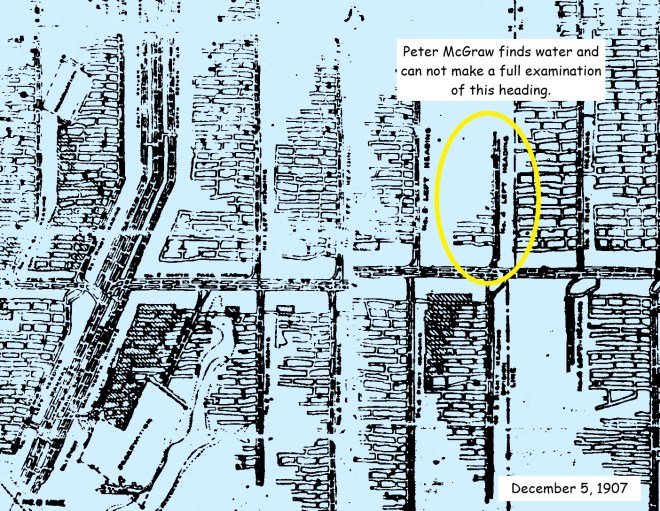
He finds water in 4th left so significant that he can’t get in there to properly examine the heading. (Inquiry)
Inside #6
22-year-old Lester E. Trader arrives for his fire boss shift around 6 pm. (Inquiry, McAteer)
Trader inherited his job when the previous fire boss got sick during Trader’s apprenticing. Trader lacked 3 years necessary experience, training, and certification for his official position so he was kept on the night shift so as to “not run into the inspector”. (McAteer)
Trader worked alone like most fire bosses. He led a horse drawn water cart to sprinkle the mine walls in order to dampen any renegade coal dust.
To check for dangerous gas levels, he used a Wolf Safety Lamp to check for methane. However, due to the size of #6 mine, Trader cannot check everywhere.
~7:00 pm
At the mines:
Libberato Delesandro works the night shift, “helping to get #6 and #8 through together”. (Inquiry)
Inside #8:
Tony Pasquaele arrives to work and drives the horse-drawn water cart in #8 through the night. “The watering carts carried large wooden barrels filled with 300 gallons of water; perforated ends of the barrels were plugged by wooden combs that could be removed to allow water to sprinkle out.” (McAteer)
As he is leading the horse and water cart, he notices that the heading is “a little dry” for this time of year. (Inquiry)
Tony is also responsible for pumping out any rising or standing water which had seeped into the mines. His pattern is systematic; he “would start the pumps then go water mines for a bit, and then would check back on the pumps every 2 hours to see how they were doing.” (Inquiry)
Inside #6:
Ludwig Strezelecki works at F face: 1st right, room 15. His task for the night involves working with his brother-in-law taking out stumps and finishing the headings.
Night
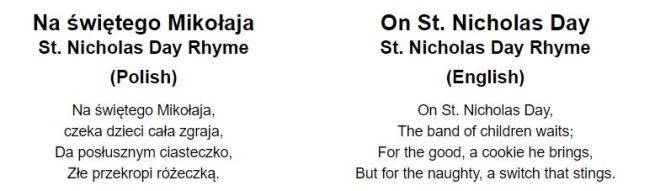
It is the eve of St. Nicholas Day for Italian Catholic and some Polish Catholic immigrants.
At night, the families gather around their coal stoves or fireplaces (if they are fortunate enough to have a fireplace) and tell stories, sing hymns, or verse simple rhymes about St. Nicholas De Bari.
Children leave their shoes lined up side-by-side next to the door, window, or hearth. If possible, some would place bits of carrot, oat, or hay inside as a gift for the trusty mule/white horse which traveled along with St. Nicholas as he delivered small gifts.
8:00 pm
In Clarksburg:
At the Bacon & Godfrey skating rink a “Who’s Who” Carnival is held. “Upon entering the rink, you will be furnished with a false head or some contrivance of that kind which will make it almost impossible for your mother to even know you. With everybody thus attired the big show will start, with everyone wondering who is who.” (CDT 12.5.07 pg. 1)
~10:00 pm
Inside #8:
Homer C. Palmer (electrician) arrives for his night shift.
Through the night:
Inside the mines:
The main ways of the mines are watered.
Fire bosses like Lester Trader and P.J. McGraw walk their respective mine checking for dangerous conditions in both #6 and #8.
Inside #8:
George Bice dug coal (pick work) on 5th right, 2nd north in #8
Inside #6:
Fred Cooper (motorman) sprinkled headings in #6. (Inquiry)
In Monongah:
Not long after the children have fallen to sleep, several parents quietly replace the bits of hay or carrot in their children’s shoes with a sweet treat, like candy or fruit, and a small present—typically a (gold) coin.
There are several reasons why Appalachians have their own special language about their land. The most prominent reason is that ‘proper’ English simply isn’t good enough to help with navigation. Those basic terms work just fine in the foothills and the flatlands, but deep in these ranges and forests we need to get a little more specific so we don’t end up on the wrong side of the mountain. So, we tend to make up our own words or adapt existing words to take on a new or more specific meaning which is why terminology will differ depending on where you go in Appalachia.
Terminology matters just as much today as it did in the times before GPS and vehicles. Mostly because this terminology is included in the names of many places, like Mill Fall Run, and if you lose your satellite reception (which will happen in certain parts) knowing your terminology can help you “get to where you need to get” all on your own just like the early settlers or those on the Underground Railroad.
The layout of Monongah and its surrounding area is a perfect example of the terminology and its relevance. I am a ‘visual’ person so I will use lots of pictures to get you familiar with our terminology as it applies to this little town, its people and the surrounding areas.
GEOGRAPHY
Land
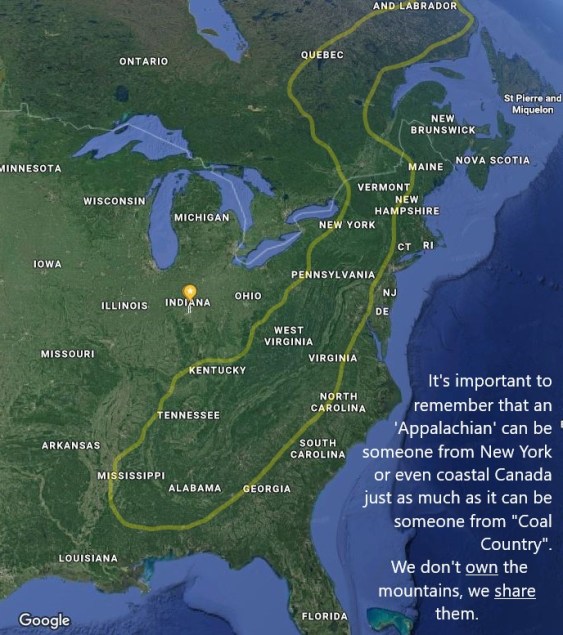
Well, just in case you didn’t already know, we are located in the Appalachian Mountain range which extends from the deep south all the way up into Canada on the east coast. West Virginia is the only state completely engulfed by this range. Even when we were part of Virginia, they still referred to us as “Western Virginia” and, basically treated us with the same indigence. We were those rugged, backwoods “Mountaineers” who lived off the land with only the very basics and enough to ‘care for our own’. The proper English folk of the Colonies had no use for us if they couldn’t profit from us so, the area was mostly neglected and remained severely isolated from ‘society’ until coal was discovered. By that time, we had developed our own complex language and various dialects to accommodate our environment. Despite the best efforts of the “Americanization” process of the early 20th century, that language still thrives today and it helps to know the very basics.
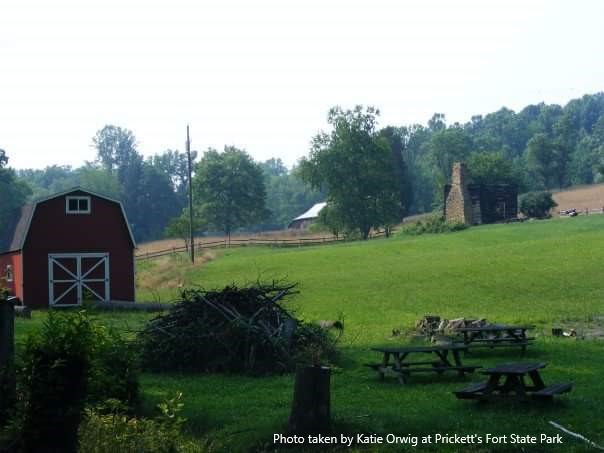
This photo is of the Morgan Cabin at Prickett’s Fort State Park only a few days after an arson incident when the old pioneer house was set on fire.
The Valley
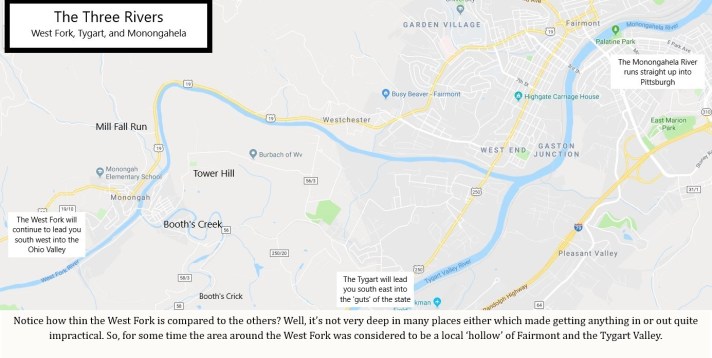
Valleys are elongated lowlands between other uplands along major waterways and typically play permanent host to major cities or towns. Therefore, they are more populated and hold most of the resources for the area. Monongah sits in a valley along the West Fork River. At the time all of the ‘official’ mapping and naming was going on, we were included as part of the Monongahela/Tygart Valley Region. This probably explains why most of Monongah’s earliest settlers got their land by tomahawk rights.
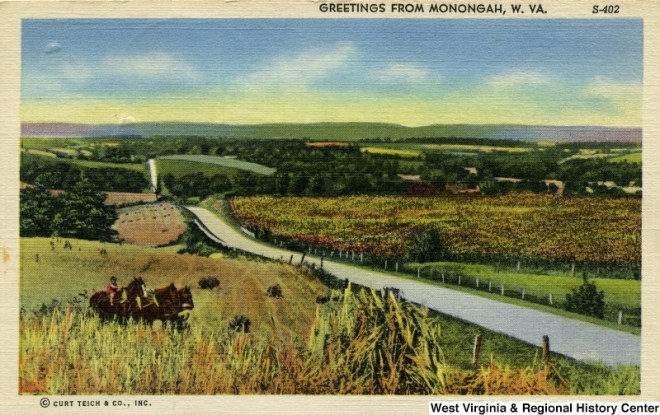
If you love history and old photos, I highly suggest browsing the extensive online collection of the West Virginia & Regional History Center at WV Dept. of Arts, Culture, and History
When it comes to the time of tales like ‘Coffin Hollow’, this place was still just a collection of isolated farmers in a small hollow known as Briar Town. Once transport to and from the hollow was established via railroad, bringing industry and a population boom to the area, her status was upgraded to valley and the hollow known as Briar Town became the town of Monongah – a suburb of the city of Fairmont.
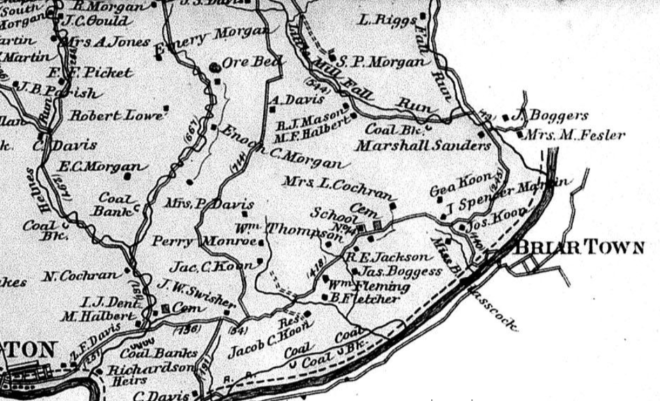
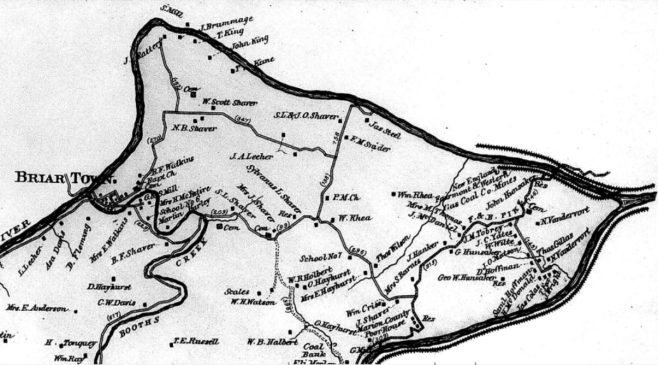
These are screenshots of a map of the area from 1886. The East side of Briar Town is in the Grant District. The West side of Briar Town is in the Lincoln District. Link to the website where these maps can be viewed or purchased are in description
The Hollow
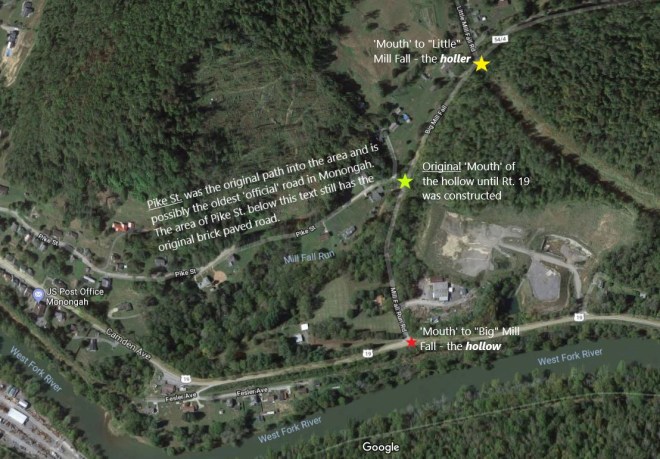
Hollowsarevalleys – an area of land that has been drained or irrigated over time by a water system which may or may not still exist; the second definition of the word valley. The key difference is that a hollow is located on higher ground within the landscape surrounding what is considered to be THEvalley. Though the ‘mouth’ of the hollow may be located in thevalley, it’s typically not the only way in or out. It’s simply the most direct way into the hollow from the main road or path which almost always follows along the main valley and its waterway, hence the term ‘mouth’.
It’s all about navigation.
The most important thing to know about what constitutes a hollow these days, is its road system. In a city, rather than walking all around the block to get to the next street, you may try to cut through an alley or ‘backstreet’ because the shortest distance between two points is a straight line, right? But, you will use caution because alleys are notorious for their potential dangers and a wrong turn can send you in the worst direction. Hollows are just like alleys.
Hollows can usually be determined by the width and conditions of their roads. An existing and mapped road wide enough for two cars to pass side by side, though it may be a tight squeeze, is your typical hollow road. The ‘mouth’ of the hollow is often paved but it doesn’t always stay that way throughout. Main routes which pass through hollows are paved, painted, and mapped by Google Earth like any typical road these days.
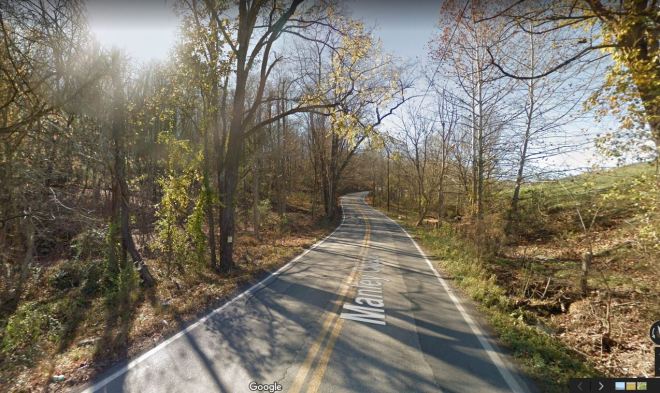
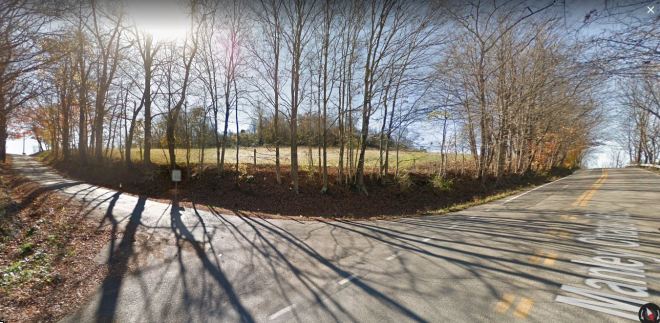
Manley Chapel Rd. is a hollow road which also functions as a main route.
However, Country Roads, like the CR56s in and around Monongah, are a hit-or-miss; if they are paved, they probably don’t have lines as they typically get the most minimal of maintenance and the Google Maps car probably can’t get clear pictures on such bumpy roads. A real Country Road is more like a permanent scab of compressed dirt and gravel where the space for 2 cars means someone’s tires are riding the ditch.
If you watch this YouTube video of Hall Family Roadtrips you can see first hand how easy it is to get mixed up on these roads without some kind of navigating system or existing knowledge. I love this video for so many reasons:
Being from this area, the first part of this video pleases me so much as the driver ‘hits every light’ at just the right time along Fairmont Ave. You don’t realize how rare that is until you’ve worked food delivery service in that place.
It is a brilliant live example of what I’m trying to explain. If you look at the far right of the map above, where the yellow line turns over the word “Fairmont”, and start this video at 2:06 you can follow along on the map as they drive. Except…
This poor driver gets sucked into the “Country Club Trap” at 3:28. Now, this is great for you and me because it gives you a glimpse of what I mean by “hollow-holler-hollow” road systems. Notice how the road changes with its surroundings. The deeper you get into the hollow the more it starts to resemble a holler as the road narrows, the lines go away, and forest surrounds you more than residences.
Snapshot from the Hall Family video
Then, at 4:40, we get dropped back out next to the West Fork River on Rt. 19, exactly where we would have ended up minutes earlier if the driver had just stayed straight at the light and not turned right onto a hollow/holler road.
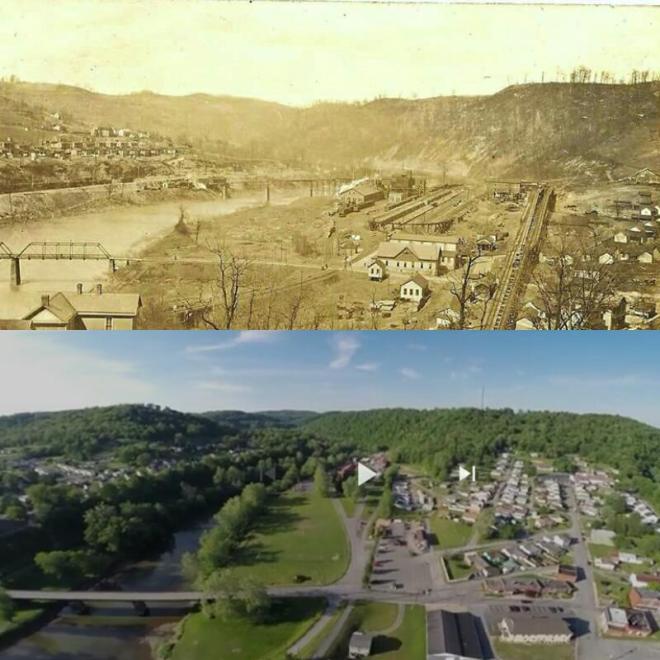
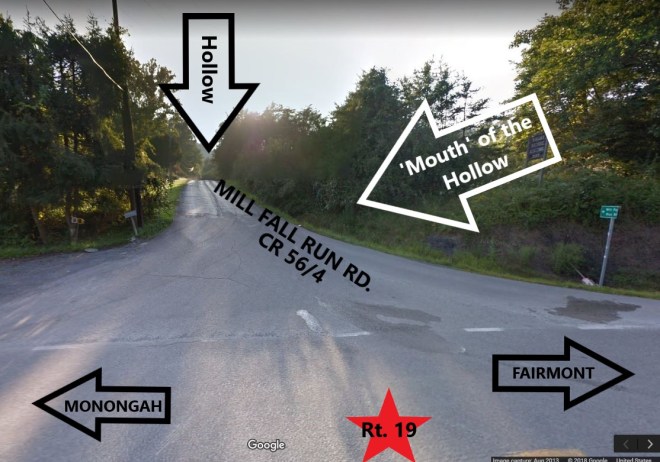
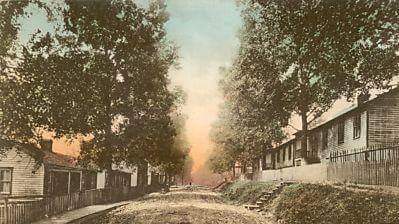
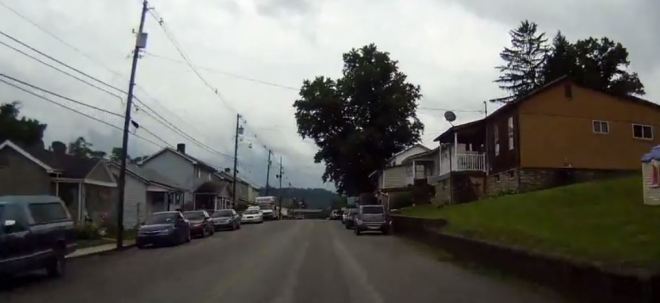
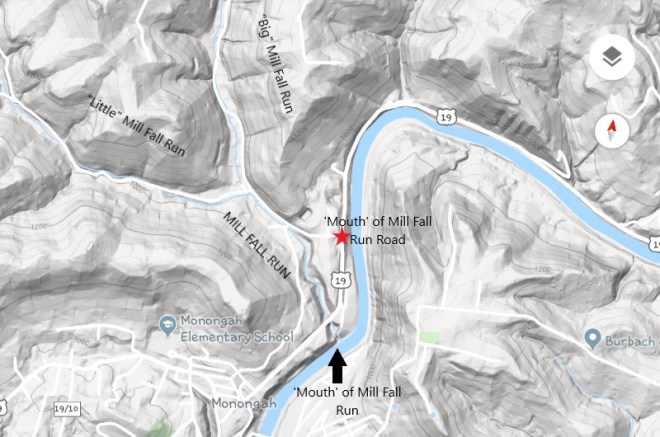
From there, you are on your way into the west side of Monongah. At 5:20, the driver passes the ‘mouth’ of Mill Fall Run on the right. At 5:32 of this video, you pull into Monongah where Rt. 19 is known as Camden Ave (because it predates the existence of Rt. 19) and it really is a blast from the past. Below is a postcard of Camden Ave around the turn of the 20th century on top of a snapshot of Camden Ave today.
Snapshot from Hall Family video
At 5:50, the driver stops to turn on GPS or at least check a map right smack in the middle of Monongah, which isn’t uncommon. Monongah itself is so twisty and turny with so many ins and outs that travelers tend to get wary about making another wrong turn beyond this point. We have a saying that, “all roads lead to Monongah; you just gotta know where to turn”.
Hollow roads are sometimes several miles long and if you can navigate these Country Roads just right they can be a shortcut to the other side of the county, they can connect to other hollows, or they can take you to someplace even more awesome…
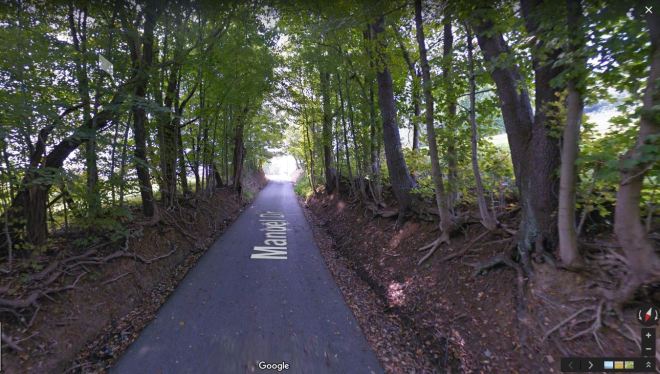
Along Manley Chapel Rd., another road branches off to the left. This is Manuel Dr. – a holler road.
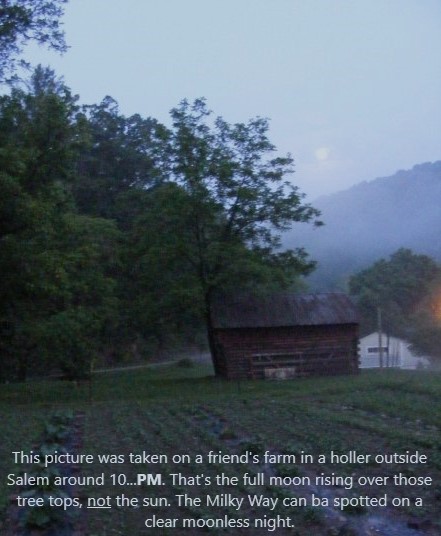
A holler is a very special place. One can only get to a real holler in a vehicle by correctly navigating the hollow. Sometimes you can only find the holler if you have been personally invited by its occupants as only they know the ways in and out. Other times, you may need to hike, bike, and/or boat your way there.
The holler is just an area past the hollow. The holler is a far more isolated place because it sits deeper in the mountains, typically below the hollow but still above the valley and can be impossible to navigate. In the right areas of the state, you can find hollows or hollers with a full rapid river, like Ten Mile in Buckhannon. In the greater Monongah area, our hollers are more likely to have nothing more than a crick which may be elevated to creek status only after heavy rains.
Where valleys typically have rivers or streams, a hollow may have nothing more than a run or brook/creek, and a holler will usually only have a crick– which, in some cases, is only around after heavy rains as it is nothing more than a natural drainage path for runoff rainwater.
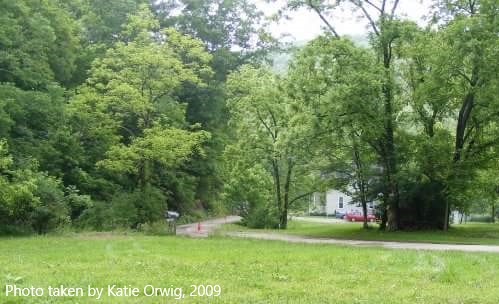
Manuel Dr. is a beautiful example of a holler road
You may have heard that the holler gets its name from the fact that all one must do to talk to your neighbor on the adjacent hill is simply “holler” at them. Well, that can happen in hollows too. That factor is more of a coincidence which just helped the term stick as a general title. True, in the average holler you can talk to a neighbor over hundred of yards away as if they were on your own porch, but this isn’t true for all hollers or hollows.
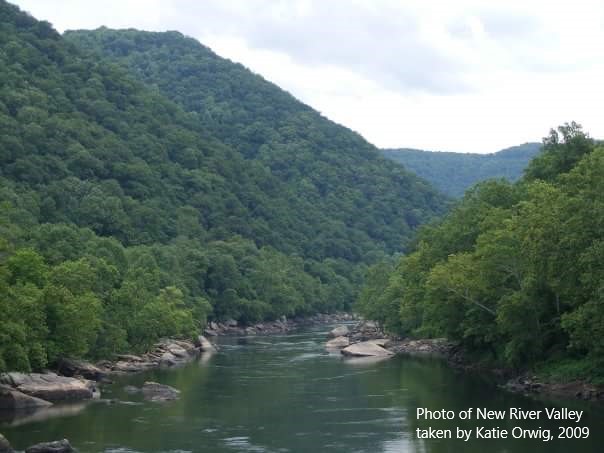
In a steep valleyholler with a large waterway, like those in the southern part of the state near the New River Gorge, it doesn’t work as well. The white noise of the flowing river paired with the air currents of the valley can ‘take your words with the wind’. However, in small ‘backwoods’ hollers where the natural landscape mimics that of a Greek or Roman amphitheater, voices or other sounds can carry with such ease that hollerin’ is unnecessary overkill.
In the early years of my childhood, before the days of 24 hour news channels and shows like America’s Most Wanted and Unsolved Mysteries, being a kid meant being home by the time the streetlights came on and always staying within “hollerin’ distance”. The landscape of any area will determine what counts as “hollerin’ distance” – the distance a good hearty shout will travel across the landscape to the ears of another person. Basically, if the adults couldn’t hear you and you couldn’t hear them, then you were out of “hollerin’ distance” and you were in real trouble.
The Waterways
We have the same types of terms everyone else has for their natural water systems. But, naturally, we have a hierarchical system in place so we can get quite specific with them too as it is another special part of our navigation system.
Though West Virginia can boast many lakes, both natural and man-made, our most important water sources are our rivers.
The River
Rivers were the main navigation tool in the mountains from the earliest days. The Ohio River makes up our western most border, the Potomac defines our eastern panhandle, but it is the Monongahela River which is believed to have flowed the first of the indigenous groups (Native Americans) into the north central mountain area from the Delaware region centuries, possibly even thousands, of years ago.
Monongahela is a very specific and descriptive word on its own. Surprisingly, Wikipedia has the best and most concise description of this word:
The Unami word Monongahela means “falling banks”, in reference to the geological instability of the river’s banks. Moravian missionary David Zeisberger (1721–1808) gave this account of the naming: “In the Indian tongue the name of this river was Mechmenawungihilla (alternatively spelled Menawngihella), which signifies a high bank, which is ever washed out and therefore collapses.”[11]
The Lenape Language Project renders the word as Mënaonkihëla (pronounced [mənaoŋɡihəla]), translated “where banks cave in or erode”,[12] from the verbs mënaonkihële “the dirt caves off” (such as the bank of a river or creek, or in a landslide)[13] and mënaonke (pronounced [mənaoŋɡe]), “it has a loose bank” (where one might fall in).[14]
Monongalia County and the town of Monongah, both in West Virginia, are named for the river, as is the city of Monongahela in Pennsylvania. (The name “Monongalia” is either a Latinized adaptation of “Monongahela” or simply a variant spelling.)
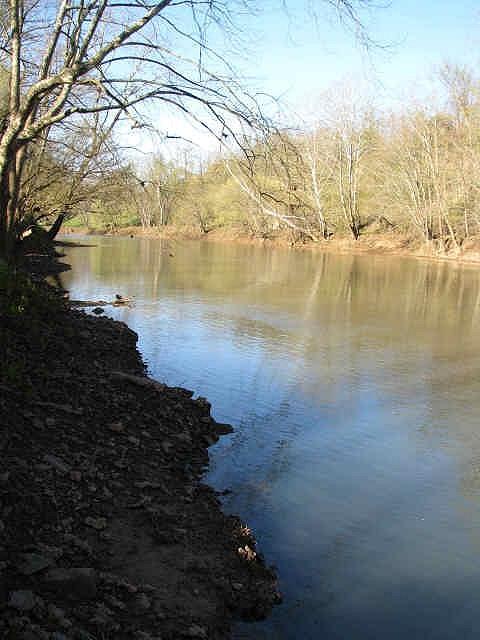
A “high” “loose” “falling” bank along a river where the dirt “is ever washed out” and therefore “caves in” and one treading along it “might fall in” to the river below. Yep, sounds like the West Fork in Monongah!
Oddly, Monongah does not sit along the Monongahela River. She is tucked away in a little and hard to access valley along the West Fork River which was only passable by anything more than a small boat during flood seasons until the railroad came along. However, her luck of having such abundant coal reserves and being so close to the Monongahela River, yet still so very isolated from ‘society’ in Fairmont, made her the “gem” of the Fairmont coal field.
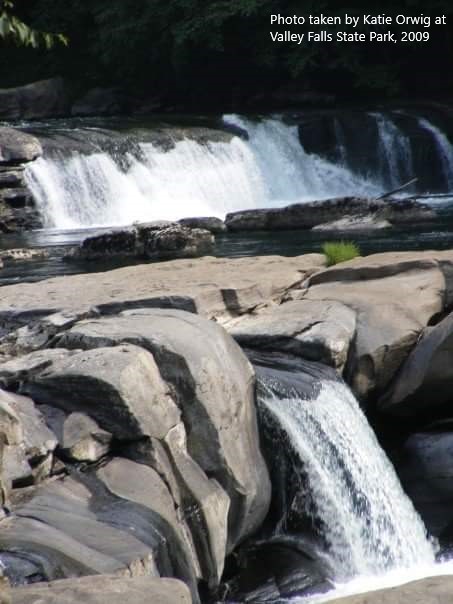
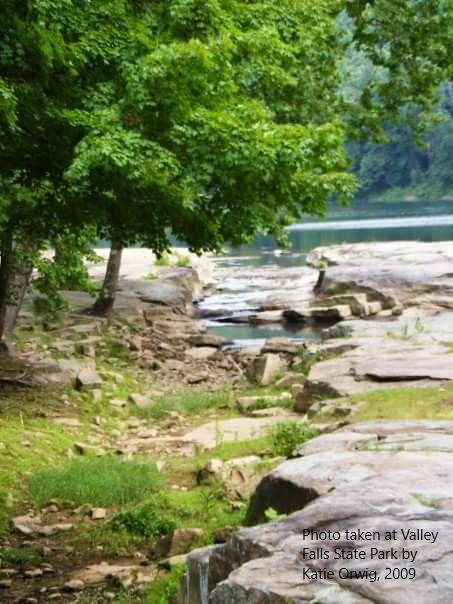
Some rivers are calm, others are rapid like parts of the Tygart Valley River which flows through and continues to carve the falls at Valley Falls State Park
The Stream
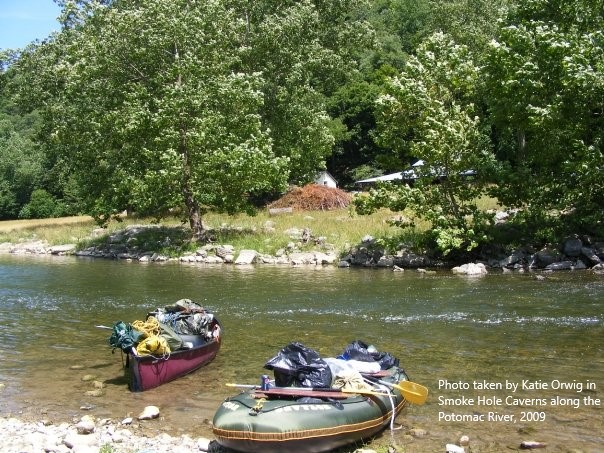
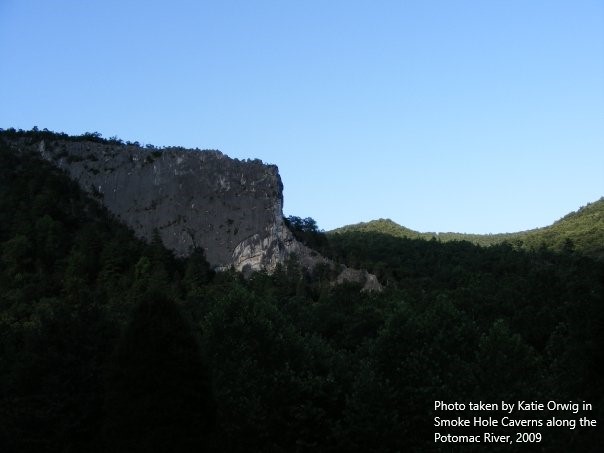
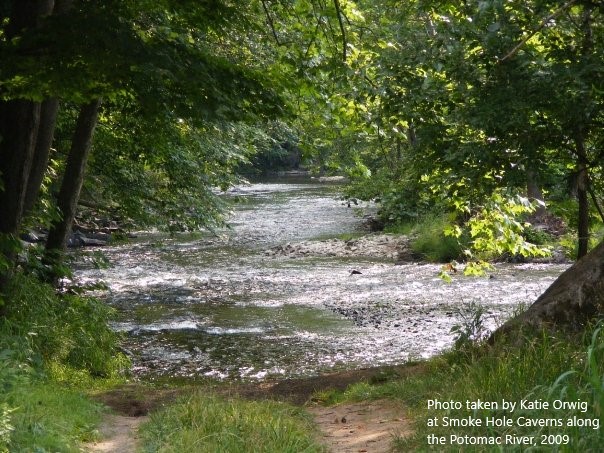
Streams are just smaller and more narrow rivers. In the mountains, a stream could be a few different things. It could be the classification given to a section of a major river which is just so low at a certain point that the river bed can be seen and the water literally streams at a slower rate, causing the river rocks to create tiny rapids, like in the photo of a section of the Potomac River above. This could be the norm for certain parts of rivers due to their natural elevation or it could just be as a result of drought and, therefore, only temporarily low.
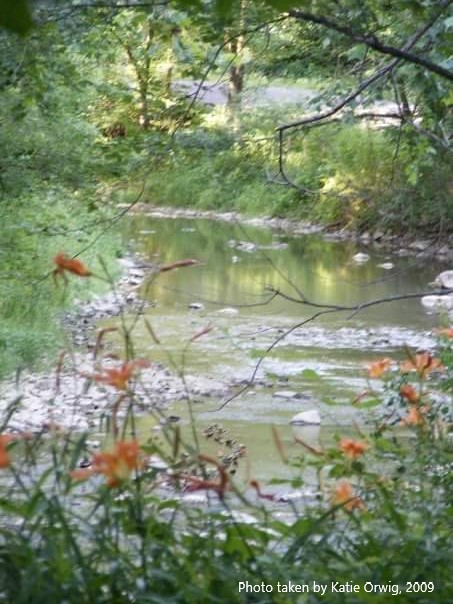
The photos above are an example of a stream being a small runoff branch of a larger and more powerful river nearby. In areas around the Valley Falls portion of the Tygart Valley River, these little streams can be found cutting into the landscape here and there along the banks. They often have a steady supply of water but some will travel up the landscape and then they could turn out to be something else…
The Run
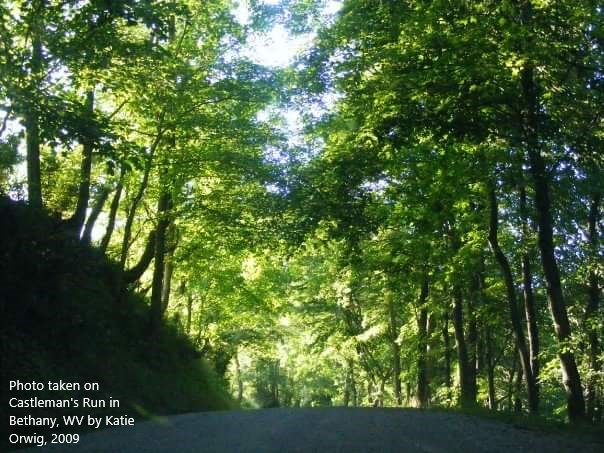
Castleman Run branches off of Buffalo Creek in Bethany, WV. This is where I would come to study while attending Bethany College.
A run is a just a small stream which holds a very special quality: its path stretches up from the main river into the higher landscape surrounding the main valley. A run is sort of half stream-half brook; it has a ‘mouth’ in the valley fed by the flow of the river like a stream but, it’s areas of higher elevation are natural rainwater runoff paths which act more like brooks carrying rain water down to the ‘mouth’ to be dumped back into the river. As a result of this natural drainage system, runs can be notorious for flash floods.
A run can take you deeper into the landscape or lead you out which explains why many hollows follow along runs- it runs water in a more direct path from higher elevations to the valley below. That is also why the word “run” is typically included in the names of places like this but, at one point, runs in these mountains took on a very special alternative meaning to certain people.
Due to their nature, runs were very significant in the times of the Underground Railroad when survival or freedom meant knowing that you need to follow the brook to the run through the hollow then wait at the ‘mouth’ to the river in the valley. Follow the creek or crick by mistake and you could end up going deeper into the landscape and fall into the hands of the wrong neighbor who will have no qualms about letting bounty hunters know about this secret little ‘through-way’ for escaped slaves.
The Brook/Creek
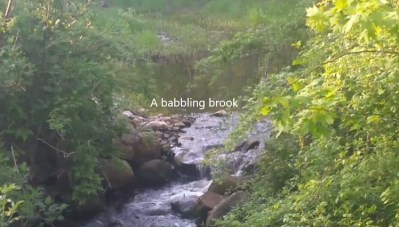
Brook is often interchangeable with creek but, again, in the mountains we have to be a little more specific sometimes. Brooks and creeks are just small streams. They can be their own entity and carry water from a highland directly down to the valley below or they can feed into a run or stream. There is no exact science in determining the difference between a brook and a creek other than observing elevation and even that is hit-or-miss depending on the landscape.
However, if you had to try and take a guess and determine if you are beside a creek or a brook the first thing to do is look and listen to the water. Does it look like it is flowing with gravity? Does it sound like a cup that’s slightly overflowing in your sink, the little trickle of water falling down sort of ‘babbles’ as it runs down and hits the bottom? Then it’s a probably a brook.
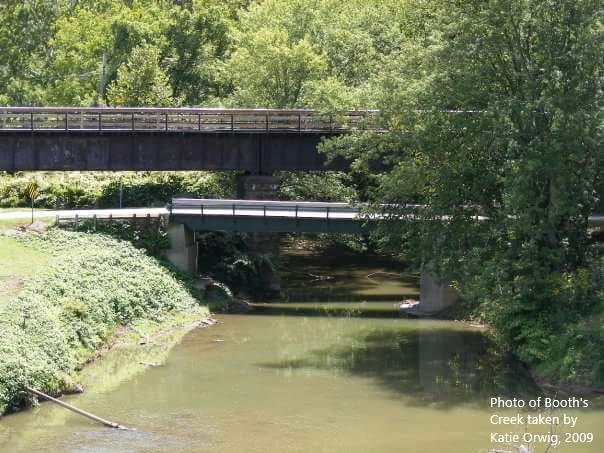
Or, is the waterway rather level for the most part? Does it serpentine through the landscape, occasionally rising and falling while it twists and turns? Does it sound a little more like water pouring out of a hose than a container overflowing? Then it’s probably a creek which is typically found on slightly lower elevations and it’s flow has less to do with gravity and more to do with water pressure.
The Crick
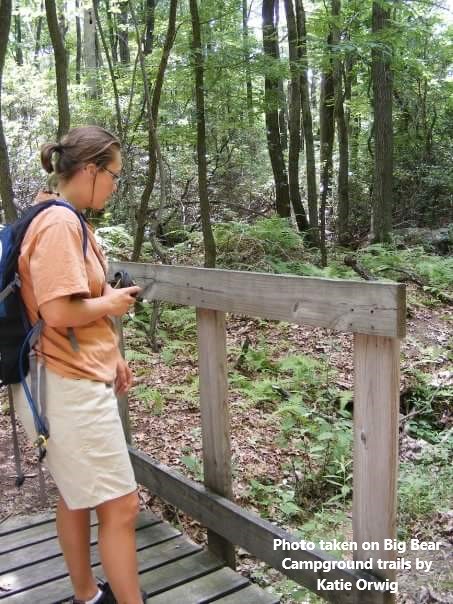
Last but not least we have the crick. Now, cricks aren’t always there in the form of water but their path is still a permanent gouge in the landscape. More often than not, cricks only really flow after heavy rains.
My friend, Becky, evaluating the crick below. If you look closely, you can see there is some water in there but the gap that remains in the land is the real reason for the footbridge














 The Monongah Disaster