

“Mining experts pronounce the rescue work in this disaster the most thorough ever provided under similar circumstances, and friends and relatives receive every courtesy and consideration.” (NYTb 12.8.07 pg. 3)
~10:00 pm
At the morgue:
“One hundred and twenty-five bodies had been brought to the surface tonight and the dozen undertakers from this and surrounding towns, who have been on duty since the catastrophe had the bodies washed and made as presentable as possible in an improvised morgue, into which one of the nine buildings has been converted.” (RP 12.8.07 pg. 1)
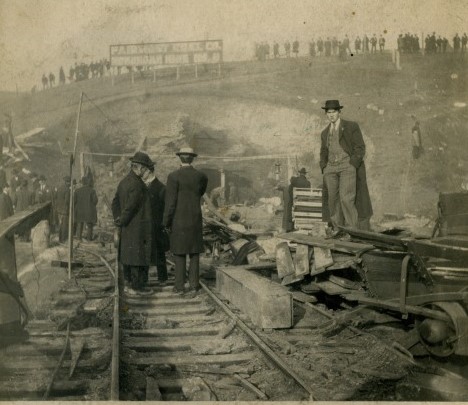
At the mines:
Floyd W. Parsons spends the night working “in the wrecked mines” (FWV 12.10.07 pg. 2)
Rescue efforts shift to recovery efforts as teams enter, explore, and exit finding only dead bodies.
“The condition of the bodies thus far recovered is horrible; many are dismembered, some fearfully crushed and the rest blackened and burned beyond recognition.” (DASB 12.8.07 pg. 1) (LAH 12.8.07 pg. 1) (ES 12.8.07 pg. 1)
“A score or more of men of rescuing parties are in a critical condition tonight from inhaling black damp, and several of them are not expected to live.” (DASB 12.8.07 pg. 1) (LAH 12.8.07 pg. 1)
In Monongah:
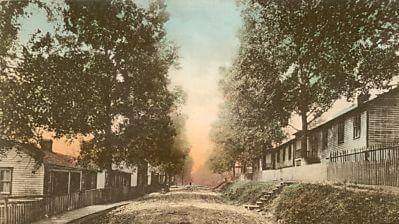
“In certain vicinities of Monongah the newspaper representatives visited house after house in rotation and found that in every home there was grief and mourning as a result of the terrible catastrophe. In some instances, it was the father who left his family at 7 o’clock yesterday morning or a son or brother to enter the unsuspected death trap. When this grief and suffering is witnessed human tongue cannot describe the scene of horror and suffering that is being witnessed here.” (FWV 12.9.07 – pg. 7)
~11:00 pm
(Out of Pittsburg) “A special to the Gazette-Times from Fairmont W. Va., says: ‘That at least ten members of the heroic band of rescuers will die of gas poisoning was admitted tonight by the physicians who are attending them as they are drawn out of the mines unconscious…” (DASB 12.8.07 pg. 1)
At the mines:
Telephones are established between both mines and the company office. There is a telephone at foot of the slope in #6 and a telephone is regularly moved along the main heading as work advances in #8. (McAteer)
“The gases are still strong in the No. 6 mine and scores of rescuers have been overcome and carried to the hospitals. With the exception of Charles Cain, the company’s inspector, one of those overcome is in a serious condition.” (WH 12.8.07 pg. 1)
Chief Mine Inspector Paul and all of the State District inspectors have arrived and taken over the rescue and recovery work. 6 inspectors are assigned to each mine – 3 for each shift. They will serve in an advisory capacity, oversee the progress, and will assist in exploring and locating bodies. (McAteer)
Work forces are formally organized into 3 crews of 6 men each and rescue crews are changed out regularly. A squad of 4 men with a leader did disinfecting.
The workmen are composed of volunteers from other mines.
About 40-50 men are employed on each shift. Each man is furnished with a Wolf safety lamp to test for foul air; his name is taken down, assigned a number and he is given a tin check bearing that number. On entering and leaving the mine his number is recorded; no one is to be given a check unless he is a workman or an official. (McAteer)
Shifts in #8 were 8 hours long. Shift in #6 were 6 hours long. As work progressed in #6 it took about an hour to walk from the surface to working places, meaning the shift in all was still 8 hrs. (McAteer)
“Only the strict discipline of the officials has prevented many of the men from rushing into useless danger. The best men in the company’s employ, and under the direction of the State mine department, are watching the work with a view to protecting those who are searching for the dead.” (WH 12.8.07 pg. 1)
“Starting tomorrow, a new system of rescue work will be inaugurated at both mines. It is the intention to dispense with the services of the miners who have been employed in either of the mines. In their places there will be about 200 expert mining men from Pennsylvania, Ohio, and West Virginia, all of whom have volunteered. These men, under the direction of Chief Mine Inspector Paul of West Virginia, who arrived today from Charleston, will be more fitted to render effective service in the recovering of the dead. The reason for this is that conditions now existing in the mines are extremely dangerous, and it is feared, should inexperienced men make an incorrect move, a second explosion would occur, which would completely wreck the mines.” (ES 12.8.07 pg. 1) (BDT 12.8.07 pg. 1)

More on How Death Gloated!
 The Monongah Disaster