

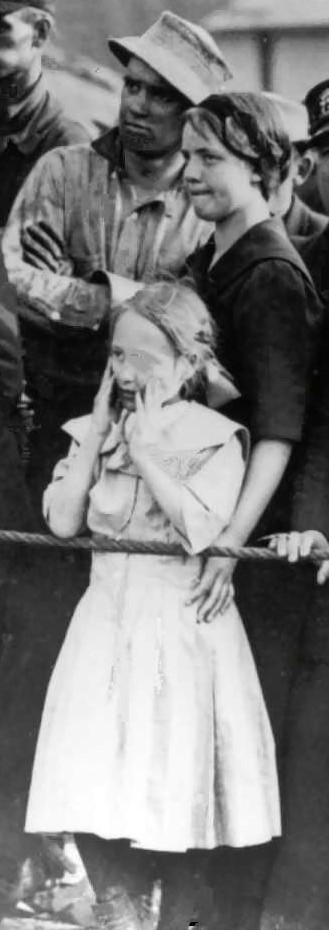
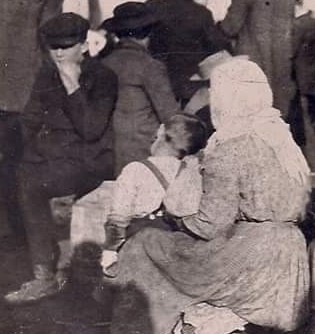
“Although rain is increasing the work of the rescue parties, it brought a merciful relief from the pitiful scenes at the exits in the last few days. It drove indoors many of the grief-stricken relatives and friends of the victims who crowded about the mouths of the shafts waiting for the bodies of the loved ones to be restored to them. All the soft earth about the mines was turned into a thin mud by the downpour, and although some of the stronger of the watchers remained through the forenoon, nearly all sought shelter later and awaited in their homes the summons to come and claim their own.” (RP 12.10.07 pg. 1)
~12:00 pm
At the mines:
Recovery is becoming more horrific and tedious as bodies now have to be carried a distance of a mile or more underground just to get to mine mouth. As recovery of bodies gets swifter, the system of identifying and counting the deceased leads to more confusion over the total number of bodies “found” and those actually “recovered” and when. (McAteer)
Between 170-180 bodies total have been taken out by noon, “…all of them except thirteen having been recognized and were either buried immediately after coming out or turned over to relatives where the corpse was in shape to be seen.” (CET 12.11.07 pg. 1) (News)
“…with large additions to the rescuing force it is hoped to have the mines cleared very soon.” (ES 12.11.07 pg. 1)
“It is stated today that there is every reason to believe the number of the dead will reach four hundred.” (CET 12.11.07 pg. 1)
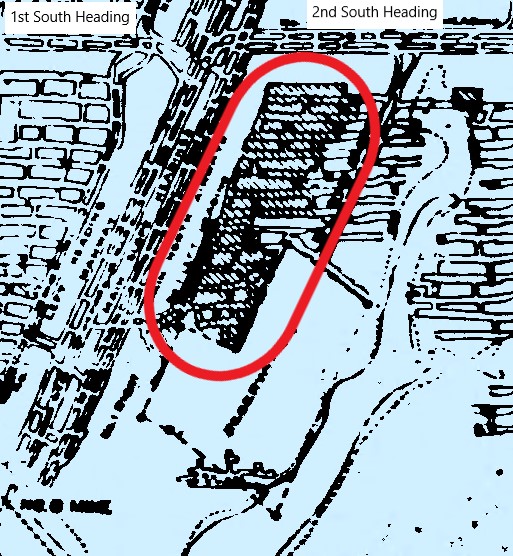
In an interview, the head of a rescue crew tells the Fairmont West Virginian: “#8 main from the opening to the bottom, a distance of about 1 mile in the mine, is absolutely clear of wreckage or falls. About the only obstruction of any amount in this mine is quite an extensive fall in the first left of the second south main working. This fall is about 100’ in length and about 4’ deep. Quite a few rooms were discovered with falls.” (FWV 12.11.07 pg.1)
In Fairmont:
Tom Donlin’s mother (who lives on Gaston Ave between 3rd and 4th street) knows nothing of the disaster. Her friends have kept her at home and kept all news from her “but in spite of all of this care Mrs. Donlin knew there was something wrong.” Her son usually came to visit every few days and was due for his visit on Friday. Since he didn’t show up, she was suspicious that something was not right. Father Boutlou informed her of the death of her son at noon. 2 years ago, another of her sons, John, was killed in a railroad wreck near Buckhannon. (FWV 12.12.07 pg.1)
At some point during the afternoon
In Monongah:
5 men showed up in town and “represented that they were workmen; they were supplied with rubber boots…and some other things that they needed to make up a fair disguise. These men then started to see how much good victuals they could consume. They were so successful with their scheme they began to boast about it. They did not stay long in Monongah after they were found out. They were given the grand bounce.” (FWV 12.12.07 pg.1)
Francesco A Cirmo, clerk at the local post office in Fairmont, is at Monongah participating “…in taking the census…” (FWV 12.11.07 pg. )
“Fifty-seven more bodies were taken out of the ill-fated Monongah mines 6 and 8 today; the larger number of these having been recovered from No. 8. This brings the total number recovered up to 184.” (CDT 12.11.07 pg. 1)
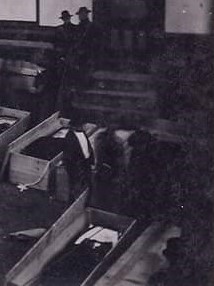
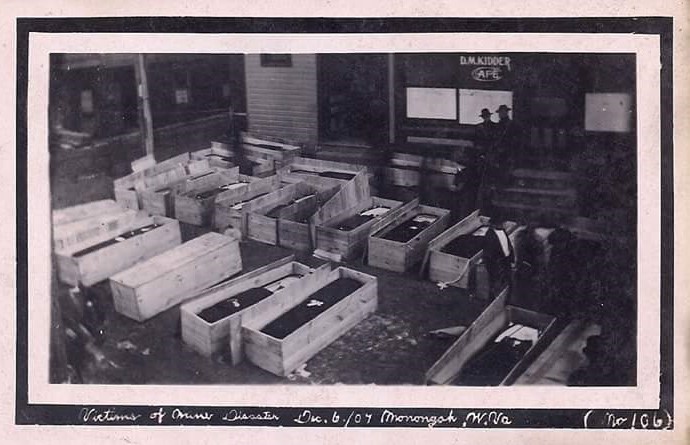
“These bodies many of which are badly burned and some mangled, have not all been identified as yet. The undertakers are working hard in preparing the corpses for burial and placing them in caskets. Those not identified are placed in the rooms provided for unidentified bodies where they are viewed.” (CDT 12.11.07 pg. 1)
In Fairmont:
“It is now quite apparent that a large amount of money will be sent to Fairmont for the relief of the Monongah sufferers. Many thousands of dollars have already been deposited for this purpose and word comes from various cities of donations in large and small amounts.” (FWV 12.11.07 pg. )
“The Union Relief Association, an organization of Fairmont women from the various churches of the city, is doing noble work in providing for immediate needs of the wives and children of the victims and the General Relief Committee will use the larger sums of money in making provision for the families in a more comprehensive manner a little later on.” (FWV 12.11.07 pg. )
“This is a great work and ought not be done in a hurry. Needs not now thought of will probably develop a little later and then it will be a good thing to have some money to meet them. Let the gifts continue to be made for remember the needs of 300 widows and 1,000 orphans are great.” (FWV 12.11.07 pg. )
Dr. D.C. Duncan of Cameron informs Mayor Arnett of Fairmont that he offers 2 houses, rent free, to Monongah sufferers: “I have two small houses of two and three bedrooms that I will let some poor woman that has one or two children have to live in two or three months free of rent to help them along till spring. If they are able and willing to work they can get lots of common work such as washing to do to help them along. You will please let me hear from you if there is that would accept the offer.” (FWV 12.13.07 pg. 1)
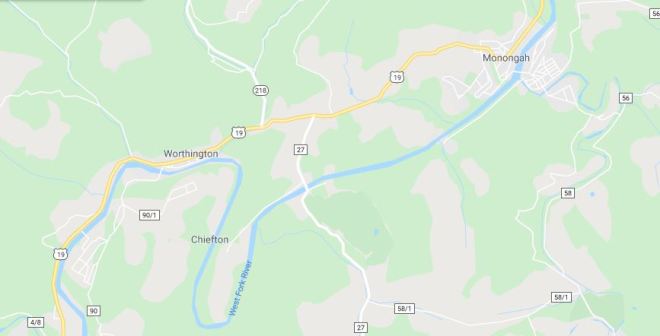
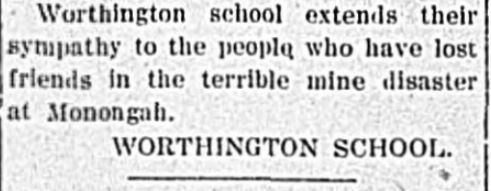
In the next town south of Monongah:
South east on the state border:
The Watson school in Pendleton County donates the proceeds from a box dinner they held Friday evening. “The proceeds though needed for the school’s new library was given to the Monongah sufferers by a unanimous vote of the pupils. An openhearted, willingness to relieve want and help the distressed has become a prominent characteristic of our civilization. No better place to teach the brotherhood of man than in the public schools.” (12.11.07 pg. 2)
Further south in Charleston, WV:
The Children’s Home Society of WV, located at Charleston, announce they “will care for all homeless children and orphans that may be committed to their care.” (FWV 12.11.07 pg. )
~2:00 pm
“At 2 o’clock, 212 bodies had been recovered.” (ETR 12.11.07 pg. 1)
“Of forty-four bodies taken to the morgue about 2 o’clock this afternoon, none have been identified.” (CDT 12.11.07 pg. 1)
~3:30 pm
In Fairmont:
“The cash contributions up to this time total $40,000.” (ES 12.11.07 pg. 1)
At the mines:
At Press time today there were 197 bodies that had been brought to the morgue and 25 bodies were ready at the mouth of the mines to be brought over. This makes 222 bodies that have been taken out of #6 & #8. (McAteer)
“Of the fifty bodies taken from the mines in the past twenty-four hours a majority are so mangled and decomposed as to render preparations for immediate burial imperative and many were sent direct from the mines to the graveyard in compliance with the order of the county board of health to prevent disease.” (BDP 12.11.07 pg. 4)
Rescue teams have not yet made any extensive efforts to clear the many roof falls in the mines and many bodies still remain trapped underneath. (McAteer)
Inspectors sent from Ohio, George Harrison and Ebenezer Jones, go into the mines for the first time. (McAteer, Inquiry)
Inside #6:
The bottom of #6 slope has been mostly cleared of debris from the wrecked coal cars and repeatedly examined. The line to the left of the main heading has also been cleared but men are still working on cleaning up wreckage in other areas of the mine. (McAteer) (News)
~5:00 pm
“A steady rain has been falling here all day, adding to the discomfort of the rescuers and making the recovery of the bodies more difficult.” (BDP 12.11.07 pg. 4)
Inside #8:
The body of John M. McGraw, pit boss in #8, is found in F Face, where the mines connected – “evidently going from one mine to the other.” (FWV 12.12.07 pg.1)
~5:30 pm
At the morgue:
John McGraw’s identity is confirmed by friends and by papers in his pocket. “Body was in fairly good state of preservation. Remains taken to Clarksburg for interment.” McGraw was well known and the president of First Regiment Band and had been a member since its organization. (FWV 12.12.07 pg.1)
~6:00 pm
In Monongah:
Bishop Donahue has “instructed the various priests ordered to the scene to remain on the ground until all the bodies have been recovered.” He returns to Wheeling where he will begin working on plans to assist placing the children in orphanages if necessary. (FWV 12.12.07 pg. 1) (News)
Donahue makes a statement that he is still uncertain how many orphans will be put into his care “owing to the grief and prostration of so many widowed mothers and his reluctance to as if they will part with them. He thinks however the number will be large.” Should there be more children in need than the current facilities can handle, Donahue says he “will lease a separate home for them and later build.” (FWV 12.12.07 pg. 1)
More on How Death Gloated!

 The Monongah Disaster