Friday, December 6, 1907, 10:15 am – 10:29 am

10:15 am

Outside #6

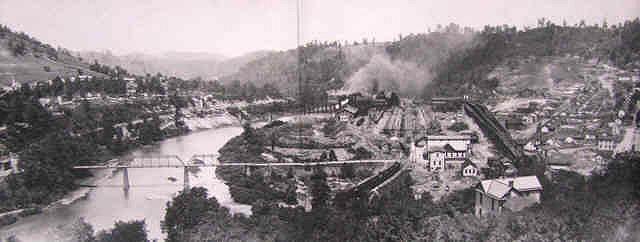
J.H. Leonard is just outside of the fan house and watches the trip of coal cars come out of the mine mouth, pass by the derailing switch, and begin to travel up the trestle toward the tipple. (McAteer, Inquiry) ◊
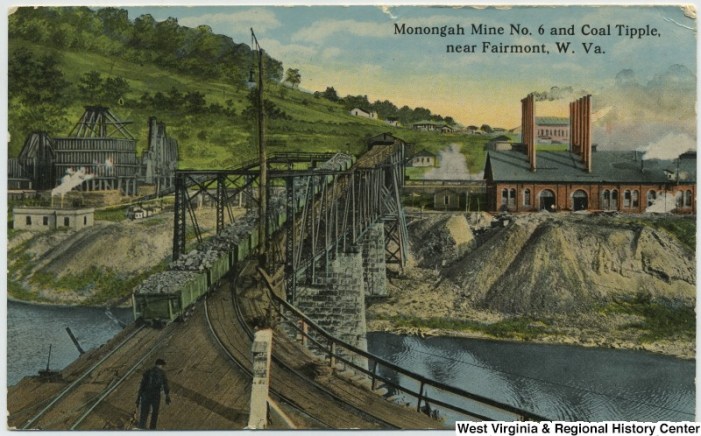
post card - owned

10:19 am

In East Monongah:

William Finley is standing on the street by the coal company’s office at the south side, not far from #6. (Inquiry)

10:20 am

Outside #6

Nick Smith is working at the forge in the blacksmith shop. (Inquiry)

Inside the fan house, the gauge for the fan pressure rises .4 inch. This is normal, typically caused either by general workings vibrations or the loaded trip of cars going, “with and against the current” of air being pushed through the mines. (Inquiry, Victor)

In Traction Park (between #6 and #8):

George Bice is walking down to the Traction Park interurban station to catch the trolley into Fairmont. George is a tracklayer in #8, but he is not scheduled to work today. (Inquiry)

Inside #8

Orazio DePetris notices a fire boss come into his area for a few moments and then leave. (Inquiry)

Angelo DePetris has just finished putting in a shot and begins picking from the roof. (Inquiry)

Peter and Stan Urban sit down to eat some lunch. (Inquiry)

Outside #8

Lee Curry, the stationary engineer, just finished dropping a trip of empty coal cars into #8 mine and has stopped it still. (Inquiry)

Carl Meredith is on the same loaded track, looking toward the mouth of #8 mine. (Inquiry)

On the opposite side of the river:

E.P Knight, #6 tipple foreman, is in the shanty under #6 tipple. He is talking on the phone with John Talbot in the shipping department discussing coal cars, or probably the lack thereof. (Inquiry)

Pat McDonald is walking on the haulage bridge, facing the mouth of #6. (Inquiry)

Outside #6 on the trestle:

The trip of cars gets stuck at the knuckle of the tipple; the rear car is about 50’ from the knuckle. (Inquiry)

ME66

10:21 am

A warning light in the engine room, connected to the main current line, which indicates that the train of cars is in motion turns off. (McAteer, Inquiry)

10:25 am

Outside #6

J.H. Leonard watches the stuck trip of cars and waits by the derailing switch. (McAteer, Inquiry)

Luther Toothman is on #2 tipple (directly opposite of #6). (Inquiry)

10:26 am

Christina Cerdelli is standing in the door of her home. (Inquiry) ◊
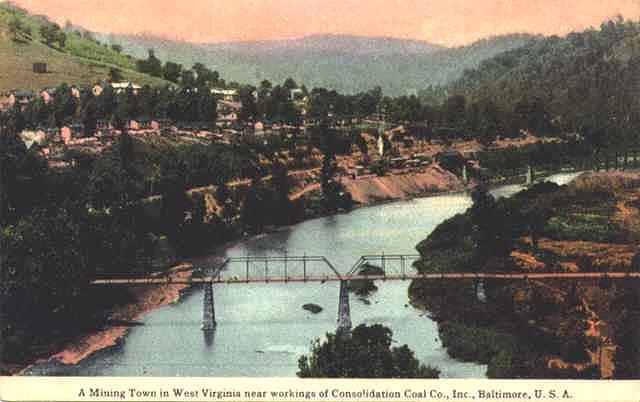
MONONGAH POST CARD

10:27 am

Levi Martin is at his home on Willow Tree Lane (just past Thoburn post office, above and behind #8). (Inquiry)

10:28 am

On the West side of Monongah:

George Bice reaches Traction Park interurban station. He is about 330 feet from #8 and ¼ mile from #6. (Inquiry) ◊
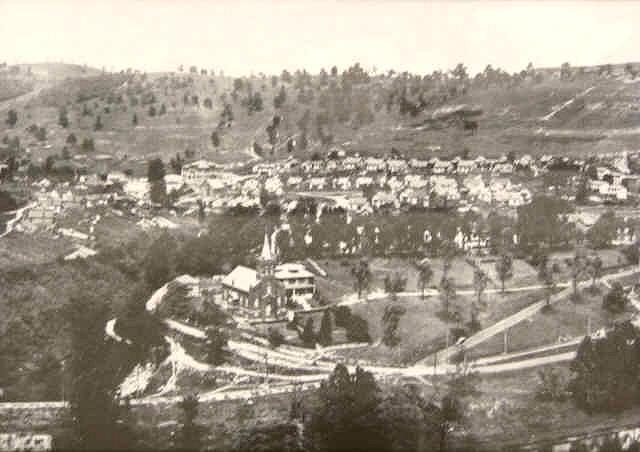
westside

On the East side of Monongah:

George Peddicord is walking onto the Iron bridge with buckets of chains from the East end of town. (Inquiry) ◊
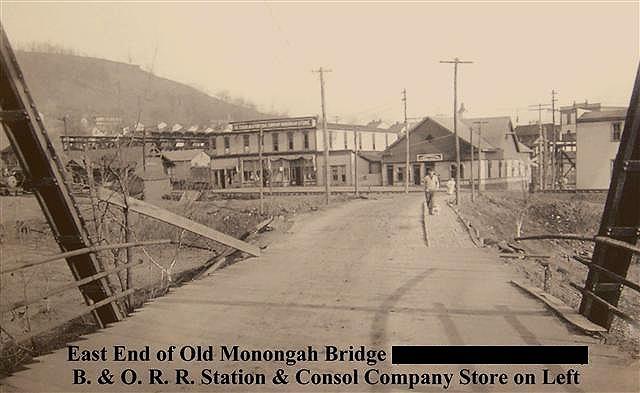
ME91

Outside #6:

Will Jenkins has just finished replacing one shoe on a horse in the blacksmith shop and is preparing to shoe the other foot. (Inquiry)

J.H Leonard hears a noise from fan house and, fearing the fan was stalling, turned away from the derailing switch and ran back to the fan house to check the fan engine. (McAteer, Inquiry)

10:29 am

Outside #6:

J.H Leonard barely gets into the fan house when he hears a large *snap*. (Inquiry)

At the top of #6 trestle:

The loaded tip of coal cars has been stuck for almost ten minutes when the coupling pin on the first car of the train snaps. (McAteer, Inquiry)

In #6 engine house:

Ed Fry notices the engine speed up once the trip breaks free of the rope. (Inquiry)

Across the river from #6:

E.P. Knight, who is still on the phone with Talbott, feels the #6 tipple jar and sees the wench rope jerk back. Before Knight can tell Talbott that the train broke loose, Talbott has already sat down the phone and started outside. (Inquiry)

On the trestle:

The loaded trip of cars begins careening back down the trestle toward the mine mouth. (McAteer, Inquiry)

Pat McDonald hears the trip break loose, turns and looks up to see it racing back down the trestle. He begins to sprint towards the derailing switch. (McAteer, Inquiry)

Outside #6:

J.H. Leonard turns around, runs out of the fan house and back toward the derailing switch. (McAteer, Inquiry)

Nick Smith watches the runaway trip speeding toward the #6 mouth from the blacksmith shop. (Inquiry)

The trip makes an “unusual noise”, startling the horse in the blacksmith shop causing the horse to trample Will Jenkins to the ground. (Inquiry)

Alonzo Shroyer is 50-60 feet away from the mine mouth and only notices the trip when it is passing right by him. (Inquiry)

J.H. Leonard makes it back to the derailing switch just in time to watch the last two cars go into the mine. (Inquiry)

In #6 engine house:

The lights in the engine room flicker off and back on. Ed Fry turns off the wench engine. (Inquiry)

At the mouth of #6:

J.H. Leonard thinks someone could get caught on the slope of the mine in the wake of the runaway train. He and Alonzo Shroyer run to the mouth of the mine and look down into the portal. Leonard braces himself for impact. (Inquiry)

Outside #6:

The power goes out in the blacksmith shop. (Inquiry)

Outside #8:

The interurban car, south-bound for Clarksburg, passes by and below the trestle to #8 mine mouth.

ME83

On the West side of Monongah, between #6 & #8:

George Bice sees the trolley heading south, passing by #8. He is worried he is too late and has missed the trolley into Fairmont. He turns north, toward #6, to see if it is already on its way to Fairmont. (Inquiry)

Inside #8:

The DePetris brothers are just bending over to pick up and load the coal they just shot down. (Inquiry)

Peter Urban is finishing up his lunch when he hears a noise in the distance and suggests to his brother, Stan, that they should run. Stan hears nothing over the noise of his work, shrugs off his brothers concerns and goes back to digging coal. (McAteer, Inquiry)
ME56


Previous Post

Next Post


More on How Death Gloated!

Bibliography

Disclaimer and Guide

Introduction

About the Author

Contact Information

Friday, December 6, 1907, Mid-Morning 9:30 – 10:15 am

9:30 am

Inside #8

The DePetris brothers finish loading their 1st car and being taking it out to the main line. (Inquiry) ◊

Dan Dominico is working alone nearby. (Inquiry)

Inside #6

Will Jenkins arrives to 4th left but finds that the horse in question does not need a new shoe and begins out of the mine. (Inquiry) ◊

10:00 am

At the mines:

All day shift workers, at least those who are coming to work today, have arrived and are at work. (News, Inquiry)

In East Monongah:

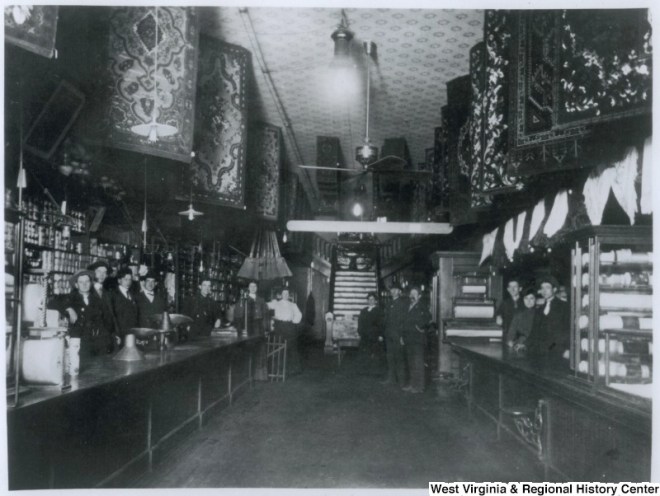
Frank Morris is in his office at the Company Store. (Inquiry)

frontThumbnail (12)
Inside the Company Store.

George Peddicord is in the supply house, located on the opposite side of the river from the mine, collecting more chain buckets. (Inquiry)

John Talbott is working in the shipping office between the company store and main offices. (Inquiry)◊

Inside #6

Will Jenkins is on his way out of the mine and back to the blacksmith shop when he meets Charlie Wise on his way out. They are about a half mile in #6 and Wise was going down the heading, deeper into the mine. (Inquiry) ◊

10:10 am

Outside #6:

Will Jenkins exits the mine and heads back to the blacksmith shop to start shoeing another horse. (Inquiry) ◊

In East Monongah:

H.L. Sloan is on the hill cleaning coal cars at Mine #2, across the river and “right in front of #6”. (Inquiry)

Outside #8

Otto Smith is out on the tipple. (Inquiry)

Inside #6

At the bottom of the slope, the coupler connects a train of between 15-19 fully loaded, 3-ton coal cars onto the wire rope of the wench and, using modern electrical systems, signals Ed Fry in the engine house to start the wench and pull up the first haul of the day. (McAteer, Inquiry)◊

Outside #6

In the engine house, Ed Fry receives the electric light signal from the bottom of #6 slope and pulls the winch engine arm to begin hauling the train of cars from the bottom, up the slope, across the trestle, and to the tipple on the opposite side of the river. (McAteer, Inquiry)

ME66


Previous Post

Next Post


More on How Death Gloated!

Bibliography

Disclaimer and Guide

Introduction

About the Author

Contact Information

Friday, December 6, 1907 – Early Morning, 6:30 am – 9:30 am

6:30 – 7:00 am

Inside #8

Fire Boss P.J. McGraw leaves his fire boss shift after filling out his report.

Outside #8

Pat Kerns comes out of the mines and talks with P.J. McGraw for a bit. (Inquiry)

Carl Meredith arrives to work as Tipple Foreman. (Inquiry)

Inside #6

Andrew Daran arrives for work and proceeds to F face, 4th right, rooms #12 & #13. Despite seeing no mark to indicate that either Fire Boss had been in that area and inspected it prior, he proceeds to work. (McAteer, Inquiry)

Outside #6

Lester Trader has finished cleaning himself up and stops by the Post Office to mail the letter to his father in Pennsylvania that he finished during his lunch break before walking home. (McAteer, Inquiry)

Will Jenkins gets called down to the mine to shoe a horse. He leaves the blacksmith shop, walks over to #6 pit mouth and rides one of the motors down. (Inquiry) ◊

7:00 – 7:30 am

In Monongah:

Several men leave their homes for work at the mines. (FWV 12.9.07 pg. 7)

These men are not paid according to the tonnage they mine, like the diggers who showed up hours earlier. Rather, they are paid a flat wage for a special job or skill performed through the day.

A miner says goodbye to his family and walks off to the mines singing ‘Nearer My God to Thee’. They can hear him singing “as far’s it carried.” (Kellogg) ◊

Lester Trader arrives home and eats the breakfast that Mayme, his wife, has prepared. (McAteer, Inquiry)

Inside #6

Will Jenkins arrives to 2nd left, east heading to shoe a horse. (Inquiry) ◊

7:30 – 8:00 am

In Monongah:

Fire Boss Trader checks on his 2-year-old daughter, Elizabeth, then heads to bed himself. (McAteer) ◊

8:00 – 8:30 am

Inside #8:

The DePetris brothers are working in 2nd right south, room #15, when they are told by a boss, one they are not familiar with, to stop working and move elsewhere. The brothers tell this boss they want to go to a section where they can “start the room” and work the 100’ long wall (a.k.a. the “long-ton”). (Inquiry) ◊

Leo Dominico is working alone in south, 2nd right, 1st south but changes his location to 3rd left south. (Inquiry) ◊

Inside #6

Andrew Daran is still working at F face, 4th right, rooms #12 & #13 and has occasionally noticed a little gas in his area throughout the morning. (Inquiry) ◊

8:30 – 9:00 am

Inside #6

Andrew Daran is still working at F face, but is starting to feel ill. (Inquiry)

9:00 – 9:30 am

A life insurance salesman enters one of the mines to sell insurance policies, a common practice of the day. (McAteer) ◊

Outside #8

Hyre Stalnaker is working in the shop across the river from the mine opening. (Inquiry)

Lee Curry is running the hoist in the engine house. (Inquiry)

Inside #6

Andrew Daran leaves work for the day, feeling too sick to continue on. (Inquiry)

Will Jenkins is called to 4th left by Frank Moon to check on shoeing another horse. (Inquiry)

In Fairmont:

FCC offices are open and running.

General Manager L.J. Malone is working in the general offices on 12th street.

J.O. Watson II, a company officer, is in Downtown Fairmont along with S.L. Watson, company treasurer.


◊ = Time of event is ‘best guess’ by author based on available information


Previous Post

Next Post


More on How Death Gloated!

Bibliography

Disclaimer and Guide

Introduction

About the Author

Contact Information

December 1, 1907 – Welcome to Bloody December

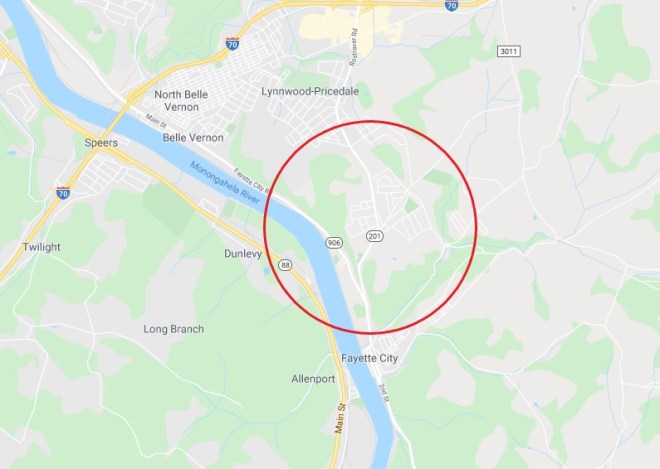
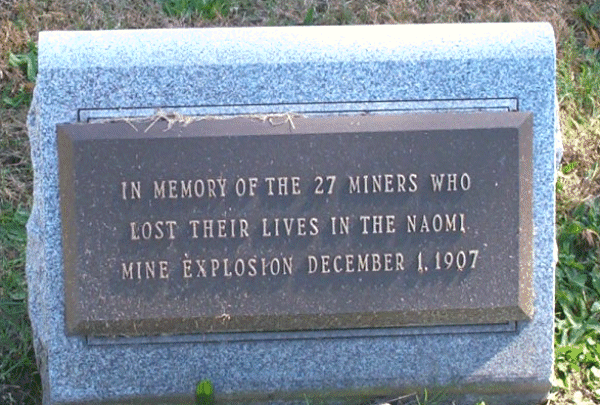
Naomi - approximate location

Belle Vernon, near Fayette City, Pennsylvania.

Sometime between 7:15pm – 7:30 pm, the Naomi mine explodes “with a roar that shook the whole countryside.”1

“The explosion was caused by gas being ignited by an open light or an electric spark or flame from the electric wires, and it was greatly augmented by coal dust.”4

Fires inside the mines immediately follow the explosion. The Sunday night shift is relatively small so it is believed some 30 – 60 miners are entombed underground where the fires steadily consume all breathable oxygen and replace it with toxic gases known as black damp.

“Within a few minutes hundreds of people surrounded the pit mouth. The screams were indescribable. Wives and children and friends of the men entombed wrung their hands and begged piteously for rescuing parties to enter the mines and bring out their loved ones. All night they refused to leave the pit mouth.”

“After a brief examination of the conditions, the impression prevailed among the inspectors that no one would be found alive in the mine, as the after damp would in all probability have smothered those who were not burned by the gas or hurled to death against the sides of the mine by the force of the explosion.  The miners, most of whom were foreigners, were at work almost a mile from any entrance.”4

“Only one man, an unknown foreigner, (out of 34 employees), reached the surface after the explosion occurred, and as he reached the open air he fell unconscious from inhaling the gas fumes and died in a few minutes.”4

This slideshow requires JavaScript.

image from usminedisasters.com
In West Virginia:

Governor Dawson leaves for Washington D.C. to attend a meeting of rivers and harbors congress which will be in session for several days. (FWV 12.4.07 pg. 4)

Welcome to Bloody December.


1907 is considered the deadliest year of the mining industry in the United States.2 The month of December produced 5 separate major disasters and numerous accidents which cost the lives of over 800 men and boys, the majority of whom are minorities and immigrants.

This month will be the real catalyst to a decades-long fight to bring an end to negligent labor practices across the country. Bloody December is so horrific that the American public finally lets its government and its industries know that they have had enough. The devastating and very preventable loss of life sparks a heavy push for government regulation in private industry and labor practices.


Previous Post

Next Post


More on How Death Gloated!

Bibliography

Disclaimer and Guide

Introduction

About the Author

Contact Information

Some thoughts on folklore credibility

In Appalachia, we consider our folklore and oral storytelling traditions to be very credible sources of information, often more credible than any ‘official’ report on an event. In places where ‘official’ reports mean revealing only the information which has been ‘company approved’ (like accurate reports on the number of victims in mine disasters) and especially in times when the company owned you as much as it owned the house in which you and your family lived, oral storytelling tradition was known to be the real and trusted account of how it went down, told by the people who lived it or knew those who did.

For example, in the case of the Monongah Mine Disaster which occurred in West Virginia on December 6, 1907, we now know that the accepted ‘official’ number of 365 fatalities, including their names, was given by the coal company and it is nothing more than the list of those on the payroll at the last pay period of the month prior. Though the list does include miners who were lost, like my great-great-grandfather, the ‘official’ list does not include those who worked off-the-books as subcontractors for payroll miners (many of whom were boys as young as 10 or 12), those who were hired onto payroll in the few weeks prior or those known to have gone into the mines looking for work that day, nor does it even include the names of B&O Railroad employees on loan to the coal company or the insurance salesman killed inside the mine while selling life insurance to the miners. Thanks to Davitt McAteer’s 20+ years of detailed research and subsequent book, Monongah: The Tragic Story of the Worst Industrial Accident in U.S. History, we know that the most accurate count of victims came not from the experimental American Red Cross survey, or the ‘official’ coal company reports or surveys, but from the surveys done by the local parish priests of the Italian and Polish Catholic churches.

“… independent surveys by the parish priests of Italian and Austro-Hungarian members of the two immigrant churches was 410. When added to the ‘Americans’, both black (11) and white (74), and the Turks (5) the total comes to 500, so it is reasonable to conclude that the disaster at the Monongah mines certainly claimed in excess of 500 lives and probably more than 550 men.” (McAteer, pg. 241)

However, this total of at least 500 lives is no shocker to the people of Monongah. Ask anyone who grew up there or has heard tales of the disaster from family elders. We have always known. For us, it is historical fact that the number of dead, especially our dead children, was far higher than the company ever wanted to publically admit. To the rest of the “outside” world, it’s whatever the ‘official’ sources say and what exactly counts as an ‘official’ source could change depending on where you are in the country or in the world. There are areas of Italy where Monongah is still a familiar name, but they may also claim that over 1,000 people died in the disaster. Misinformation over the better part of the last century has led many in other countries to believe that Monongah’s Breaker Boys were located inside the mines, not across the river in the tipple.

So, how do you know what or who to believe? Well, that’s always a difficult question, but getting to the truth inside the tales of mountain people really just takes a little extra effort in understanding. Your starting perspective will always make a difference when it comes to analyzing anything unfamiliar as it reflects your personal biases.

To “outsiders”, mountain people are famous for “tellin’ tales” or “spinnin’ yarns” – a phrase which likened our oral storytelling tradition of history lessons with important messages of morality to the way one weaves a long thread from many small fibers. Eventually, it was turned into a phrase conveniently synonymous with “lies” that worked so well during the 20th that many of the local people now think of them as nothing more than “tall tales” like those of Paul Bunyan and his giant blue ox, Babe.

To the mountain folk, “outsiders” are notorious for being over-privileged and dismissive – with access to better education and living resources, they are more likely to side with and willingly listen to those who match their own standards, like those of the non-mining middle class or the elite extraction barons. Even Ruth Ann Musick acknowledged this suspicion as a significant barrier in her process of collecting WV folklore. In her introduction of The Tell Tale Lilac Bush, she discusses that the, “…elderly people will often hesitate to make known to a stranger what they might willingly tell a younger friend or relative.” This is why she credits every book and so many of the tales to students whom she had to enlist in order to collect these tales from their rural home towns. Despite Musick’s love and respect of the place and its people, she was an “outsider”, an “academic”, the type of person who typically exploits our traditions and perspectives to enforce common stereotypes for personal gain as if we are some new zoological study.

Even I, an educated Millennial, today, would trust my 5 year-old nephew with certain local tales that I wouldn’t dare share with an academic peer from the “outside” and my reasons are all based on personal experience of being dismissed by these same types of academics for no other reason than they are convinced that their way is the ‘right’ way and any other way of thinking is a “lesser than”.

If you want to believe from the get-go that the only sources of information which are credible are those which are documented by ‘educated’ or ‘trained’ sources making them “more reliable”, that is your liberty. But, it also means you are only willing to consider the things which are easiest for you to understand in the manner of thinking which you already possess.

As one who grew up in Monongah and its public schools then proceeded to get an advanced ‘credible’ education, I have a perspective which the average ‘credible’ outside source does not – one that learned to find the truth within the tales before learning the forms considered to be standard or ‘credible’, which makes me a translator of sorts.

But, if you are willing to try just a little harder to call out and then put aside your biases, to use your basic education as a guideline rather than a rule book, you will start to see between the ‘yarns’ and begin to tell the difference between the tiny fibers of fact and fiction.

A mountain local will probably ask, ‘Who do you really want to believe? The people who knew them in life, buried their bodies and mourn them still, or a company who, for the first time ever in Industrial history, was suddenly coming under a real public outrage at the staggering loss of life and demanded the company be held financially accountable for every single victim and was beginning to be used as reason to establish federal regulation laws on mine operators and their practices?’.

Or, to put it in a more relevant example, if the current administration and other sources considered ‘credible’ told you that the death toll in Puerto Rico was still under 1,000 when the locals and other on-site sources are telling you it is over 3,000 at this point, who do you want to believe and how does that influence your starting perspective on finding the truth of the situation in Puerto Rico?

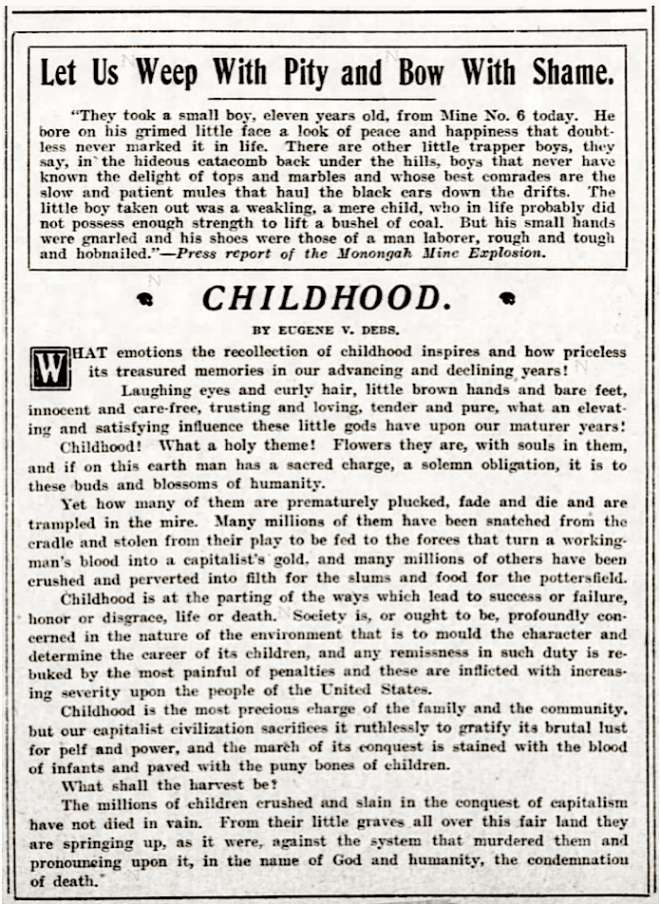
Boys-of-Monongah-Childhood-by-EVD-AtR-Dec-21-1907
Excerpts from published articles on Monongah were frequently used in the Progressive movement over the following 20 years in attempts to abolish Child Labor in America. Unfortunately, since the ‘official’ report does not claim any victim this young, despite this being taken from news reports on-site and local people confirming his identity and age, it is considered vintage “fake news”.