“The immediate needs of the resident families are amply met by the company and a committee of women from Fairmont and Monongah.” (DASB 12.25.07 pg. 5)
Bisbee Daily Review in Arizona:
Manchester Democrat in Iowa:
Albuquerque Morning Journal in New Mexico:
The Manning Times in South Carolina:
TMT 12.25.07 – pg 6
Evening
At the Darr mines in PA:
“Rescuers found a great mass of victims…for which they have searched incessantly for six days and if all goes well a great number of them will either be in the blacksmith shop morgue or the big identification tent nearby by evening.” (TRCC 12.27.07 pg. 2)
“Only sixty bodies have been brought to the surface, but scores of others have been located in entry 27 and there was evidence that many more were in entries 28 and 29.” (TRCC 12.27.07 pg. 2)
“The mine was in much better condition and the progress of the rescuers was satisfactory in every respect. It is believed most of the victims will have been brought out by tonight.” (TRCC 12.27.07 pg. 2)
“Eight unidentified bodies were buried. All clothing checks and other means of identification were preserved and where relatives appear, they were disinterred. If unidentified, they were buried at Connellsville.” (TRCC 12.27.07 pg. 2)
In Fairmont:
The First M.P. Church performs “Santa has the Grippe” cantata. “The performers all did splendid work and the evening’s entertainment was thoroughly enjoyed by the large audience present.” (FWV 12.26.07 pg. 2)
7:30 pm
In Fairmont:
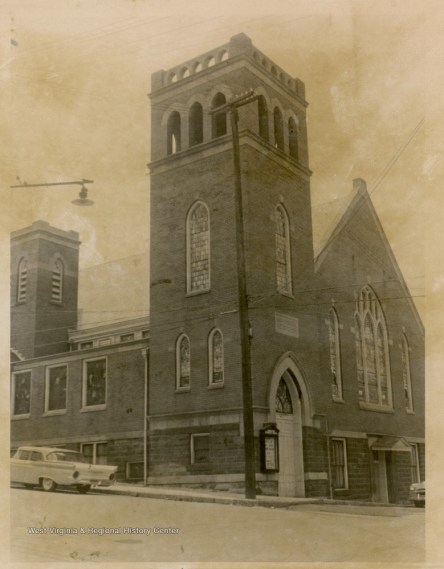
Diamond St. M.E. Church holds its Sunday school program “Bethlehem Chimes”, consisting of beautiful Christmas songs and recitations which “…was attended by a large audience. The program was an excellent one.” (FWV 12.23.07 pg. 1) (FWV 12.26.07 pg. 2)
“A chorus of young girls rendered splendid music. The appropriate anthems of the choir were greatly enjoyed.” (FWV 12.26.07 pg. 2)
Two prizes have been offered: one for the best Christmas recitation given by a child under 10 years of age and the other for the best recitation given by a person over 10. (FWV 12.23.07 pg. 2)
Winner of under 10 = Elizabeth Kiger, Winner of over 10 = Ila Bent. The judges were Judge E.F. Morgan, Frank Reeves and Mrs. W.W. Brown. (FWV 12.26.07 pg. 2)
Night
At the Darr Mines in PA:
“There were only 18 bodies recovered in the 24 hours, making a total of 68 brought out. Of these, 47 have been identified and 12 had to be buried unidentified because of decomposition. Nine unclaimed bodies still remain in the morgue.” (PPG 12.26.07 pg. 1)
“The work of recovering the bodies is slow, and, although a week has elapsed since the explosion, the rescue work is lagging more each day, not because of lack of willing workers, but because of the condition of the mine, which the district inspectors say is worse than that encountered at Monongah.” (PPG 12.26.07 pg. 1)
In Fairmont:
M.E. Church South holds their Christmas program. Recitations and songs will be rendered and a treat will be distributed to the children. (FWV 12.23.07 pg. 1)
In Monongah:
“Christmas in Monongah! What a mockery it was!” (TEP 12.26.07 pg. ?)
“It was the women as usual who bore the brunt of it all; the mothers with their helpless little flocks tugging alike at skirts and heart strings, the little ones who cannot understand. To them Christmas brought neither gladness nor hope; to them the Christmas spirit was as Dead Sea fruit.” (TEP 12.26.07 pg. ?)
“Then there were toys in plenty for the children. That was cheer for the moment for them. There was warm clothing for them, too, and also for all the women who needed it.” (TEP 12.26.07 pg. ?
“But over all, throughout the long bleak day, was the silent weeping of the women and the utter despair on their weary faces.” (TEP 12.26.07 pg. ?)
“And in little graveyards up yonder on the barren yellow hills nearly 100 fathers in unidentified graves. Christmas in Monongah!” (TEP 12.26.07 pg. ?)
OTC 12.21.07 – pg 1
Midnight
In Farmington:
Mrs. Ephriam Ashcraft dies at her home from her burns. (FWV 12.26.07 pg. 1)
“This is a beautiful Christmas day except for the mud, but the small boy with the sled is disappointed.” (FWV 12.26.07 pg. 2)
Throughout the Morning
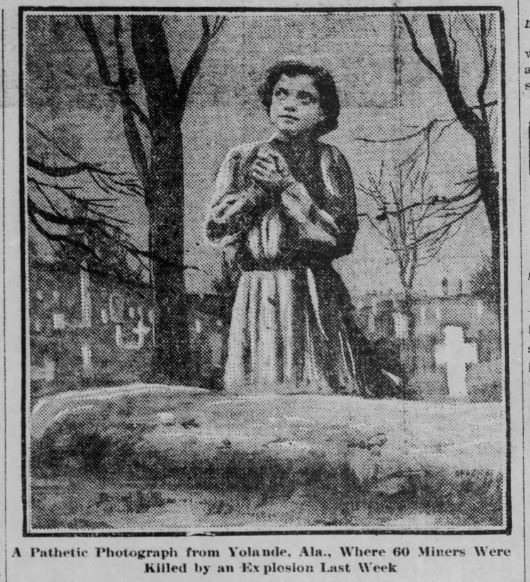
In Yolande, AL:
TEP 12.26.07 – pg 1
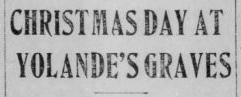
“Christmas cheer in Yolande, gave way to the gloom of grief though the skies were asmile and the hills tinged with yuletide green.” (TEP 12.26.07 pg. ?)
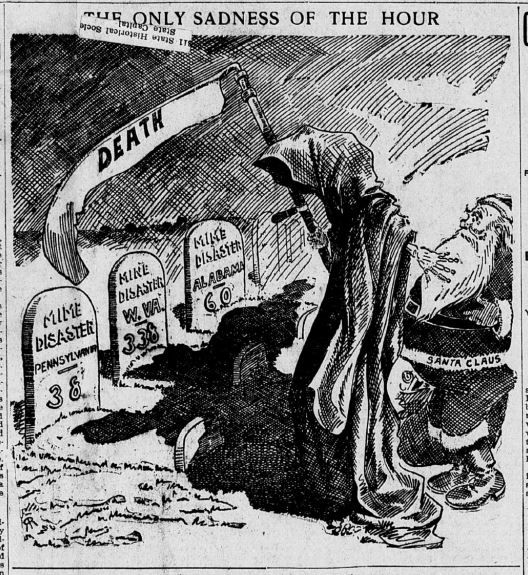
“Sixty freshly made graves in the little cemetery beyond the ill-fated Yolande mine tell their mute story. It was Yolande’s first toll to the dread call of the mine horror. The payment in heart wrung tears of widows and orphans was all the heavier.” (TEP 12.26.07 pg. ?)
In Jacobs Creek, PA:
TEP 12.26.07
“It was Christmas only in name to them. Little children stunned by the loss of father, and wives, dry-eyed now, but with faces drawn with affliction, passed through the streets. Some went to church and listened to the sad-faced priest as he besought the mercies of God in their behalf. Others wandered aimlessly about. Few went in the direction of the mine. They had done that so often, and what was the use.” (TEP 12.26.07 pg. 1)
“Wretchedness filled the air. Nobody thought of cheer except the Sisters of Charity, those devoted souls who on this, His day, went about among the poorest of the victims and distributed what Christmas toys they had been able to gather, and thus in a measure softened the grief of many little ones.” (TEP 12.26.07 pg. 1)
“Never before has so black a Christmas day passed at this place, and the other little hamlets surrounding the Darr mine…”(TEP 12.26.07 pg. 1)
“There are 150 widows and nearly 500 orphans as a result of the deadly blast…”(TEP 12.26.07 pg. 1)
“Despite the grief at Jacobs Creek, the orphans of the mining village will not be deprived of a visit from Santa Claus. Through the efforts of Mayor Coleman arrangements have been made to ship a carload of toys to Jacobs Creek Christmas morning and the role of Santa Claus will be taken by a committee of McKeesport men.” (PDP 12.24.07 pg. 3)
“The carload of toys, candies, books, etc., will leave the Pittsburgh & Lake Erie station at McKeesport at 9 o’clock… The movement was started [Monday] and in a short time hundreds of presents were pledged. They have been coming in almost faster than the committee can handle them and every McKeesport resident appears anxious to be among the contributors.” (PDP 12.24.07 pg. 3)
“Rev. Carl G. Hagberg, of McKeesport, who has made a personal canvass of homes at Jacobs Creek, will likely have charge of the Santa Claus expedition. Mayor Coleman has also issued a call for subscriptions for the relief of the bereaved families, to include cash, clothing, etc.” (PDP 12.24.07 pg. 3)
In Parkersburg, WV:
Charles Huffman is shot through the heart by an accidental discharge of his gun while hunting. (FWV 12.27.07 pg. 4)
In Farmington, WV:
Mrs. Ephriam Ashcraft, an aged lady who had been in poor health for some time, is alone in her room. It is thought she attempted to reach something on her mantle when her clothing catches fire. She was found lying on her floor with her clothing a mass of flames. “Dr. Trach was hastily summoned and rendered medical assistance, yet but little hope for her recovery was entertained…” (FWV 12.26.07 pg. 1)
In Fairmont:
J. Taffanel and Joe Dunaime, of Paris, France, mining experts, arrive to inquire into the conditions of the mines. (FWV 12.26.07 pg. 5)
“Christmas was quietly observed while few large entertainments were given, most homes were the scene of family dinner parties and reunions. In many homes a wondrous Christmas tree had sprung up during the night which added greatly to the festive holiday spirit.” (FWV 12.26.07 pg. 1)
“Christmas was a very quiet day in the First ward. No social functions were held and the entertainments at the M.P. and M.E. Churches were all that engrossed the attention of the residents. All stores were closed and the streets were deserted the greater part of the day.” (FWV 12.26.07 pg. 2)
In Monongah:
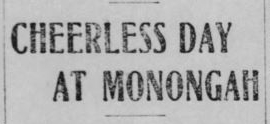
“No, not a merry Christmas, but a bountiful one, is the better way to describe the day at Monongah.” (FWV 12.26.06 pg. 1)
“The mantle of sorrow has wrapped the inmates of many of them in its somber folds but the hand of charity has been willingly extended and gently the curtain has been drawn back letting a flood of sunshine and hope into these very homes to the fullest extent.” (FWV 12.26.07 pg. 1)
Work at the mines throughout the region was shut down for Christmas and this notice is still posted on the office door at Monongah this morning: “No work at mines 5 and Shaver December 25 and 26.” (FWV 12.26.07 pg. 8)
11:30 am
In Fairmont:
FWV 12.24.07 – pg 1
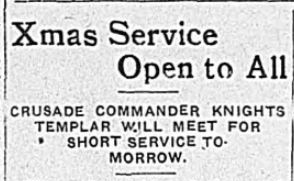
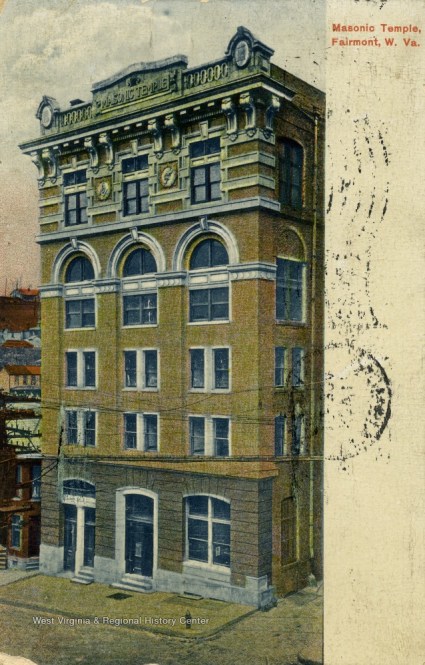
Members of the Crusade Commandery Knights Templar meet in the Masonic temple and “participate in the Christmas observance as outlined by the committee of the Grand Encampment.” (FWV 12.24.07 pg. 1)
“This service is held at precisely the same hour without uniforms wherever the Templars may be…” (FWV 12.24.07 pg. 1)
FWV 12.24.07 – pg 1
“This service is open to all and to the visitors who have never seen the new Temple, this will be an occasion to inspect the new lodge rooms.” (FWV 12.24.07 pg. 1)
Afternoon
In Yolande, AL:
TEP 12.26.07
“…the cemetery was dotted with mourners. Widows with their fatherless offspring made the only offer they could upon the altar of their shattered love; a wreath of laurel, a carpet of cedar, a shower of their tears. To the stricken homes Santa Claus brought little of joy.” (TEP 12.26.07 pg. ?)
“Charity did all it could to brighten these homes, but charity is a poor substitute for the father who is no more. All the charity and sympathy in the world could not blot out the memory of those terrible hours of waiting, the horror of the coming of the poor charred body: the despair of the never ending journey to the cemetery.” (TEP 12.26.07 pg. ?)
In Jacobs Creek, PA:
PPG 12.26.07 pg 1
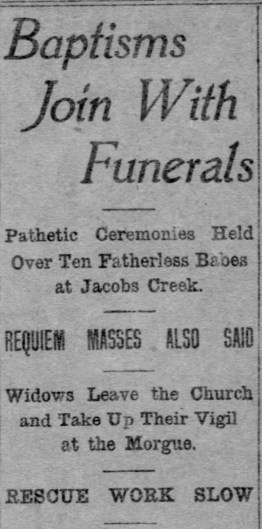
“The beginning and the end of life was fittingly illustrated Christmas day, when Father Adam Binio of St. Timothy’s church baptized 10 infants and said requiem mass over the former members of his church, who lost their lives in the mine.” (PPG 12.26.07 pg. 1)
“The children are all fatherless and the services attending the baptism were devoid of the Yuletide spirit. Solemn as was the funeral mass, this ceremony for children who will never know their fathers, was the most pathetic sight imaginable, when the sad-eyed widows of but a few days ranged themselves before the altar, with their offerings to God in their arms.” (PPG 12.26.07 pg. 1)
“Following the services many of the women walked again to the morgue in another effort to identify the father of the child whose life had just been consecrated.” (PPG 12.26.07 pg. 1)
“Jacob’s Creek’s dead—the bodies that have been recovered—are buried at Smithton, West Newton, Connellsville and other surrounding tons and hamlets, where cemeteries are located. Most of the miners in the bituminous region of Pennsylvania are members of the Catholic church and the recovered bodies are buried in consecrated ground.” (TEP 12.26.07 pg. ?)
“At some of these graves…knelt black robed figures of women. Some had children with them. The bitter tears of widow and mother mingled with these of sister and sweetheart. It was cold but the praying women did not mind it. They were far away from the cold, in spirit, with their loved ones.” (TEP 12.26.07 pg. ?)
“The children romped about the graves clutching the little presents given them in the morning by the Sisters.” (TEP 12.26.07 pg. ?)
In Parkersburg:
Orlie Bennett is rendered deaf and blind by a premature discharge of a miniature canon. (FWV 12.27.07 pg. 4)
In Farmington:
10-year-old Mary Lamb, daughter of Mrs. Jas. Lamb, climbs into a “dark wardrobe and strikes a match, igniting the clothing hanging there and set fire…Miss Blanche Lamb had her hands burned while trying to extinguish the flames. While the child’s burns are not serious, she is suffering a great deal.” (FWV 12.26.07 pg. 8)
In Monongah:
TEP 12.26.07
“Two hundred and fifty widows mourning for their dead. One thousand orphans, mostly children of tender years, mourning for absence of Santa Claus. Want, stalking specter-like through the entire district, and sickness on every hand.” (TEP 12.26.07 pg. ?)
“Mourning services in the churches, mourning in the homes, sorrow in every face, despair in every heart; not a Christmas tree in all the length and breadth of the camps; and yet throughout the world ‘Peace on earth; good will toward men!’” (TEP 12.26.07 pg. ?)
“It was on No. 3 hill this blow fell the hardest. There in 60 families not a father escaped. From theses stricken homes more than a score of boys, just old enough to evade the labor laws went down to the same fate. Only one boy escaped and he was ill with typhoid fever. And of all this gathered harvest of death less than a dozen bodies found identified graves.” (TEP 12.26.07 pg. ?)
“In the camps behind No. 6 and No. 8 mines, in Wahu, and across the river beyond No. 6 these conditions are repeated. What Christmas means where the blow comes with the redoubled force the imagination only can portray. Words fail. One’s mind dulls and the heart dumbs in the presence of grief so unutterable.” (TEP 12.26.07 pg. ?)
Stonco Goyac, the 29 year old Hungarian miner stabbed and shot in Farmington, dies at Cook’s Hospital. He leaves behind a brother in Pennsylvania. (FWV 12.23.07 pg. 1)
7:30 am
In Fairmont:
Christ P.E. Church – Holy Eucharist (FWV 12.21.07 pg. 5)
9:30 am
In Fairmont:
M.P. Temple Sunday School meets; “a full turn out of the school is desired so that the plans for the ‘Old Fashioned Christmas Tree’ service to be held on Christmas Eve may be completed.” (FWV 12.21.07 pg. 5)
Diamond St M.E. Church Sunday School meets in charge of Mr. E.A. Wilson. (FWV 12.21.07 pg. 2)
Presbyterian church Sabbath School meets – J. Walter Barnes, superintendent. (FWV 12.21.07 pg. 5)
First M.P. Church Sunday School meets – J.A. Swiger superintendent. (FWV 12.21.07 pg. 2)
Palatine Baptist Church Bible School meets with Supt. W.A. Hustead in charge, the subject being, “Christmas lessons” (FWV 12.20.07 pg. 2)
M.E. Church South Sunday School meets – Dr. L.N. Yost superintendent (FWV 12.21.07 pg. 5)
Grace Lutheran Church Sunday School meets – Home-coming day. (FWV 12.21.07 pg. 5)
First M.E. Church Sunday School meets– C.W. Evans in charge. (FWV 12.21.07 pg. 5)
First Baptist Church Sunday School meets. (FWV 12.21.07 pg. 5)
Christ P.E. Church Sunday School meets. (FWV 12.21.07 pg. 5)
Central Christian Church Sunday School – McIntire, superintendent (FWV 12.21.07 pg. 5)
9:45 am
In Clarksburg:
First Presbyterian Church, Wm. M. Hudson, Minister – Sabbath school meets. “Tuesday night the Sabbath school will have a tree to which the children and others are to bring presents and these presents are to be sent to the Rev. W.O. David at Monongah for distribution Christmas night to the Monongah children.”(CDT 12.21.07 pg. 3)
10:00 am
In Fairmont:
Cook Hospital informs Coroner Amos of Goyac’s death. This is the first any official has heard about the incident. Coroner Amos attends the postmortem examination. (FWV 12.23.07 pg. 1)
10:30 am
In Fairmont:
M.E. Church South service – R.T. Webb, pastor. “Both the music and the sermon…will be appropriate to the Christmas occasion.” (FWV 12.21.07 pg. 5)
Grace Lutheran Church service. (FWV 12.21.07 pg. 5)
Subject, “No Room for Jesus”
“Reception of members at 10:45”
“Sacrament of the Lord’s supper will be administered immediately after the sermon.”
“Congregational meeting after morning services.”
10:45 am
Christ P.E. Church – morning prayer and litany (FWV 12.21.07 pg. 5)
Presbyterian Church service – H.G. Stoetzer, Pastor (FWV 12.21.07 pg. 5)
First Baptist Church service – W.J. Eddy, Pastor (FWV 12.21.07 pg. 5)
Subject of sermon, addressed to the boys and girls, “Jesus, our Great Christmas Gift.”
“Some special music will be rendered by some folks as well as by the choir.”
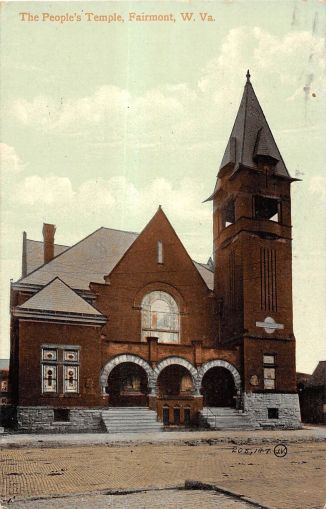
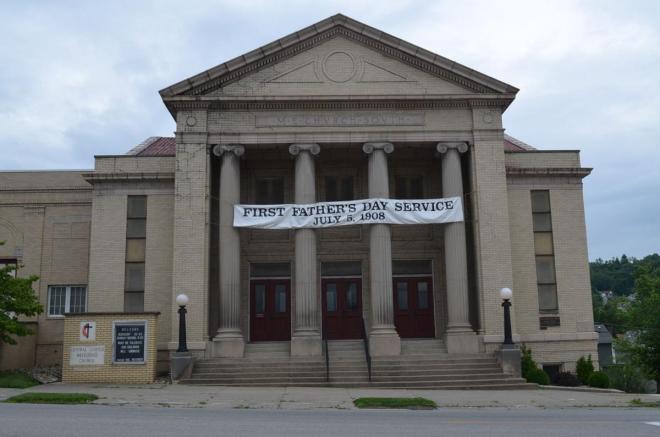
M.P. Temple service – J.C. Broomfield, pastor. Sermon, “The Birth of Christ”; text, “And the Word Became Flesh and Dwelt Among Us.” (FWV 12.21.07 pg. 5)
Central Christian Church service – W.H. Willison, Pastor. (FWV 12.21.07 pg. 5)
First M.P. Church service – Rev. U.W. Morrison, pastor. Subject of sermon, “Christmas” (FWV 12.21.07 pg. 2)
Palatine Baptist Church service – T.B. Lawler, Pastor. Subject, “The Guiding Star” (FWV 12.20.07 pg. 2)
First M.E. Church service – G.D. Smith, pastor (FWV 12.21.07 pg. 5)
Diamond St M.E. Church services – Rev. G.W. Bent, Pastor; subject of sermon, “Christmas themes” (FWV 12.21.07 pg. 2)
11:00 am
In Clarksburg:
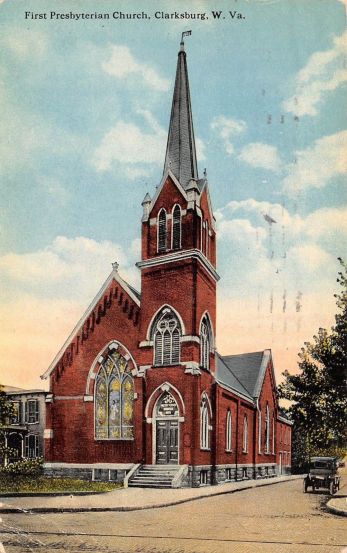
First Presbyterian, Wm. M. Hudson, pastor; Divine worship and sermon, “The sermons at both services will be held in the spirit of Christmas, the morning sermon dealing with ‘Blessedness of Giving’…” (CDT 12.21.07 pg. 3)
“Strangers are cordially invited to all these services.” (CDT 12.21.07 pg. 3)
11:45 am
In Fairmont:
Diamond Street M.E. Church class (FWV 12.21.07 pg. 2)
“It is believed that the shock of the explosions displaced many of the heavier timbers in the galleries and whole rows where the unfortunate men were working collapsed upon them. In this case the work of reaching the entombed men will be infinitely greater. Some of them are now believed to be separated from the outer world by many tons of earth.” (WED 12.7.07 pg. 8)
“The hope that they are alive lies in the possibility that enough pure air remained in the mine to supply those who were not crushed outright until they can be reached by the rescuers.” (WED 12.7.07 pg. 8)
In Monongah:
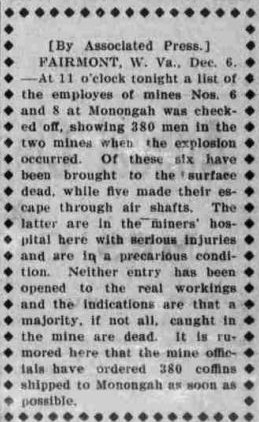
“At eleven o’clock tonight the list of employees had been checked off, showing that 380 were in the two mines when the explosion occurred. Of these six had been brought to the surface dead and five escaped through air shafts. The latter are in the miner’s hospital here in a precarious condition.” (DASB 12.07.07 pg. 1)
For hours now, more than likely since the meeting with Pres. C.W. Watson, General Manager Malone has been sorting through the payroll lists for Monongah mines #6 and #8 to get a better idea of just how many fatalities they are facing. By 11:00 pm, he is as finished as he can be with this aspect of his research. However, he does not deny that this list of around 380 payrolled names does not include any non-payrolled workers (such as B&O railroad workers on loan or those hired and paid by the miner personally—what we would consider an Independent Contractor today), younger trapper boys, or those who have been hired since the last time this list had been updated some two weeks prior, nor will it include those who were known to have been hired the morning of the explosion.
None the less, the press and public will become fixed with this very first “official” number of 380 and begin to speculate on their own.
“Six charred bodies lying in the improvised morgue, five men near death in the hospital and 369 men imprisoned by tons of coal, rock and mine debris in the depth of the hills surrounding this mining town with chances all against a single one of them being alive is the most accurate summary obtainable at 11 o’clock tonight…” (SFC 12.7.07 pg. 1)
The company nor the press is yet aware of just how many workers, like Bill Sloane and this author’s own great-grandfather, did not go into work that morning. As each one begins to turn up alive over the next several days, the overall number of potential corpses continues to be lowered rather than a name simply getting checked off the potential identity list. Though the extra off-payroll workers are acknowledged by company, they are not included in their factors.
In Fairmont:
“Late in the night…the streets of the city were crowded with anxious people eager to snatch any news that came from the disaster. Every car that came from Monongah, the passengers were stopped while inquiry about the news was made by the waiting crowd but the passengers had little to satisfy the hungering ones.” (FWV 12.7.07 pg. 2 – noon)
At some point during the night at the Miner’s Hospital, William H. Bice, the fan engineer who was blown through the walls of the #8 fan house, dies of his injuries. Though many doctors and nurses have returned to the Miner’s Hospital, the morticians and undertakers are still in Monongah. As a result, Bice had plenty of care in his final hours of life, but in death there is no one on hand to care for his body at the hospital. His body, along with others, is simply left in the hospital morgue.
In Pennsylvania:
FWV 12.6.07 pg 5
Clarence Hall has been on the site of the Naomi mine disaster for days, but now he boards a train and heads straight for Monongah. He is considered U.S. President Theodore Roosevelt’s personal representative as one of the few federal government agents attempting to remedy the ever-growing mortal cost of the mining industry in the country.
In Monongah:
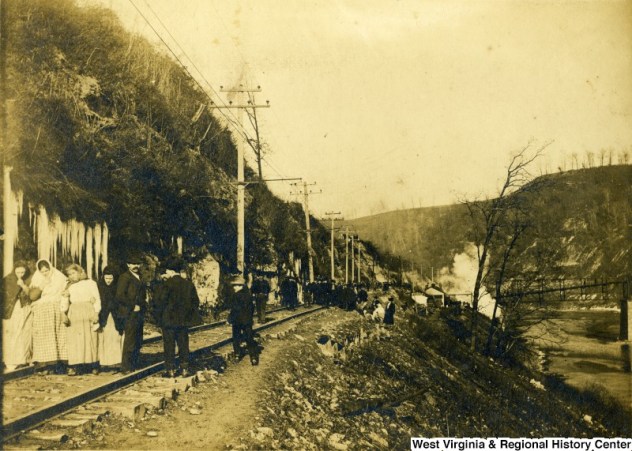
Before the midnight hour, rescue work transitions into recovery work as the long process of removing bodies from the mines begins. As #6 mine was not as badly damaged as #8 and workers have been able to restore enough ventilation for rescue crews, the process begins there.
As each body is brought to the surface, Dr. F.W. Hill and several other medical volunteers briefly examine the bodies in hope to quickly determine the true cause of death before sending them over to the temporary morgue. Though Coroner Amos and many other morticians are expecting to have the chance to perform autopsies, they simple become too overwhelmed too quickly and decide against doing so. Due to the conditions of many bodies, it is impossible to embalm them and they must be prepared for burial and identified as quickly as possible.
~Midnight
“Of the victims six dead bodies had been taken from mine Nos 6 at midnight and six others were piled up in the entry awaiting the completion of facilities for bringing them to the surface. From mine No 8 at the same hour, fourteen bodies had been removed, and a number of others are ready to be brought out as soon as arrangements can be completed.” (LAH 12.7.07 pg. 1)
Outside #8:
Once the small fires in #8 are subdued, the temporary 8’ wide fan on loan from a local mine in Shinnston is started up once again. Though they manage to recover some bodies near the mouth and along the main shaft of the mine, the temporary fan is simply not powerful enough to purify the air in the mine and rescue crews only make it around 700 feet beyond the main entrance before they are once again driven out by toxic gases. However, this does not stop the rescue and recovery efforts. A fresh crew replaces those who came in contact with the gases and a round-robin system of smaller crews and shorter trips into the mine takes hold at #8.
In Monongah:
A large number of lingering physicians are “ordered out” of the town; “At midnight these messengers of mercy with pity and patience were on the scene ready to minister to the maimed and moaning, but there was little need for their services.” (FWV 12.7.07. pg. 1 – noon)
“Tonight, thousands are gathered at …No 6 and 8, aghast of the horror of the explosions…in fact, the entire town of several thousand people are crowded about the mine openings anxiously awaiting the work of the rescue party, but without even the slightest hope of seeing any of their loved ones alive.” (CDT 12.7.07 pg. 1)
~7:00 pm
In Monongah:
“Trolley cars and trains over the Baltimore and Ohio brought great crowds of people from Clarksburg and Fairmont, many of whom have relatives in the terrible catastrophe, all anxious to learn the worst, as all hope had been abandoned that any survived and the only hope that remained was that the bodies at least might be recovered.” (CDT 12.7.07 pg. 1)
Vice President Potter, General Manager Thomas Fitzgerald and Division Superintendent and other officials of the Baltimore and Ohio Railroad Company heard of the horrible disaster and arrive to offer their services.
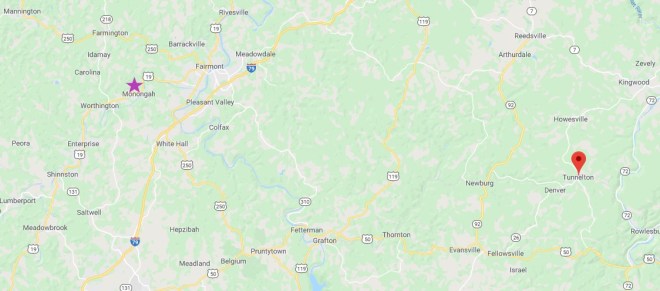
14 miners also arrive from Tunnelton, WV, to aid in the rescue (FWV 12.7.07 pg. 1)
“The general opinion in the town is that the number of dead and imprisoned will reach 500. A few persons believe this number will be exceeded, claiming that more than half the total force worked during the day, while on the other hand some think the number will be smaller. The most conservative estimates place the number of victims at 300 or more.” (DASB 12.07.07 pg. 1)
~7:30 pm
At #8:
Superintendent A.J. Ruckman finds the body of Charles Honaker. “…it was thought that Honaker had been blown in the river but he had not. He was lying about 70ft from the mouth of No 8. When he was found his watch was still keeping time and this property was the means of his identification. Mr. Ruckman still has his watch.” (FWV 12.7.07 pg. 2 – noon)
“Undertakers on the scene have converted the First National bank building into a morgue to take care of the bodies and all the caskets possible have arrived from Clarksburg and Fairmont with a special order on the way from Wheeling.” (CDT 12.7.07 pg. 1)
~8:00 pm
At the mines:
“At this time the rescuers are hard at work digging debris, dirt, coal, timbers, and the like away so as to get further into the mine. The efforts are to rescue any live men who may possibly be in the mine and dead bodies are now being removed.” (CDT 12.7.07 pg. 1)
“The chief efforts of rescue are at mine No 6, where the explosion was not so terrific.” “At No 8 the rescue work is difficult and proceeding very slowly on account of the afterdamp.” (CDT 12.7.07 pg. 1)
In Monongah:
“The saloons have all been closed by order of the mayor. The great crowds still linger at the mines. The order is good.” (CDT 12.7.07 pg. 1)
West Virginia Governor Dawson wires a message to Pres. C.W. Watson: “Inspector to arrive tomorrow. Do not hesitate to call upon me for assistance.” Watson replies, “Our accident was deplorable indeed. Very much obliged for your offer…glad to know Chief Mine Inspector Paul will be here in the morning. Impossible to tell extent of fatalities at this time. Will advise you early tomorrow.” (FWV 12.7.07 pg. 1 & 2 – noon)
~8:30 pm
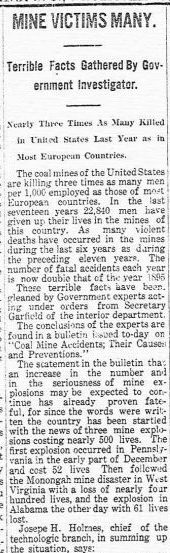
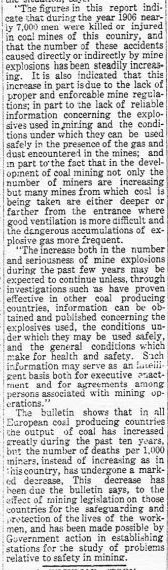
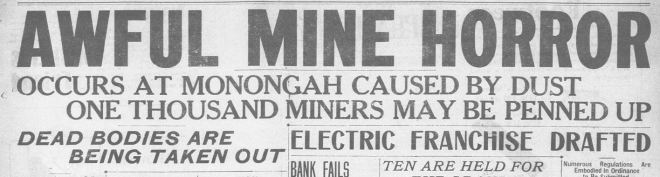
Evening presses from major papers across the country are putting out some of the first words the country will read about the disaster in Monongah. At some point during the day, either General Manager Malone or someone who had talked with Malone had a telephone conversation with a reporter at the Associated Press. As a result of this too early conversation which will be reprinted again and again nationwide, much of the first and perhaps only words many people will read about the disaster over the next month are highly inaccurate.
CDT 12.6.07 pg 1
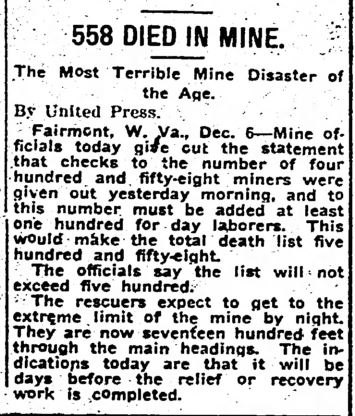
CDT 12.6.07 pg 1
(ETR 12.6.06 pg. 1)
(ETR 12.6.06 pg. 1)
~9:00 pm
Inside #6:
Rescuers begin investigating side entries and rooms further from explosions. As each crew moves forward, they stumble over material debris as well as dead bodies of miners and horses.
“Relay parties bring no work of encouragement, to the contrary their only report is the finding of dead bodies piled up in the mine pits in heaps of twenty, indicating that when the explosion occurred, many of them rushed to the openings and perished on the way—overcome by gas.” (CDT 12.7.07 pg. 1)
In Monongah:
Another special train arrives, this one from Baltimore carrying V.P. Wheelwright of Consolidated Coal Company, President Oscar G Murray and General Manager Thomas Fitzgerald from the B&O railroad company along with more company officials, volunteers, newspaper reporters, and sightseers.
It becomes clear to company officials that many burial sites will be needed, and the existing potter’s field is insufficient.
“C.W. Watson, president of the company, is deeply affected by the accident and refused to give out a statement tonight. He only observed that it was ‘Too bad! Too bad!’” (TS 12.7.07 pg. 1)
Outside #8:
“The deadly fire damp made it impossible to do much rescue work early in the day, especially at Mine No. 8, where the explosion had completely wrecked the fan, until another fan could be brought from Shinnston, twelve miles away, and put in working order, the men labored at a disadvantage…” (WH 12.7.07 pg. 1)
Relief crews have managed to create a stable air hole about a half mile from the mine mouth. A temporary 7-foot-wide fan has arrived from Shinnston and put into place at #8 mine. But, “When the fan that was installed at the mouth of mine No 8 was started…it caused a small fire.” (FWV 12.7.07 pg. 1 & 2 – noon)
Inside #8:
“One fire was discovered to the right of the main entry in No. 8 and a pipeline was immediately laid into the mine and the fire extinguished.” (FWV 12.10.07 pg. 2 – Floyd Parsons)
~9:30 pm
“Up to 9:30 Peter Roisberg is the only man brought out alive.” (TS 12.7.07 pg. 1)
“Not less than 400 are dead and the number may run to 700, as officials have been keeping down the number as much as possible.” (FWDN 12.6.07 pg. 1)
~3:00 pm
“At 3 o’clock this afternoon it is known that the mine disaster is the worst in the history of the country.” (FWDN 12.6.07 pg. 1)
In Parkersburg:
“Mr. Watson was in Parkersburg at the time of the accident and went at once to the scene.” (TBS 12.7.07 pg. 2)
In Baltimore:
“Mr. Wheelwright left here at 3 pm over the Baltimore and Ohio for the mines. He was accompanied by Mr. J.R. Buckingham, his secretary, and some of the others of the company’s officers.” (TBS 12.7.07 pg. 2)
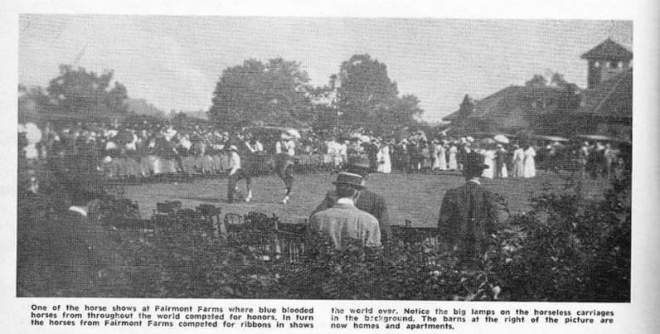
“Mr. Clarence W. Watson is the president and Mr. Jere H. Wheelwright the vice-president, both of whom spend most of their time here in directing the executive affairs of the corporation. Mr. Watson has a home at Fairmont, where he spends the summer. On this estate, which is just on the outskirts of that city, he has recently built a magnificent stable for his famous show horses and also a half-mile track for their exercise.” (TBS 12.7.07 pg. 2)
In Monongah:
It is “Press Time” and some of the reporters are in line to use the telegraph or telephone in the company store post office or the company office just across the river from #6 to submit their reports in time for the evening papers. A majority have had to go into Fairmont to find more communication resources. (News)
Outside #6:
Carl Tarleton arrives from the mines just down the tracks in Enterprise to help with the recovery. He works personally with David Victor on restoring proper ventilation to the mines, despite only having one working fan. By this point they have only achieved breathable air in most of the main shaft of #6, but they are almost to the area where the two mines are conjoined. David Victor decides to go ahead and make an attempt at a fire examination of #6. (Inquiry)
~3:30 pm
The two staff writers for The Clarksburg Daily Telegram make “fast time” despite taking the back roads to Monongah. “…they arrived some time before the first train and about two hours before the first trolley car arrived from Clarksburg, beating other newspaper representatives.” (CDT 12.8.07 pg. 1)
Outside #6:
The second round of rescue crews is starting to be organized just as several experienced miners arrive from the Montana mines just outside of Fairmont. As these men already work together as a congruent team underground, they are formed into a rescue crew all their own. (FWV 12.7.07 pg. 1 – noon)
Outside #8:
Someone standing near a toad hole, possibly a company watchman, happens to hear a sound like moaning coming from the ground. He calls out to nearby work crews for help. Several run off to a nearby supply house to collect materials.
~3:33-3:35 pm
Outside #8:
The rescuers have returned quickly from the supply house with armloads of rope and begin tying critical hitch and harness knots in one end to safely support the men who will be lowered down through the toad hole.
~ 3:40 – 3:45 pm
Inside #8:
The first rescuer, a long slender rail worker in the mines named Charlie “Skinny” McGraw, has been lowered over 100 feet before getting to the floor of the mine. He unties himself from the lowering lines so they can be raised back to the surface for the next man to follow down and help.
He follows the moans through the dark and soon finds the Urban brothers. Stan is lying face down in a puddle of water and Peter is sitting atop Stan’s back sobbing uncontrollably, simply staring ahead into the dark space with wide glassy eyes.
~3:45 – 3:50 pm
Inside #8:
The second rescuer, Tom Weeks, has been lowered into the room with McGraw and the Urbans. As they come upon Peter and Stan, Peter begins to shout at them and protect his nonresponsive brother. The Urbans are from Poland (their original last name is Rosebeiq) and, unfortunately, Stan knew more American English than Peter and neither of the two rescuers speak or understand Polish. (News, Ancestry, Inquiry, McAteer)
Absolutely crazed by the trauma, fear, and utter darkness he has endured for the past 5-6 hours, Peter begins to aggressively fight with McGraw and Weeks to keep them away from his brother. He shouts at them but they do not understand him and again try to grab Peter and force him away from his brother. A full-on struggle ensues.
~3:50-3:55 pm
Inside #8:
Weeks and McGraw have managed to wrangle Peter into submission. They tie him into the rope hitch and give a signal to the men on the surface to start pulling. The workers on the surface grapple with the line as Peter continues reaching and screaming for his brother on his way back up the 100’ ascent to the surface
As Tom Weeks keeps an eye on Peter from below, Charlie McGraw rushes back to check on Stan’s condition. Despite the severe head injury and 5 hours face down in a puddle, Stan is still breathing but barely hanging on to life.
~3:55 – 4:00 pm
Outside #8:
Several people grab a hold of Peter as he nears the surface and assist in pulling him out. They get him safely out of the hole, pull him away to solid ground and untie his rope when, again, Peter begins to fight off the rescuers around him. The rope is dropped back into the toad hole again as Peter continues to struggle against those trying to help him.
Inside #8:
McGraw and Weeks have moved Stan out of the puddle and closer to the toad hole. They begin to tie him into the rope harness, just as they did with Peter. Stan is still breathing but unconscious.
~4:00 – 4:10 pm
Inside #6:
“For fully two hours nothing but wreckage, such as blocks of coal mine timbers and machinery rewarded the search, but at 4 o’clock in mine No. 6, twenty bodies were found in a heap a short distance from the opening. These were not brought out at the time as the purpose of the searches was to find if any survived the awful disaster and to bring them out first.” (CDT 12.7.07 pg. 1)
“Men who entered the mine say there are twenty dead men sitting on one bench, where they were awaiting their turns to take cars.” (TS 12.7.07 pg. 1)
Outside #8:
Peter Urban manages to break free from the rescuers. He tears through the crowd of onlookers, screaming and crying, sprints down the bank towards the river but crashes full-force into a fence. Rescuers follow and though Peter gives them quite the chase he begins to put up another brief fight as they catch up with him. Peter is simply too exhausted by this point and they manage to subdue him again with little issue.
Inside #8:
At some point during the ascent back to the surface, Stan Urban dies.
~4:10 – 4:15 pm
Outside #8:
Dr. F.W. Hill quickly looks over Peter Urban for any sign of significant injury or need for hospitalization. Though Peter is so distressed and upset that he can not even give the doctor his own name, Dr. Hill finds no reason to hospitalize him and sends Peter home to his family to rest.
At the toad hole, Stan is pulled out and taken to the side. Though he shows no signs of life, the warmth coming off his body gives them hope. Resuscitation is attempted but soon it is accepted that they are too late.
Stanislaus Urban is put onto a horse drawn cart, sent across the river to the morgue.
~4:30 pm
Word has already begun to spread through town and reaches #6 that at least one man has been found alive and rescued from #8.
Peter Urban
Outside #6:
Crowds swarm in the direction of #8. For some, especially many newspaper reporters who have arrived from out of town, this is the first notice they get that the #8 mine they have just submitted reports on isn’t actually #8 mine at all. Dozens of reporters who have been on or around the Iron Bridge all day have already gone to print and have mistakingly identifyied either #1 or #2 mine, which are across the river from #6, as being mine #8 simply because they can see smoke coming out of this mine from their vantage point.
Outside #8:
Despite the lack of ventilation and being driven out hours earlier by toxic gases, the discovery of Peter Urban alive and relatively well encourages another round of rescue crews to prepare to attempt another tour into #8. John C Thompson is in charge of one of those crews. (News, Inquiry)
Inside #6
By late afternoon, part of the broken trip that clogged the heading of mine #6 was removed and the entrance to the mine proper was clear enough to allow for the removal of bodies. “It was the blockade of broken cars that made it so difficult to get the work started.” (FWV 12.7.07 – pg. 1 – noon)
“The entry of No 6 mine, 300 feet from the mountain is piled high with wreckage of two strings of cars and two electric motors. Some of the rescuers have climbed over this and found dead bodies beyond, but have made no attempt to remove these to the surface, partly because it would be almost impossible to carry the bodies over the debris, but more particularly because they do not want to lose any time in reaching other sections of the mine where it is possible men still living may be imprisoned.” (ES 12.7.07 pg. 2)
~5:00 pm
At the mines:
By now, it has become very clear to the physicians and nurses who rushed to the scene that their services will not be needed. Some stay for the night to care for the rescue workers who are injured or overcome by the gases. Many leave on the 5 o’clock trolley car as a 3rd round of rescue crews gets organized.
~6:00 pm
In Monongah:
By this time, only Stan Urban has been recovered from the inside of #8 mine and arrangements are being made to begin bringing bodies out of #6.
Dr. Hill calls on Peter Urban at his house just to check on his condition. Peter can finally tell the doctor his name and now that Peter is around those who can understand him, he tells them that not far from where he and Stan were found, another man was also trapped but still alive.
A special train arrives on the main B&O line from Parkersburg and pulls into the center of Monongah carrying C.W. Watson, president of Consolidated Coal Company and its subsidiary Fairmont Coal Company, along with his private secretary.
In Fairmont and other cities around the country:
Newspapers are already publishing reports in their evening editions which have been circulating for about an hour now. Local papers from Monongah’s neighboring cities will put out several special extra additions over the next few days in an attempt to keep the local populace as updated as possible.
The Fairmont West Virginian publishes these headlines along with an article written by reporter L.M. Davis who was on the very first trolley to Monongah and got the opportunity to watch the action go down all day long and speak directly to some rescue workers like Fred Shaver.
They also publish a list of those “known” to be dead or injured based solely on what little information they have received from rescuers like Fred Shaver and officials who are simply too busy at the time to give in depth, detailed statements.
In the next city south of Monongah, the Clarksburg Daily Telegram publishes slightly different information.
Unlike the Fairmont West Virginian, The Clarksburg Daily Telegram is not yet publishing personal reports from those directly on the scene, though they do include a small announcement that they have reporters on the scene and will put out a special evening edition with those updates. Rather, for this first printing they rely on an article created by the Associated Press after a candid conversation with an official from either the Consolidated Coal Company or Fairmont Coal Company, or possibly a combination of both.
At this point in U.S. history, the Associated Press has a practical monopoly over the spread of news across the country and a majority of U.S. papers rely almost entirely on the Associated Press for national news at this time. To battle what many saw as a corrupt control of information, The United Press formed earlier in the year to challenge that hold. Over the next month they will both make drastic, lingering mistakes in the mad dash to be the first to publish the latest information to the country.
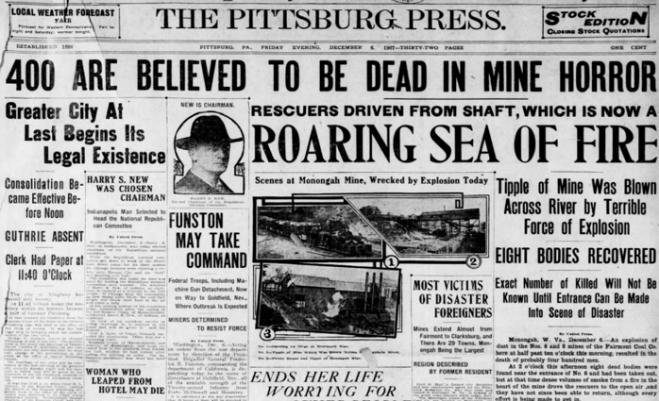
The Pittsburg Press is just one of the many papers that uses the United Press to collect their information. On the evening of Dec. 6, it publishes what will become one of the most notorious headlines associated with the disaster, some of the first photos of Monongah, and several articles detailing events that have taken place through the day.
Almost all of it is wrong.
The Cumberland Evening Times in Maryland also uses the United Press as a primary source and reports that, “The accident happened in Monongahela mines Nos 6 and 8 and was caused by the fan house, which supplied the miners with air, failing to work.” They follow, “The mines were idle yesterday and that is why it is thought that the fans failed to work this morning.” They will also, unfortunately, report that “Over one hundred men are known to have escaped.” (CET 12.6.07 pg. 1)
~6:30 pm
In the Monongah offices:
C.W. Watson and several other company officials hold a meeting to bring the president up to date with events. Watson decides that, “the bodies of the miners, so far as could be reached should be taken out during the night.” From here, Watson personally supervises all rescue work aided by General Manager Malone. (CDT 12.7.07 pg. 1)
At #8:
Word makes it back to #8 mine that Peter Urban has revealed that another man was still trapped in the mine, not far from where he and his brother were found.
General Manager Frank Haas is personally overseeing the rescue work at #8 but little progress has been made compared to #6. Nonetheless, rescue crews, again led by “Skinny” McGraw, reenter #8 through the toad hole. True to Peter’s word, 20-year-old Francisco Loria is found nearby, but it is too late.
Francisco will be the 5th body to enter the morgue.
At the mines:
By dusk, rescue crews are once again pushed out of the mines by gases but it is confirmed to those on the surface that there is no hope of finding any survivors inside of #6.
“Men and women who had congregated around the mine knelt down in the falling snow and prayed, offering a miner’s benediction.”
“The women around the mine entrance are going crazy with grief and can hardly be handled.” (FWDN 12.6.07 pg. 1)
Crowds are growing to uncontrollable numbers. (News)
Agents for the company begin to prepare for the worst.
~1:00 pm
On the east side of Monongah:
“At one o’clock this afternoon the officials of the Fairmont Coal Co. revised their figures as to the number of men at work in the mines, making it three hundred, instead of five, and they do not believe any have escaped death or injury of a serious nature.” (CET 12.6.07 pg. 1)
Coroner E.S. Amos prepares to set up a temporary morgue inside the unfinished First National Bank of Monongah (a new institution owned by the Watsons and others).
“The First National bank building…has been rigged up for a morgue and the dead will be taken there as soon as recovered.” (FWDN 12.6.07 pg. 1)
E.P. Knight brings the piece of broken coupling pin to Frank Morris in the office of the company store for safe keeping then returns to the relief work. (Inquiry)
~1:30 pm
Outside #6:
Dr. Cook sees first 3 bodies brought out of #6; the 3 men who were found in the shed at the foot of #6 slope. (Inquiry)
~2:00 pm
Outside #6:
8 bodies found near entrance of #6 “and had been taken out, but at that time dense volumes of smoke from a fire in the heart of the mine drove the rescuers to the open air and they have not since been able to return, although every effort is being made to get in.” (Pitt. Press Evening, 12.6.07 – pg.1)
“The fans were all blown out of mine No. 8 and it was the belief of some that the mine was afire.” (CDT 12.7.07 pg. 1)
At the mines:
“Little was done…until after three o’clock when several men were rescued.” (FWV 12.7.07 pg. 1 – noon)
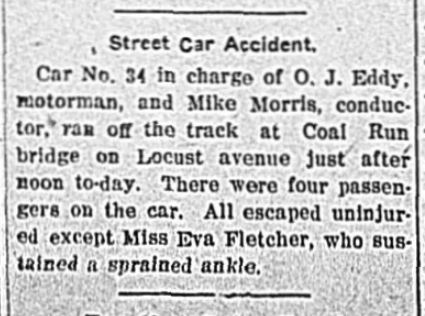
Within the next few days, this event will gradually become entangled in the news coming out of Monongah. With so many people and newspaper reporters in and out of Fairmont, entirely unfamiliar with the area, this is more than likely how various reports begin to spread across the country that the trolley which ran passed #8 coal mine just before the explosion was blown off of its tracks, wrecked, and that a young female passenger was injured in the process. Though there is no information about what happened to the trolley after it passed #8 nor are there personal accounts from any of its passengers, the trolley at Monongah was not thrown from its tracks and wrecked.
At the company offices, “Mr. S.L. Watson was called up by many newspaper men but was unable to accommodate them because of lack of news.” (FWV 12.7.07 pg. 2 – noon)
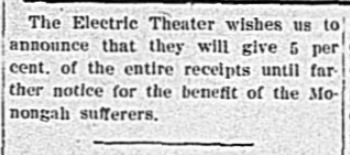
The Electric Theatre calls the Fairmont newspapers to make the announcement that they will give 5 percent of the entire receipts until further notice for the benefit of Monongah sufferers. (FWV 12.6.07 pg. 5)
FWV 12.6.07 pg 5
Inside the mines of Monongah:
Localized explosions, ignitions, and fires continue consuming the oxygen throughout the mines. Afterdamp has had over hour and half to work through the mines and has already suffocated many. Some miners who survived the initial explosions are putting jackets over their heads or napkins over their mouths to try and prevent breathing in gases. (McAteer, News)
In the town of Monongah:
Monongah is getting positively ambushed with all varieties of people from the area. Train/Trolley loads of volunteers, mourners, amateur photographers and macabre sightseers start pouring in from Fairmont and surrounding areas.
Undertakers begin pouring into town, ”from Fairmont, Shinnston, and Clarksburg among whom are Clifford & Osborn, Sleppy & Warne, of Clarksburg, Harmer of Shinnston, and Musgrave and Bunningham*, of Fairmont, summoned at the instance of the coal company to take charge of the frightful morgue that will present itself when all the bodies are recovered.” (CDT 12.7.07 pg. 1) (*should be “Cunningham”)
Transport wagons and crews are hired. W.S. Thomas Transfer Co. (Fairmont firm) sends all available wagons and teams to Monongah. (News)
Communications within town, let alone outside of town, are extremely limited and reports about the events going on in the area begin to conflict from the very start. (News)
“The bodies of three miners were recovered near the mouth of Mine No. 6 at 12 o’clock.” (CDT 12.6.07 pg. 1)
“Up to noon four bodies had been recovered. These were found at the entrance of the mine.” (CDT 12.6.07 pg. 1)
Inside #6:
“Besides the broken cars that clogged the heading much of the brattice work was demolished and this too added to the delay in bringing bodies out. Many of the brattices were constructed of brick and were supposed to be permanent, thought to be sufficiently strong to withstand any concussion that might arise from an explosion; but these went down and were but a mass of debris.” (FWV 12.7.07 pg. 1 – noon)
The rescue crew headed by Supt. Gaskill continue exploring beyond the shanty at the foot of #6. They find another body, one they assume must belong to the car coupler, Bill Sloane, based on its location. There’s just one little problem; unknown to everyone else, Bill Sloane is at home sick in bed. Fred Shaver will later tell L.M. Davis of the Fairmont West Virginian about the four men he recognized, including Bill, and all four names will be published as the first identified dead. (News)
Not far beyond here, the crew encounters more afterdamp and are forced to turn back until proper ventilation is restored to these areas. They do not take any of the discovered victims with them. (Inquiry)
Outside #8:
Someone coming across #8 trestle finds Joe Newton among the debris “more dead than alive”, gets him up, and rushes him over to the interurban car.
~12:30 pm
Outside #6:
Pat McDonald is found unconscious on the #6 trestle walkway covered with severe burns and lacerations all over his face and torso. The interurban car carrying Joe Newton is stopped just above #6. Pat McDonald is quickly placed aboard and the two are rushed to the Miner’s Hospital in Fairmont.
On the east side of Monongah:
#6 tipple foreman E.P. Knight finds a piece of the coupling pin that broke away from the train of cars and puts it in his pocket.
In Monongah:
“The first dispatches told of women who tore their hair, or clawed their nails into the flesh of their cheeks or threatened to throw their babies into the river. The wife of the Presbyterian minister told me that she saw these things. Such a woman had run back along the railroad tracks tearing at her face and hair. They quieted her. 3 sons, 3 brothers, and a husband—all were in the mines she said.” (Kellogg)
“The American miners of the town have been placed in charge of the relief work but the Italians and other foreigners are working under them most faithfully.” (ES 12.7.07 pg. 2)
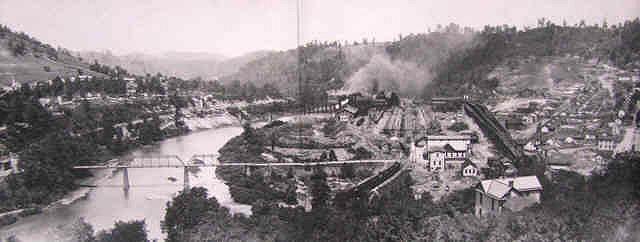
“Monongah…has a population…, most of whom are foreigners although there is a larger proportion of American miners in this district than in most of the other bituminous fields. Until about ten years ago the mines were operated almost exclusively by Americans, but during a general strike of Miners in the Pennsylvania and Ohio fields many of these West Virginia miners went out in sympathy to prevent the filling of contracts at lake ports and elsewhere with West Virginia coal by the companies in Ohio and West Virginia against which the strike was directed. At that time the mine owners brought a large number of foreigners into the field to take the places of the strikers and ever since the foreigners have been displacing Americans until they are now the majority.” (ES 12.7.07 pg. 2)
In the town of Monongah:
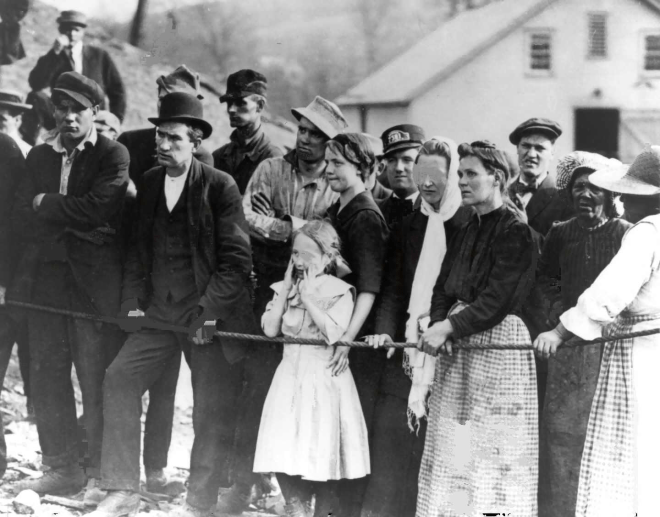
“The banks and hills surrounding the mine are literally crowded with anxious people, many women and children who are weeping and crying hysterically for love of their fathers, husbands and brothers known to be entombed. The foreign women are indeed to be pitied for their great sorrow and their way of expressing it by tearing their hair, scratching their faces with their finger nails until the blood runs down their cheeks. Several were witnessed in this condition leading their little children around through the mud and cold not noticing either in face or their great sorrow.” (FWV 12.6.07 pg. 1)
Company officials Frank Haas and J.J. Burrett arrive from Fairmont as well as the representative of the Italian consulate, G.D. Caldara, who “was doing much to pacify the women of his country, who were most loudly giving vent to their terrible feelings.” (FWV 12.6.07 pg. 1)
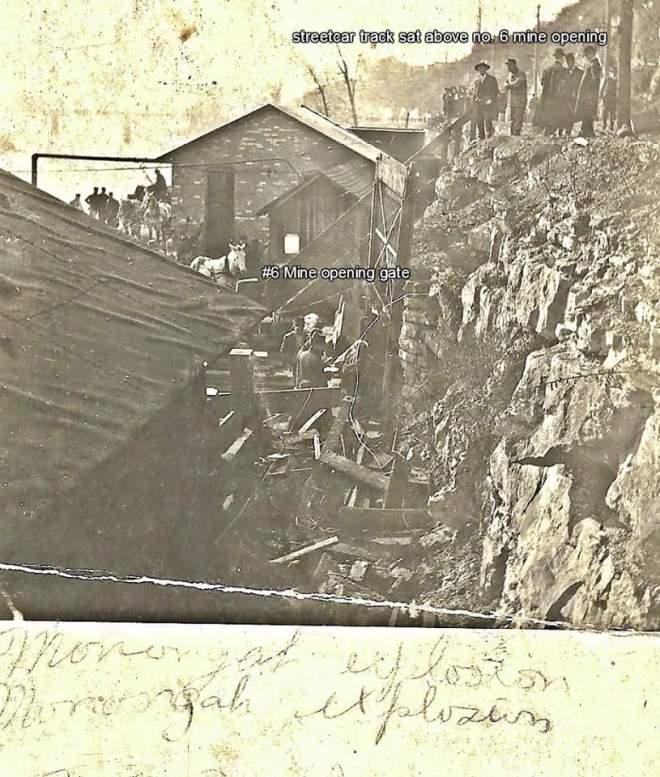
Over a dozen physicians are now on the scene: Dr. D.P. Fitch, Dr. John R. Cook, Dr. Brownfield, Dr. Jesse A Jamison, Dr. W.C. Jamison, Dr. Graham, Dr. Reidy, Dr. Bowcock, Dr. Durrett (mine physician of the New England mines), Dr. Howard, Dr. Carr, Dr. L.N. Yost, Dr. Sands, Dr. Nutter, and Dr. Hal Hall accompanied by nurses from the various hospitals in Fairmont. They begin to establish an emergency hospital in the blacksmith shop of #6. They have also arranged for the interurban trolleys and railroad companies to transport survivors to the Fairmont hospitals once they are tended and stabilized at the make-shift ER in the blacksmith shop (FWV 12.6.07 pg. 1) (Nurses on Front Lines)
“Medical men who came on the scene after…were: Dr. F.W. Hill, B.F. Bone of Fairmont, Drs. Culp and Thrash of Farmington, Dr. Falconer of Everson and Dr. Alkire of Chiefton.” (FWV 12.7.07. pg. 1 – noon)
Marion County Coroner E.S. Amos also arrives in Monongah.
Dr. Durrett of the New England mines tells a reporter with the Fairmont West Virginian that there is little hope for the men trapped in both mines; “He says that the force of the explosion traveled with the air courses and only those men who were in this air course were killed by the explosion or from the debris thrown in its wake.” (FWV 12.6.07 pg. 1)
Outside #6:
Carpenters are putting the last support boards along the roof of the approach which connects the mine shaft to the fan. It is just a temporary fix, but it is good enough to warrant restarting the fan.
In Washington D.C.:
Governor Dawson, A.B. Fleming, and a few other state/company officials receive word about the disaster. Gov. Dawson immediately telephones certain state officials while former Gov. Fleming immediately leaves D.C. for Monongah after sending word ahead to the sheriff to “preserve order”. (News, McAteer)
11:05 am
Outside #6:
35 minutes after the explosion, #6 fan is restored and started. However, the gage only rises “a little above 2” which is lower than prior to the explosion. This means that air is still not able to properly circulate through #6 because the partition which once divided the two mines has been destroyed by the explosion, allowing air to flow into #6 from #8. This needs to be a closed system in order to properly circulate breathable air and it will be impossible to close this system without getting to one of the deepest parts of the two mines. (Inquiry)
11:30 am
Outside #6:
“The rescue was started in mine No 6 about 11:30 after the fan was again put in running order and the rescue work is being vigorously pushed by Mr. J.C. Gaskill and other mine officials.” (FWV 12.6.07 pg. 1)
“As soon as the men could be organized for a plan of action forty rescuers began the work.” (CDT 12.7.07 pg. 1)
Three teams were organized: one headed by #6 foreman Charlie Dean, another by Supt. Brennon of #8, and the other by Supt. J.C. Gaskill.
The first party to enter #6 was “composed of Messrs. D.C. Dean,—Toothman, — Nichols, —Graham, —Clayton, J.G. Smith, —Clayton, … these men, armed with all the available necessary tools and safety lamps marched undaunted back into the scene of carnage…” This is an excellent choice crew. Being outside foreman of #6 mine, Charlie Dean still had plenty occasions when he had to go inside #6. He is the most ideal person available at the time to head the first relief crew and give instruction about what is and isn’t right about the conditions inside of #6 and what needs to be done to correct those conditions in order to get relief efforts underway. (FWV 12.6.07 pg. 1) (Inquiry) (News)
Dean and his crew have a primary goal—determine how far rescuers can get into the mine safely and if any victims can be reached. It is presumed that Dean and his crew are aware of the runaway trip which should most certainly be a pile of wreckage somewhere along the main shaft. Hopefully, they can reach this point and determine if the wreck and/or the explosion have caused any blockages of potential exits before they personally encounter any deadly gasses. (Inquiry, News)
~11:33-11:35 am
Inside #6
As these men steadily work their way down the #6 shaft portal, a second party of ten men headed by West Fairmont mine Supt. John Brannon prepare themselves for the decent. They enter #6, following along and continuing to clean the path already partially cleared by Charlie Dean’s crew. Naturally, Dean and his crew only cleared what was necessary for them to pass so they can survey conditions and try to reach survivors as quickly as possible. As these rescuers expect to find survivors inside of the mine, they must also make as clear and safe a path through and out of the mine as they can while still constantly pushing forward, knowing that more crews will be following to pick up where they left off. (Inquiry, News)
~11:38-11:40 am
Supt. John Brannon and his team catch up with Charlie Dean and his crew near B face entry, where the slope of the portal changes to a more gradual angle. It is here, at B face, that several other track lines which branch out to the rest of the inner workings of the mine intersect with the main shaft line. At this spot they discover one of their worst fears to be confirmed: the only true way in and out of #6, the main shaft line just before B face, is entirely blocked with wrecked coal cars and debris at the worst possible point, literally entombing every miner—dead or alive—inside with no chance of escape. (Inquiry)
Dean’s crew has already begun to tear away what debris they can to create at least enough space for one man to cross the wreckage. Charlie Price, a member of Supt. Brannon’s crew, also begins working on clearing a way through the debris. After only a few more minutes, they successfully break through near the top left of the pile. Charlie Price is the first to take in the air coming out from the enclosed workings behind the debris pile. In a matter of moments, he collapses. (Inquiry, News)
~11:45-11:50 am
Outside #6
Gen. Supt. J.C. Gaskill has assembled his own relief crew on the surface and they are preparing to enter #6 when Supt. Brennon’s crew resurfaces from the mine shaft. A few of the rescuers are carrying Charlie Price. He was overcome by the fire damp which escaped from the inner workings. At this, both crews fled #6 to avoid the same fate. Charlie is in serious condition and taken to the make-shift hospital in the #6 blacksmith shop which is still being set up by the physicians and nurses which have since arrived on the scene. (Inquiry, News)
Inside #6
“When the Brennon forces returned C.E. Gaskill headed another relief party, which continued the work.” (WH 12.7.07 pg. 1)*
Despite the knowledge that toxic gases have been released, Gaskill and his team consisting of mine foreman PJ McGraw, #6 fire boss Lester Trader, and an extended crew of carpenters like Fred Shaver press back into #6. They continue to clear away debris along the main shaft until they reach the wreckage pile by B Face. Gaskill notes that the wreckage is, “piled up pretty bad—a lot of cars piled up just like any wrecked trip…crossways and piled up generally.” However, it was “not so bad but we could pass…by climbing over…”. (Inquiry)
~11:50 am-12:00 pm
Outside #6
A key official of the Fairmont Coal Company, Supervisor and Chief Mine Inspector David Victor arrives in Monongah from the New England mines in Fairmont and immediately goes inside #6. He is aware that other crews of men are already working, including John Smith from Charlie Dean’s crew and Supt. Gaskill & crew, though he is not sure how much farther ahead they are at this point. (Inquiry, Victor)
Inside #6
“All of the headings leading off from the main entry are being cut off by canvas and barricaded as fast as they are reached by the relief workers, so that the inner most workings of the mine may be given the benefit of the ventilating system…” (ES 12.7.07 pg. 2)
Beyond the wreckage:
“The rescuing parties penetrated mine No 6 about 3500 feet before they came upon the first of the dead. A majority of the corpses will be found about a mile further back.” (LAH 12.8.07 pg. 1) (WED 12.7.07 pg. 1)
Supt. Gaskill and his team have successfully crossed over the wreckage pile and are now continuing along the main track into #6. At the very base of the slope, where the more gradual angle of the slope finally levels out to match the rest of the working areas, the team comes across a small shanty. Inside they find 3 men—all are dead. (Inquiry, News, McAteer)
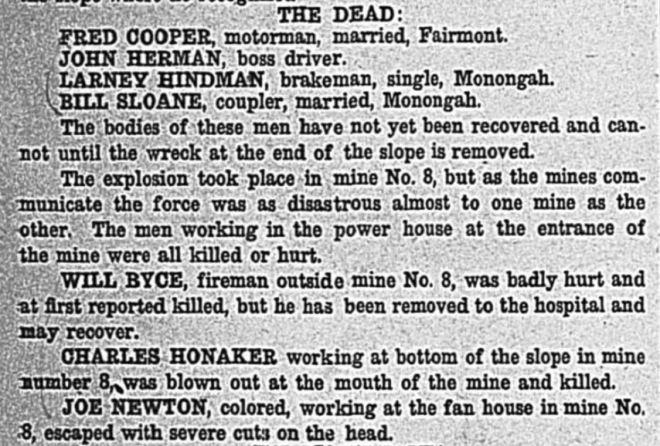
The first is 23-year-old husband, father, and motorman Fred Cooper. He is lying on the ground, on his back, his head near the shanty door, his mouth wide open.
Another, 21-year-old brakeman Laurence “Larney” Hindman, is also on the floor lying face down with his feet toward the shanty door, the opposite direction as Fred.
The last man is still sitting upright on a bench, holding his opened dinner bucket between his legs, though his head and arms are drooped down. Lester Trader steps into the shanty and lightly pushes his head back to see the face. Coffee dribbles out of the lifeless mouth and Trader can tell it is 36-year-old driver John Herman.
This rescue crew of Gaskill, Trader, McGraw, Fred Shaver and others will not linger at the shanty long—their primary goal is to find survivors—though they do take a few solemn moments to examine and observe that not one of these men shows a single sign of traumatic impact to their bodies and yet their positions, paired with John Herman’s mouthful of unswallowed coffee, indicate an instantaneous death for them all. (Inquiry)
At the wreckage site:
David Victor makes it to the general area known as the ‘foot’ of the slope and sees the “badly wrecked” trip on the main track. He counts 14 loaded cars wrecked on the middle track but, “The fellow who had been cleaning up the cars told me that he had taken two off the trip that had come back down the slope.” As David Victor begins to examine the area “to a certain extent”, he notes that there is another trip with a motor about 20 feet away “standing on the side track of about the same number of cars, 2 or 3 of the first cars had been wrecked…”, behind that was another trip of coal cars. (Inquiry, Victor)
One of the first concerns relating to the cause of the explosion circles around the new addition of electricity and the relatively recent introduction of live, uninsulated wires inside the mines. Victor examines for any evidence of a short circuit in these wires which could have sparked a fire or explosion, but he finds that the wires are surprisingly still intact, hanging along the roof of the mine and no such evidence these wires fusing or burning at the foot of the slope or on any wires, the mine roof, or walls. He decides to move on. (News, Inquiry)
“I remember climbing over the wrecked cars but had plenty of room to go over. I remember the wrecked trip happened right on the switch where there were 3 entries opened up. The wreck had happened in the middle entry and that entry was closed. The entry to the left was not closed. I remember climbing over the empty cars in order to get through to build brattices.” (Inquiry)
Not far beyond the wrecked pile, Victor sees a coal car laying “crossways of the track” and just beyond that, the shanty at the bottom of #6 slope. He does not go in nor does he take any time to examine the 3 dead men other than to acknowledge their positions. (Inquiry)
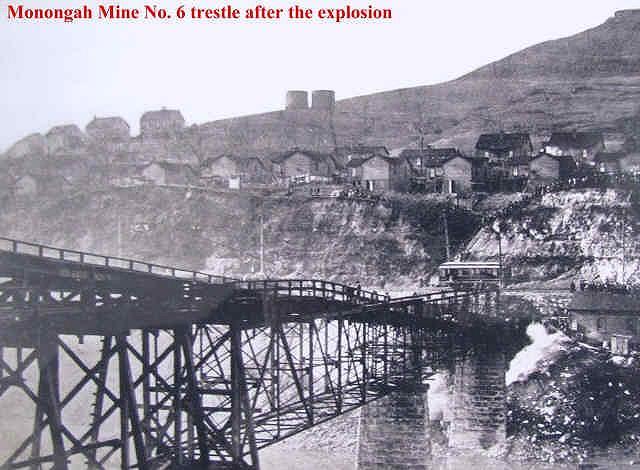
The speeding interurban car rounds the tight curve of the West Fork River and slows down only just before reaching #6 mine. There some rescuers and officials, like Company Superintendent J.C. Gaskill and General Manager Malone, get off at #6 while others ride the trolley down the line to #8. (Inquiry, News)
Outside #6:
Carpenters are working at their fastest rate to restore the #6 fan house.
“Five hundred feet from the opening of shaft No. 6 were the bodies of two of the miners, who had been blown from the shaft by the force of the explosion.” (WED 12.7.07 pg. 8)
L.J. Malone gathers some supervisors and mine security guards and forms them into an ad hoc security force to keep crowds back and make room for the incoming rescue crews. “The opening at No 6 was speedily roped off and placed under guard as to restrain the thousands of people from rushing into danger and from interfering with the search.” (CDT 12.7.07 pg. 1)
“Hundreds of people are rushing to the mouth of the mines and it is with difficulty that the guards by means of ropes can keep the people back.” (FWV 12.6.07 pg. 1)
10:50 am
Outside #8
The interurban trolley pulls up as close to #8 as it can get while Hyre Stalnaker and several others are still clearing away enough debris to free William H. Bice from the wreckage of the # 8 fan house.
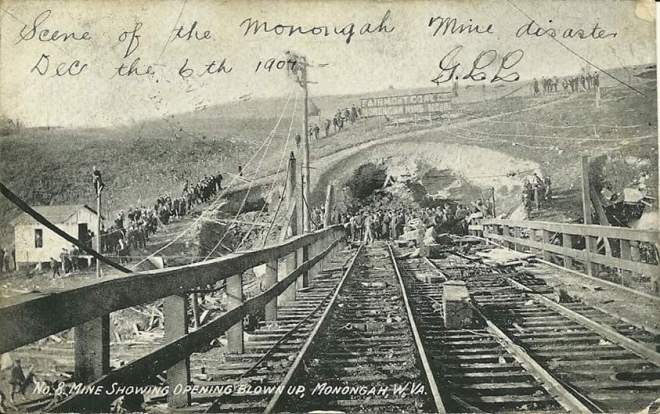
“The engines, boilers and fans were blown into a tangled mass of wreckage to the southwest with a goodly part of them into the river together with the north end of the bridge.” (CDT 12.7.07 pg. 1)























 The Monongah Disaster